

Some businesses start with a business plan.
Some start with a market study, a storefront, and a clean logo on the window.
And some start because a guy looks around town, sees what is missing, and decides to begin with what he has.
That is the story of Quincy Bike Shop.
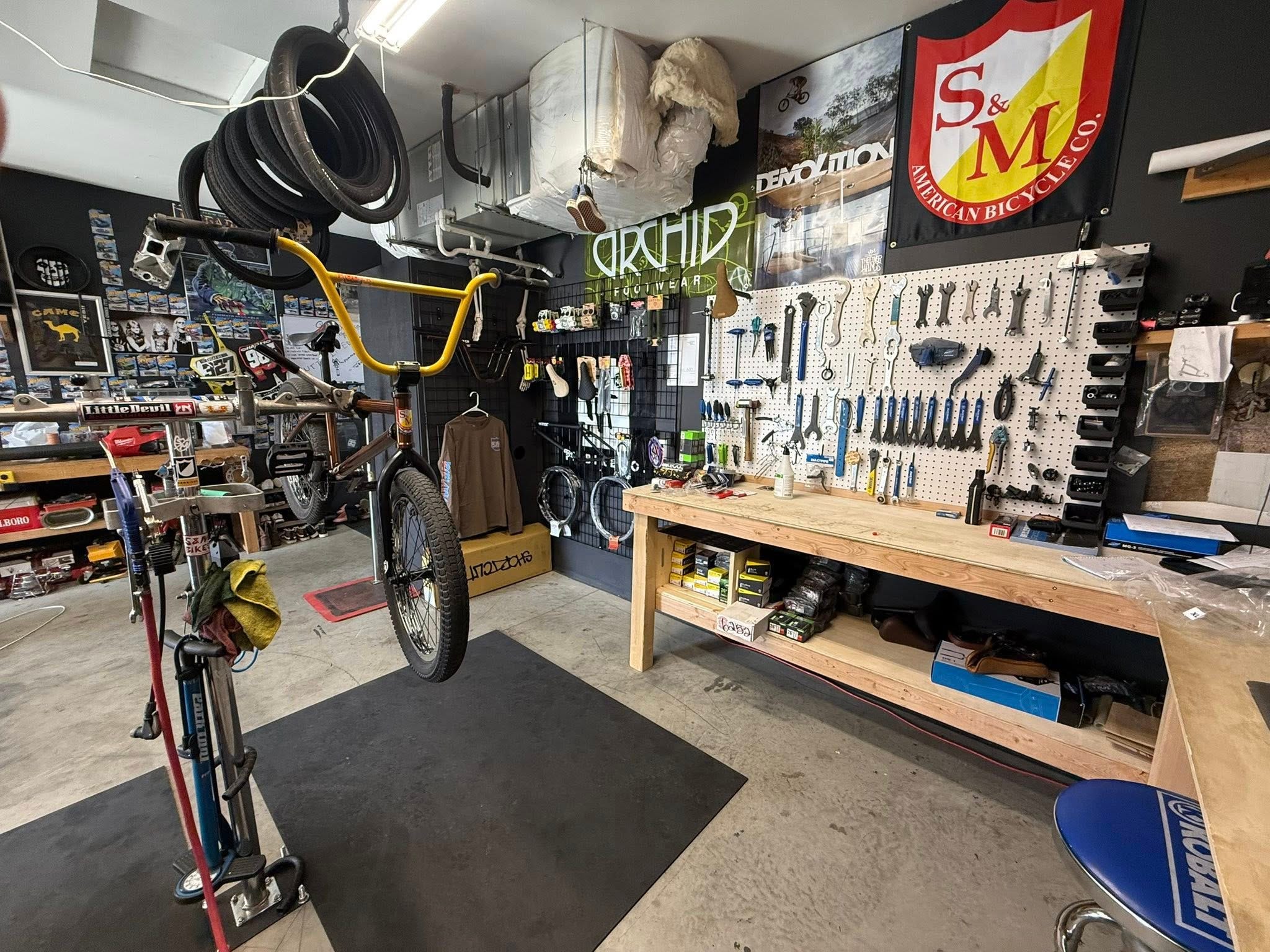
Brandon Hatch does not run his shop out of a polished downtown retail space. He runs it out of his garage. Part of that is practical. Storefronts are expensive, and like a lot of small-town businesses, growth has to happen at the speed reality allows. But after talking with Hatch, it becomes clear pretty quickly that Quincy Bike Shop is not only about repairing bikes or selling a service. It is about something deeper than that.
It is about giving people, especially kids, a reason to get outside again.
It is about building the kind of place people want to go, not just the kind of place they use.
And in a town like Quincy, it is about asking whether we still know how to create spaces where community happens naturally.
A Bike Was Never Just a Bike
Hatch describes himself as “a 40-year-old kid,” and honestly, that feels about right in the best possible way.
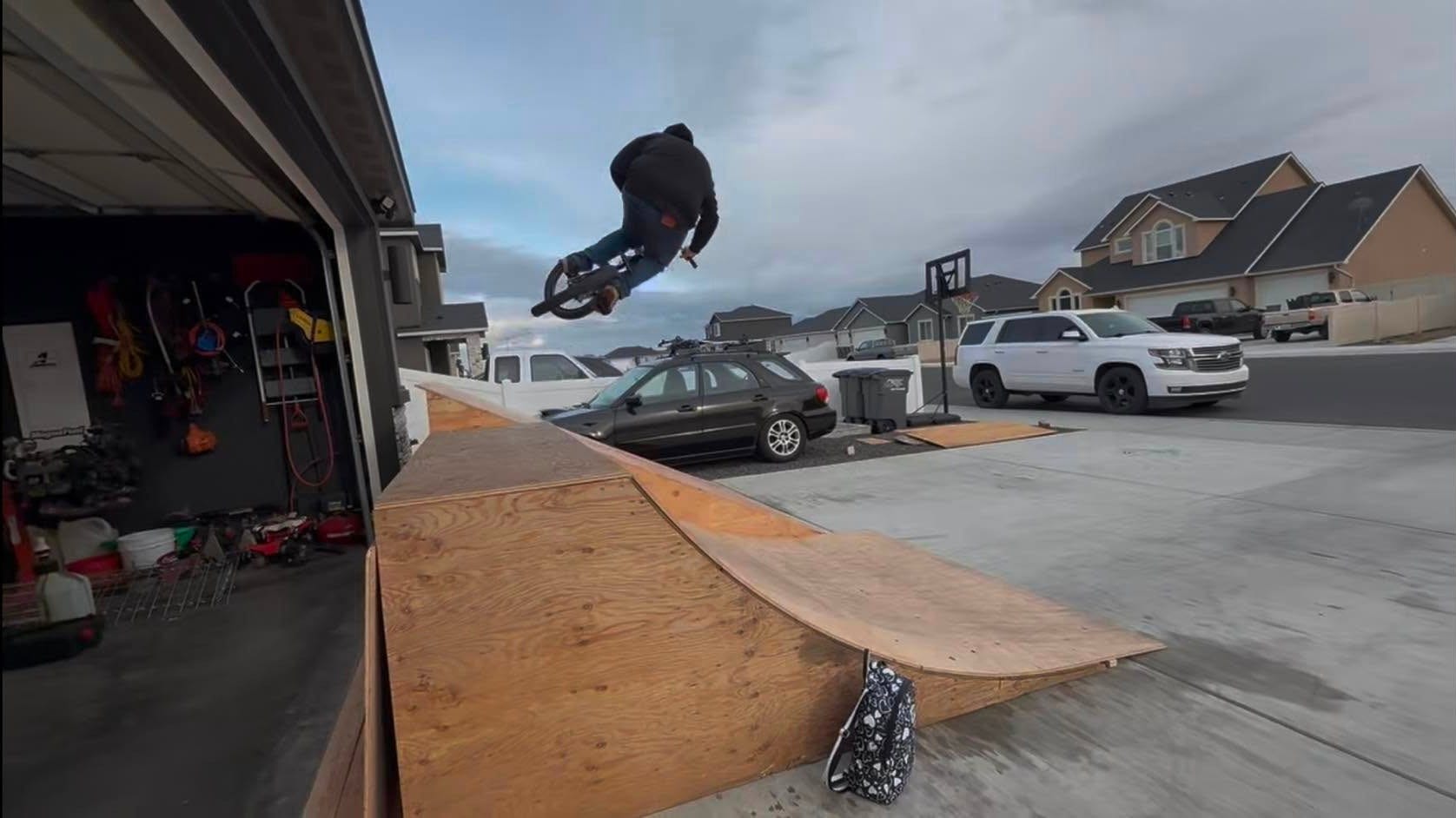
He grew up in Snohomish as an only child in a home shaped by divorce, work, and a lot of figuring life out on his own. Like a lot of kids, he needed somewhere to put his energy, somewhere to belong, and somewhere that felt like freedom. For him, that place was on a BMX.
What started with racing became something much bigger. He moved from BMX racing into freestyle, found his people, found his passion, and found something healthy and grounding that kept him out of trouble and gave him direction. He rode hard through his teens and into his twenties, even picking up sponsorship support along the way. Long before Quincy Bike Shop existed, bikes had already done serious work in Brandon Hatch’s life.
That part matters, because when Hatch talks about bikes, he is not talking about them like inventory. He is talking about them like something that changed the course of his life.
That came through over and over in conversation. A BMX gave him friendship. It gave him purpose. It gave him a safe outlet. It gave him movement, adventure, discipline, and a way to stay connected to something good. Years later, after becoming a father, those memories hit differently. He found himself drawn back to the things he was grateful for and wanting to pass that same kind of life-giving experience on to his kids.
That is a big part of what eventually made Quincy the right fit.

Why Quincy Felt Like Home
Hatch and his family did not move to Quincy because of some carefully laid out long-term business strategy. In fact, Quincy was almost more of a gut decision than a calculated one.
They knew they wanted Eastern Washington. They had looked at other towns. Moses Lake was on the radar. So were Soap Lake, Blue Lake, and Ephrata. But on the way home from looking at houses one day, Hatch and his wife started talking about Quincy, the town they had passed through before on other trips. They decided to swing through.
That was enough.
He said they had only been here about an hour when he looked over at his wife and said, “Let’s just do it. Let’s just move to Quincy.”
That kind of story makes more sense once you hear how he describes the place. To Hatch, Quincy felt like Snohomish felt when he was a kid. Smaller. Calmer. More grounded. Less crowded. More like the kind of town where kids still ought to be outside and people still ought to know each other.
For families who have spent years around bigger, busier areas, that kind of calm is not a small thing. Hatch talked about not really realizing how much noise and pressure comes with living near larger population centers until you get away from them. Quincy, for his family, felt like rediscovering that a quieter and more connected way of life still exists.
It also felt like a place with one obvious missing piece.
He saw a town that had the bones for the kind of life he believed in, but not enough kids on bikes, not enough spaces built around that culture, and not enough opportunities for the kind of active, outside community he grew up with.
That gap stayed with him.
A Garage Shop With a Bigger Purpose
When Hatch first came to Quincy, he was already deep into biking as a family passion. What he had not seriously considered yet was opening a shop.
That came later.
He spent time at bike shops on both sides of the mountains, including Full Circle Cycle in Wenatchee and Marysville Bike Shop on the west side, where owners had been good to his family for years. Somewhere in that process, the idea clicked. Quincy had nothing to support his beloved passion. He was a stay-at-home dad at the time, looking for something meaningful to pour himself into. The thing he was searching for was already right in front of him.
He loved bikes. He loved working on them. He loved what they could do for people. So he decided to start.
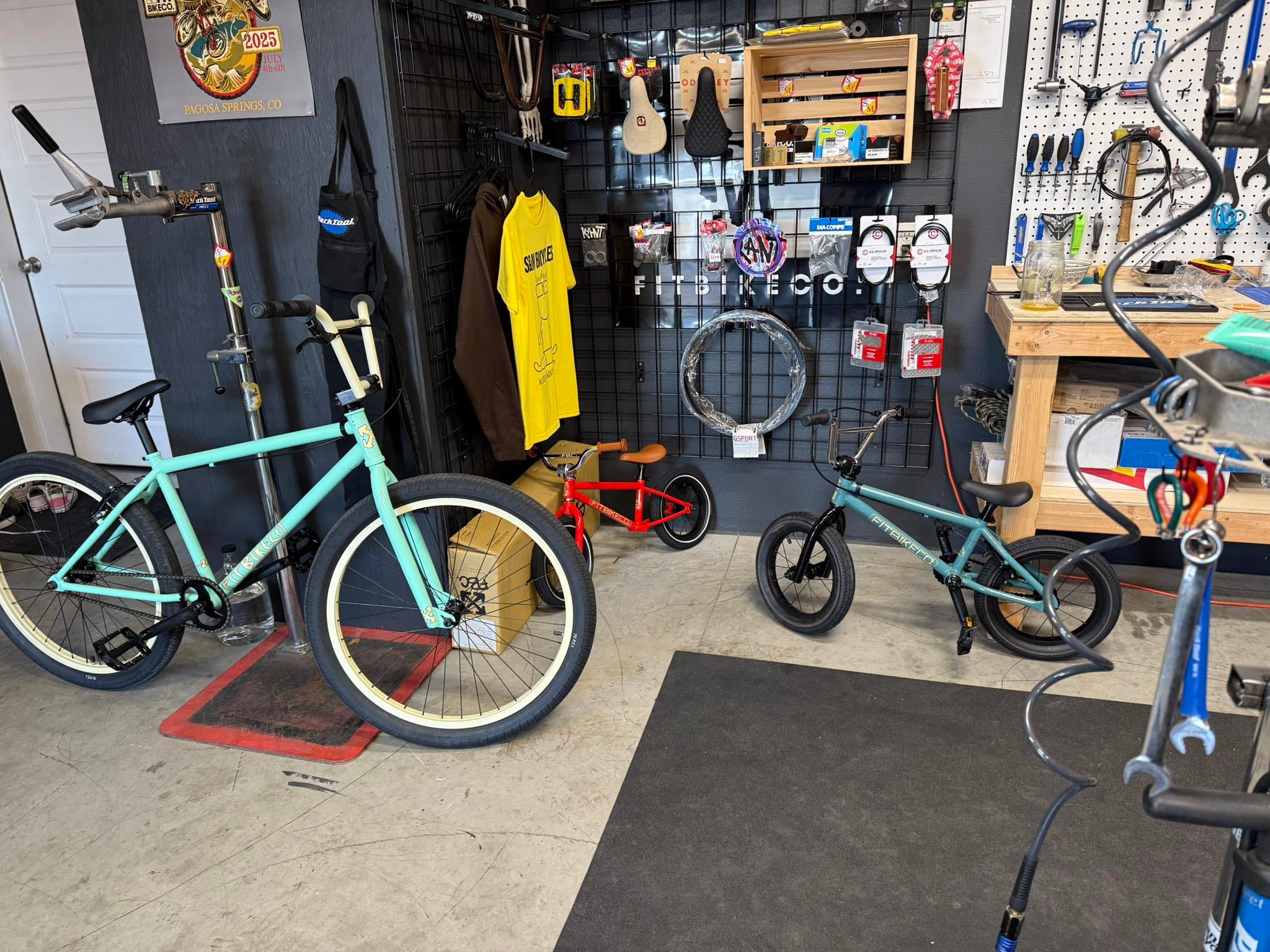
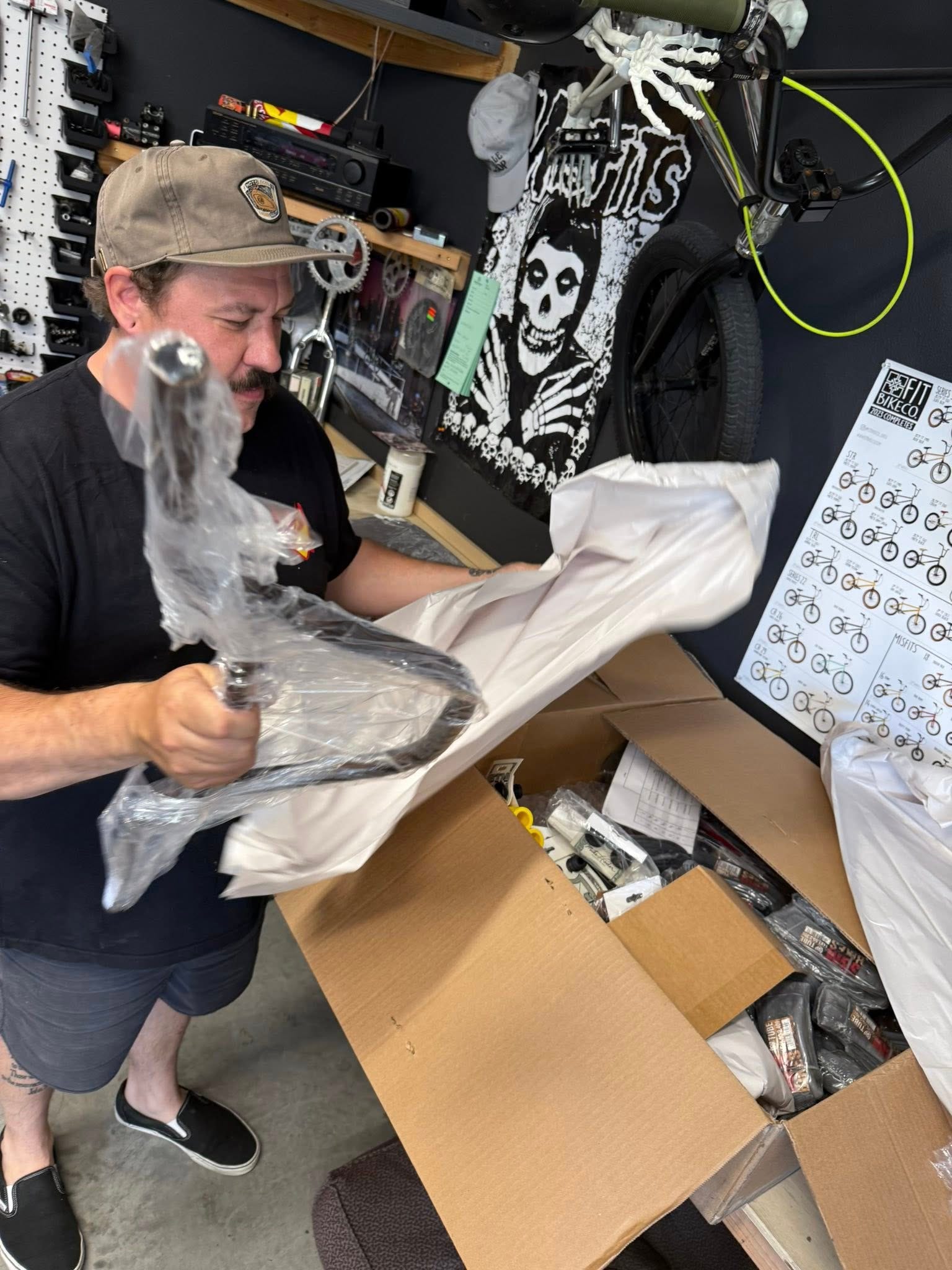
Not with a big launch. Not with a major ad campaign. Not with borrowed money and a huge overhead burden hanging over everything. He got the business license, got insured, handled the city and reseller paperwork, put together some business cards, started a Facebook page, and let it grow slowly.
That decision to start from the garage turned out to be both practical and wise.
At first, he had thought about going after a storefront right away. But conversations with experienced shop owners and a realistic look at the economics of a small-town bike business pushed him toward a slower, steadier path. He checked into at least one possible building in town, but ran into issues with the condition of the property. Rather than force something too early, he decided to build the customer base first and keep overhead low.
That is the kind of choice a lot of small businesses in towns like Quincy understand very well. You do not always begin where you want to finish. Sometimes you start where you can, and you prove the need before you take the bigger leap.
And there was a need.
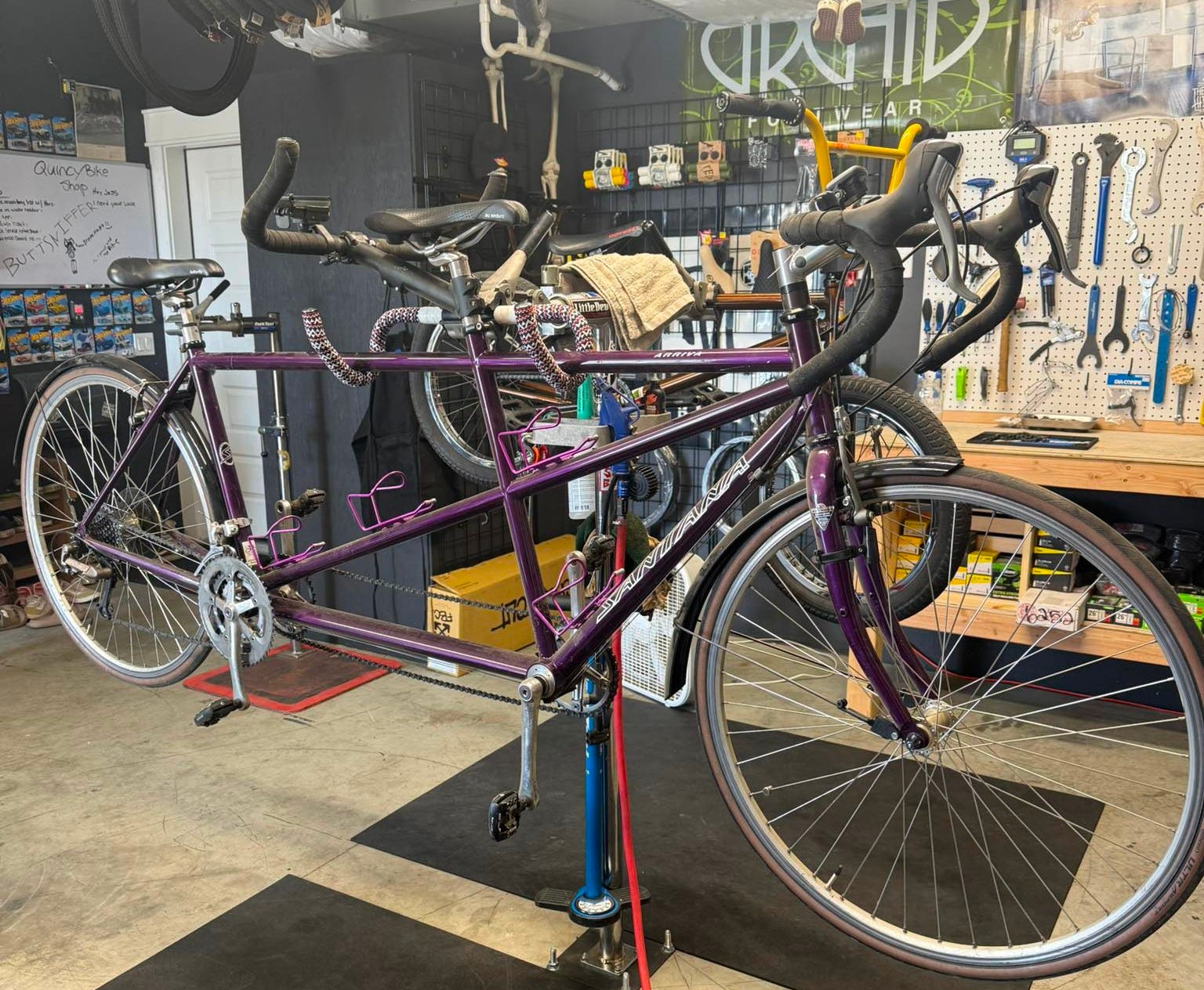
Hatch said that by the first full season, he started having days where there were multiple bikes in the shop and cars stacked in the driveway near closing time. There were moments he looked at his wife and basically asked, “Is this real?”
That is often how small-town businesses grow. Quietly, then all at once.
Why This Matters to Him
The strongest part of this story is not the business model. It is the mission.
Hatch is deeply passionate about getting kids off screens and back outside. Not in some preachy, anti-technology way. He is not pretending screens are going away, and he is not pretending his own family never touches them. He joked about still playing Fortnite with his kids. This is not a lecture from someone trying to drag families backward in time.
It is coming from someone who has lived enough life to know what gets lost when outside time disappears.
He talked about sunlight, fresh air, movement, and human interaction like someone who learned the hard way that those things are not extras. They are part of being healthy. Part of being whole. Part of being human.
That is a message a lot of people in this community will understand immediately, even if they do not say it out loud that way.
There is a time in many of our lives when being outside was not something you scheduled on purpose. It was just what you did. You rode until dinner. You knocked on doors. You figured it out as you went. You came home sweaty, tired, a little scraped up, and usually happier for it.
Hatch has not romanticized that idea because it sounds nice. He believes in it because he lived it, and because he has seen what it can do for kids who have never really had that chance.
He shared stories from reunion events he has helped run over the years on the west side, gatherings built around BMX, skate culture, and kids. Those events included food, games, prizes, and the kind of raw, unfiltered energy that comes from kids discovering they are good at something physical, fun, and social. He described seeing kids show up unsure of themselves, isolated, maybe lacking support or resources, and then start to light up once they had a bike under them and a place to belong.
He did not describe that like a business opportunity.
He described it like watching someone come alive.
That is a powerful thing.

More Than Repair Work
At one point in our conversation, Hatch told a story that probably explains Quincy Bike Shop better than anything else.
A woman came in to get her son’s bike fixed. In the course of the conversation, she mentioned wanting her daughter to be able to ride too and wanting to ride with both of her kids, but not really being able to make that happen. Hatch had bikes available, got them ready, dropped off the repaired bike, and gave the family a couple more so they could all ride.
Later, she came back just to thank him.
That moment stuck with him, and it is not hard to see why.
For Hatch, this is not just about transactions. It is about removing obstacles. It is about helping families do something healthy and simple together. It is about using what he has to get more people moving, smiling, and participating in the life of the town around them.
He also works with bikes from the city, fixing them up with tires, chains, and whatever else they need so they can be donated and put back into use.
Again, that is not the kind of thing you do if this is only about business growth.
That is the kind of thing you do when you actually believe the service matters.
Why Quincy Could Be Better for Bikes Than People Think
One of the more interesting parts of our conversation was hearing Hatch talk about Quincy as a biking town.
Most people probably do not think of Quincy that way right away. But he made a compelling case that the bones are already there.
For one, the town is compact. A lot of what people need is relatively close together. In a town this size, bikes make sense in a way they often do not in bigger spread-out communities. Add in lower speed limits through much of town, and you start to see why he believes Quincy could be a very good place for more cycling culture than it currently has.
He also pointed out something many riders know well: you experience a town differently on a bike.
You see things you miss from a car.
You notice businesses you have driven past a hundred times.
You interact with the place instead of just passing through it.
That observation rang true. Anyone who has spent time on a motorcycle, bicycle, or even just walking more regularly knows exactly what he means. A place feels different when you are in it instead of sealed off from it.
Hatch believes more biking would not just mean more activity. It would mean more interaction. More people outside. More reasons to engage with one another. More reasons to stop, notice, wave, and participate in town life.
That feels especially important in a season where many communities, including ours, can sometimes feel segmented. School sports bring people together. High school arts bring people together. But outside of those shared spaces, it can still feel easy for families and individuals to stay in their own lanes, moving from home to work to errands and back again.
Bikes, simple as they are, can interrupt that pattern.
What Quincy Is Missing
Hatch is realistic about the limitations too.
He does not think Quincy is where it could be yet when it comes to safe access and bike-friendly infrastructure. He specifically talked about the need for safer routes, especially in places where traffic feels too risky for younger riders. Like a lot of parents, he sees the difference between the freedom kids once had and the realities parents have to weigh now.
He also believes the city needs more destination spaces for young people and riders in general.
Not just a place to pass through, but a place to gather.
That is where the conversation broadened beyond bikes and into something even more revealing. Hatch kept returning to the idea that communities need “third places,” those spots that are not home and not work, but still matter deeply. Places where people want to be. Places where kids can spend time. Places where culture forms naturally.
He talked about old bike shops, skate shops, and hangouts with a kind of affection that many people from his generation will recognize immediately. Shops where kids watched videos, worked on bikes, sat on couches, talked, hung out, and then rode together. Not because anyone organized it as a formal program, but because the place itself created connection.
That part of American life has thinned out in a lot of places.
We have convenience. We have delivery. We have phones. We have endless digital entertainment. What we often do not have are enough physical spaces that invite people to gather without spending a fortune or having some formal reason to be there.
In Hatch’s mind, Quincy Bike Shop could become part of that answer someday. Not just a storefront, but a place people want to visit. A place to sit down, cool off, talk bikes, talk life, and feel like they belong there.
That is a much bigger dream than retail square footage.
A Business With a Community Vision
Hatch wants a storefront eventually. He is careful about how much he talks about it because he does not want to get ahead of himself, but the vision is there. He wants an old building in Quincy. He wants a shop people remember. He wants a place where the atmosphere matters as much as the service. He wants something with staying power.
And he wants it to be part of the community in a real way.
That vision fits with other things he has already tried to bring forward. He has pushed for more youth engagement, floated ideas with the city, and even put together a proposal centered on teaching kids hands-on skills related to bikes and boards. If the right kind of space existed, especially something like a skate park, he clearly sees the possibility for something much bigger than one shop owner fixing flats and tuning drivetrains.
He sees a path toward mentorship.
Toward skill-building.
Toward kids finding direction.
Toward giving young people, especially those who are not naturally plugged into school sports, another healthy lane to run in.
That is not a small thing.
In communities like ours, those other lanes matter. Not every kid is going to be on the field or the court. Not every kid is going to find their people through traditional school activities. Having other options can make a real difference.
Hatch knows that because he was one of those kids.

Why This Story Matters
It would be easy to treat Quincy Bike Shop like a simple local business profile. A guy likes bikes. He started a garage shop. He wants a storefront someday. That is true as far as it goes.
But it would also miss the real story.
The real story is about what kind of community Quincy wants to be as it grows.
Do we want more places that bring people together?
Do we want more reasons for families to be outside?
Do we want more options for kids who need healthy, active, affordable ways to belong?
Do we want small businesses that are rooted in service and actual community life, not just commerce?
Because that is what Brandon Hatch is really talking about.
He is not selling nostalgia for nostalgia’s sake. He is not arguing that every child should become a BMX rider or that bikes fix everything. He is pointing to something simple and practical that many of us already know deep down: people do better when they are outside more, moving more, interacting more, and connected to something real.
A bike is not the whole answer.
But it can be a beginning.
And sometimes beginnings look a lot like a garage in Quincy, a few bikes waiting for repair, and a business owner who still believes there is something worth building here.
