
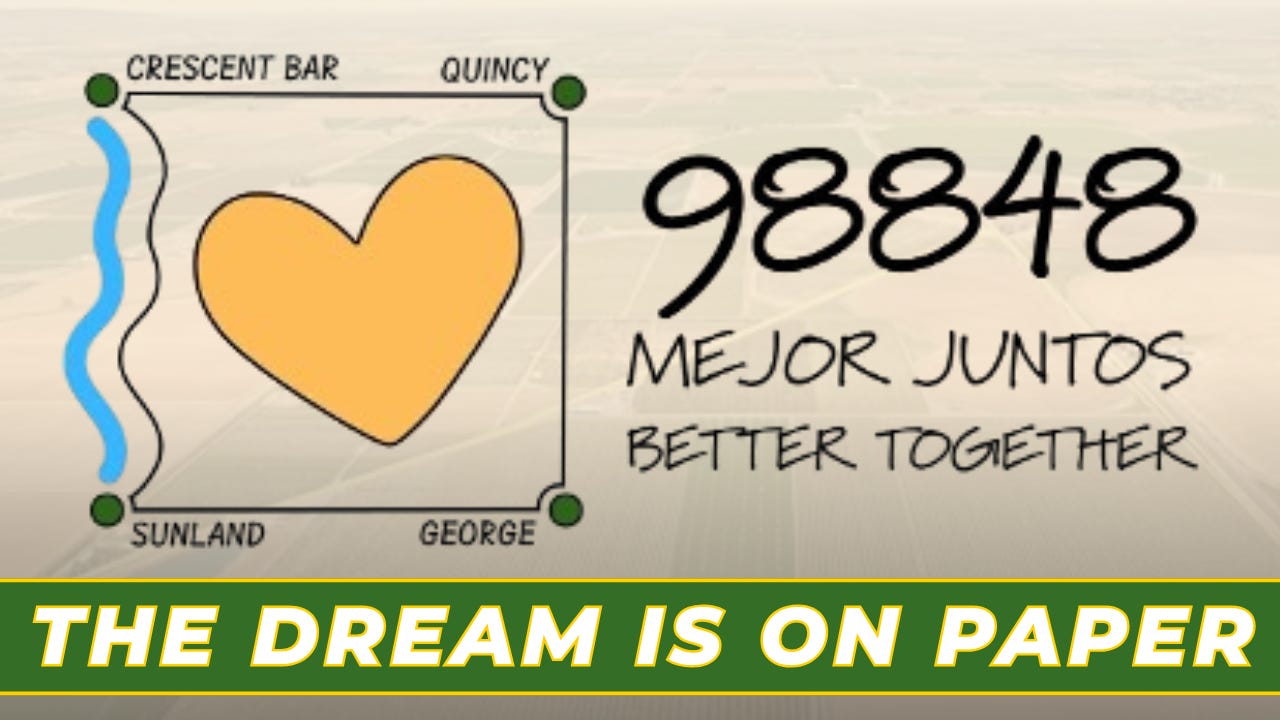
For years, people across the 98848 have been asked a deceptively simple question: What would make this a better place to live? There has been no deception mind you, but the most important answers don’t always come from complex research and studies. Frequently, they are very simple conversations.
The answers came at community dinners and listening sessions. They came through surveys, focus groups and conversations that began long before there was a finished plan. People talked about places for teenagers to go, jobs that might give young people a reason to stay, stronger support for seniors and families, better communication between communities, more restaurants and services, safer places to walk and bike, affordable housing, stronger local businesses and a future where agriculture remains part of the identity of this region.
Now, for the first time, many of those hopes have been gathered into one document.
The Better Together 98848 Community Action Plan, released July 1, is the culmination of community listening that stretches back to the Voice of Community conversations in 2018 and includes the 98848 Discovery Report released in May 2025, two Community Dinner and Action Planning sessions this spring and a bilingual community-wide survey.
The finished plan does not promise that every problem will be solved tomorrow. It does something more practical: It takes what residents said and organizes those ideas into a shared picture of what the 98848 could become, what can begin now and what may take a decade or more to build.

TL;DR
• Healthy Youth & Families: Create stronger career pathways for young people, develop more spaces and activities for teens, revitalize senior support and expand access to mental health and family services.
• Community Connection & Belonging: Improve communication across all four communities, build stronger connections across languages and cultures, protect the region’s agricultural identity and develop leadership that better reflects the people who live here.
• Outdoor Recreation & Tourism: Beautify local communities, improve walking and biking connections and capture more of the economic opportunity created by the Gorge Amphitheatre and regional tourism.
• Local Business & Economy: Expand dining, shopping and services, strengthen small business and workforce support and work toward long-term solutions for affordable housing and regional transportation.
• The plan includes 15 priorities divided into goals for the next one to two years, the next three to five years and the next five to 10 years or longer.
• Better Together 98848 is not promising to complete every project itself. Its role is to share the plan, champion the priorities and help bring together the people, organizations and resources needed to move them forward.
• The complete Better Together 98848 Community Action Plan is available to download with this story. The full document includes every priority, proposed early wins, long-term aspirations and the commitments intended to show whether progress is actually being made.

From Dinner Table Conversations to a Community Plan
This plan did not begin in a conference room with someone deciding what the community needed. Its roots are in years of listening.
The process began with Voice of Community conversations in 2018. Over the past two years, hundreds of residents have participated in additional listening sessions, focus groups, community dinners and surveys. They were asked what they love about this place, what concerns them and what they would like to see change.
Readers of Life in the 98848 have followed parts of that process. We reported on the community dinners where residents gathered around tables, talked through priorities and began turning broad concerns into possible actions. Those conversations built on the 98848 Discovery Report and were followed by a bilingual survey that gave more people a chance to weigh in. We joined in the conversations too, because this is our community and we wanted to contribute to its future. There was a lot of excitement at these dinners and conversations.
The final document is the next step in that story.
Rather than trying to become a massive master plan covering every possible issue, the Community Action Plan is intentionally focused. It identifies the priorities residents raised most often, places them on a rough timeline and includes both an “Early Win” and an “Aspirational Win” for each.
That distinction may be one of the most important ideas in the entire plan.
A community does not build a regional trail network connecting Quincy, George, Crescent Bar, Ancient Lakes and White Trail overnight. But it can begin by mapping the safe walking and biking routes that already exist and identifying the gaps.
It may take years to create a stronger regional housing and transit system. But the community can begin by bringing local government and housing advocates together to identify barriers and opportunities.
A fully revitalized senior center may be a larger project. But an intergenerational meal or reading program connecting young people and seniors can begin much sooner.
The plan asks the community to hold two ideas at the same time: dream about what is possible, but identify what can be done next.
A Place Where Young People Can See a Future
The first focus area, Healthy Youth & Families, begins with one of the most important questions facing any rural community: What happens to our young people after they grow up?
The plan calls for stronger connections between local employers, the school district and businesses to create meaningful work experiences for teenagers and students beyond seasonal positions. The goal is to build clearer pathways into technology, healthcare, the trades, agriculture and hospitality.
The early step is simple: Make the opportunities that already exist easier for students and families to find. The larger dream is that more Quincy High School graduates will have the option to stay in the community or leave for education and experience and later find a path home.
That goal connects directly to several other priorities in the plan. Residents also called for more welcoming places where middle and high school students can gather outside school hours, including spaces for art, music, athletics and leadership development. The plan suggests beginning with existing spaces such as the Recreation Activity Center, library, churches or schools while also beginning planning and design for a skate park.
The vision extends across generations. Residents asked for stronger senior supports and a revitalized senior center that would help people age in place while remaining active and connected. They also called for expanded mental health and family support services, with the long-term goal that every family in the 98848 can find needed support regardless of language or income.
Taken together, these priorities tell a larger story. Residents are not simply asking for more programs. They are describing a community where people can build an entire life from childhood through retirement without feeling that they must leave to find opportunity, connection or support.

Four Communities, One ZIP Code
The second focus area may be the most fundamental to whether the rest of the plan succeeds.
Quincy, George, Sunland Estates and Crescent Bar share a ZIP code. They also share services, an economy, schools, roads, recreation assets and many of the same challenges. But residents do not always know what is happening beyond their immediate neighborhood or community.
The plan calls for stronger communication across the 98848 through newsletters, community bulletin boards, Spanish-language outreach, social media and neighborhood connections. It specifically recognizes the need to reach seniors, new residents and people in rural areas who may not receive information through the same channels.
The larger dream is what the plan describes as a shared information infrastructure: a place where an event in George is known in Quincy, a resource in Crescent Bar reaches Sunland Estates and residents are not excluded because of language, geography or access to technology. This is an area that I am personally working on here at Welcome to Quincy WA News
That is not simply a communications problem. It is a belonging problem.
The plan also calls for stronger relationships across cultures and languages through block parties, community celebrations and shared experiences. It asks local institutions to intentionally invite more people into the places where decisions are made and, over time, build leadership bodies that more closely reflect the people who actually live here.
There is another kind of identity the plan seeks to protect: agriculture.
As data centers and other industries continue to reshape the local economy, the plan states plainly that agriculture is more than an economic sector. It is “the identity and soul of this region.” One early goal is to bring agricultural employers and data center leaders together to begin building a formal partnership and shared advocacy agenda.
The long-term vision is not a choice between agriculture and growth. It is growth that does not erase the place that was already here.

Turning the Landscape Into an Opportunity
People who live here can become accustomed to the landscape around them. Visitors often see it differently.
The 98848 sits near the Columbia River, the Gorge Amphitheatre, Ancient Lakes, Crescent Bar and miles of open country. Thousands of people travel into and through the area, yet the community does not always capture the full economic benefit of those visitors.
The Outdoor Recreation & Tourism section imagines the 98848 as a premier outdoor destination in Central Washington. That begins with communities that look cared for and welcoming, including improved gateways, more trees and shade, flowers, banners, lighting and better wayfinding.
It also includes one of the plan’s biggest dreams: a connected network of walking and biking trails linking neighborhoods in Quincy and eventually reaching George, Crescent Bar, White Trail and Ancient Lakes.
That kind of project could take many years and significant funding. The plan labels it accordingly as a long-term priority. But the first step is far more achievable: Map the routes that are already safe to walk and bike, identify the gaps and give residents a useful resource while larger infrastructure is planned.
Tourism is treated in much the same way. The long-term vision includes additional lodging and even a community shuttle connecting visitors to local destinations. The first step is making sure people who already come here know where to eat, shop and explore.
The opportunity is not merely to attract more visitors. It is to give the visitors who are already here more reasons to spend time and money in the communities they came through to reach their destination.
Building an Economy Where People Can Stay
The fourth focus area addresses a familiar frustration: too many everyday purchases, meals, services and opportunities are purchased outside of the area.
The plan calls for more dining, retail and services, including food trucks with a central gathering place and better access to amenities for residents throughout the community. One proposed early step is a “Shop 98848” campaign highlighting businesses that are already here.
That point matters. Economic development is not only about recruiting the next business. It is also about making sure residents know and support the businesses already operating in their own backyard.
The plan also calls for stronger support for new and existing small businesses, including help navigating resources, permitting, training and peer networks. The larger goal is an economy where entrepreneurs can find capital, mentorship and residents can build meaningful careers without automatically looking elsewhere.
The hardest issues are placed on the longest timeline. Affordable housing and regional transportation are identified as long-term priorities, with a vision of better housing options for families, seniors, agricultural workers and working residents, along with stronger connections between Quincy, George, Sunland Estates, Crescent Bar and Wenatchee.
None of those problems has a simple solution. The plan does not pretend otherwise. Its proposed first step is to get the right people around the same table, identify the barriers and begin mapping the opportunities.
That may sound modest compared with the size of the problem. But nearly every major community project begins that way.

The Plan Is Not a Promise From One Organization
One of the most important things residents should understand about the Community Action Plan is what Better Together 98848 is and is not promising to do.
Better Together is not presenting itself as the organization that will personally build every trail, open every business, create every youth program, solve the housing shortage and operate every future service.
Its stated role is to share the plan widely, champion it publicly and bring together the partners, institutions and resources needed to make the priorities real.
“The work belongs to the whole community,” the plan states.
That sentence may be the dividing line between whether this becomes another document on a shelf or something that actually changes the 98848.
Many of the ideas require local governments. Others require schools, businesses, nonprofits, churches, healthcare providers, agricultural employers, technology companies, funders and residents. Some will need grants. Some will need private investment. Some may begin with little more than a few people deciding to work together.
The plan is also intended to serve different purposes for different groups. Local governments can use it as a community-validated picture of priorities when discussing budgets and planning. Funders can see where residents believe investment would have the greatest impact. Community organizations can see where their work overlaps with larger goals. Residents can use it to understand what has been heard and ask what is happening next.
Better Together has also committed to reporting progress through community updates, a visible progress tracker, an advisory team that reflects the demographics of the region and continued listening sessions as priorities change.
That accountability will matter. A plan built through years of listening will ultimately be judged by whether people can see movement.
What This Means to You
If you live in the 98848, this plan is worth reading even if you have never attended a community meeting. Somewhere in its pages is likely an issue that touches your life.
If you have a teenager wondering what comes after high school, the career pathway priorities matter to you. If you own a small business, the economic development section matters to you. If you have watched an aging parent become isolated, the senior support goals matter to you. If you have wondered why visitors drive through without discovering local businesses, the tourism priorities matter to you. If you have tried to walk or bike safely across parts of the community, the trail and connectivity vision matters to you.
The document also gives residents something more valuable than a list of projects. It gives them a common reference point.
Instead of four communities, dozens of organizations and thousands of residents separately saying, “Someone should do something about that,” the plan puts shared priorities in one place. It creates a starting point for asking better questions: Who is already working on this? What would the first step cost? Who needs to be at the table? What can be done now while the larger goal is still years away?
Residents should not expect every idea in the plan to happen exactly as written. The document itself says it is meant to change as progress is made and priorities evolve. Some projects will move faster than expected. Others will face obstacles. New needs will emerge.
But after years of asking people what they want from the future of the 98848, the community now has a written answer.
Readers can download the complete Better Together 98848 Community Action Plan with this story. The full document is worth reading because the details matter. Each priority includes an early step the community could pursue and a larger vision of what success might eventually look like. It also explains how Better Together plans to report progress and continue listening as the work moves forward.
The Dream Is on Paper. What Happens Next Is Up to the Community.
A teenager graduates from high school and sees a career path here. A senior can age here without becoming disconnected. A family can find the support it needs. A small business owner can get help turning an idea into a livelihood. Visitors discover local restaurants and shops instead of simply passing through. Residents can walk and bike more safely. Agriculture remains part of the land, the economy and the identity of the region even as new industries grow around it.
Those are not individual projects. Together, they are a picture of a place.
The Better Together 98848 Community Action Plan does not provide every answer, and it does not guarantee that every dream residents shared will become reality. What it does is preserve those conversations, organize the priorities and put a map on the table.
For years, people across Quincy, George, Sunland Estates and Crescent Bar were asked what would make this a better place to live.
Now the 98848 has answered.
The dream is on paper. What happens next will depend on what we decide to build together.
Download a full copy of the BETTER TOGETHER 98848 COMMUNITY ACTION PLAN right here
