
As people we understand the world best through stories.
Think about it for a minute. The books we read, the movies we watch, the shows we binge late at night — they all work because they are stories that engage our dreams. There’s a beginning, a conflict, a set of characters, and a direction things are moving. Most follow a very well documented format known as the Hero’s Journey, something you have seen in everything from The Lord of the Rings and Harry Potter to Home Alone and 50 First Dates.
We don’t just enjoy stories. We process the world through them. Our brains are hardwired to understand the world through stories, they help us make sense of things, accept change and grow forward.
When something big happens in our lives, we tell the story. When we meet someone new, we learn their story. When we remember our childhood, we remember it as a collection of stories.
Stories are how we make sense of life.
That’s why certain movies stick with us for years. That’s why people reread the same books. That’s why we can sit around a table with friends or family and swap stories for hours.
Stories are how we understand who we are.
Your life is a story.
It has a beginning. It has chapters. It has challenges, victories, turning points, and people who shape it along the way.
Something interesting happens when you live in a community.
Your story starts overlapping with other people’s stories.
The teacher who encourages your kid becomes part of your family’s story. The coach who pushes a young athlete becomes part of their story. The business owner who hires someone for their first job becomes part of their story.
In a small town like Quincy, those overlaps happen constantly. The story of this town we live in becomes part of your story whether you think about it that way or not. The choices made in this town shape how those stories unfold.
What the schools look like. What opportunities exist for kids growing up here. What businesses thrive. What events bring people together. What kind of place Quincy becomes over the next five or ten years.
Those decisions shape the backdrop of our lives here.
Which brings me to something I’ve noticed over time.
In most communities, a surprisingly small group of people end up shaping a very large part of that story. There’s a concept called the Pareto Principle, often referred to as the 80/20 rule. In simple terms it says that about 80 percent of outcomes usually come from about 20 percent of the causes. You can see versions of that everywhere in life beyond the idea of outcomes coming from effort. You can see it in microcosms such as church’s and work teams where 80 percent of the work is done by 20 percent of the people.
But you see it very clearly in small towns.
If you start paying attention around Quincy, you’ll notice the same 30 to 40 people showing up again and again across boards, committees, advisory groups, and volunteer leadership roles.
School committees. Nonprofit boards. Planning groups. Community events. Advisory meetings.
The same names come up over and over. That’s not because they’re trying to run everything. In most cases it’s simply because they were the people who said yes when someone asked for help. Most people never take that step.
Over time I’ve come to think there are probably three reasons for that.
The first is that people often don’t know the opportunity exists.
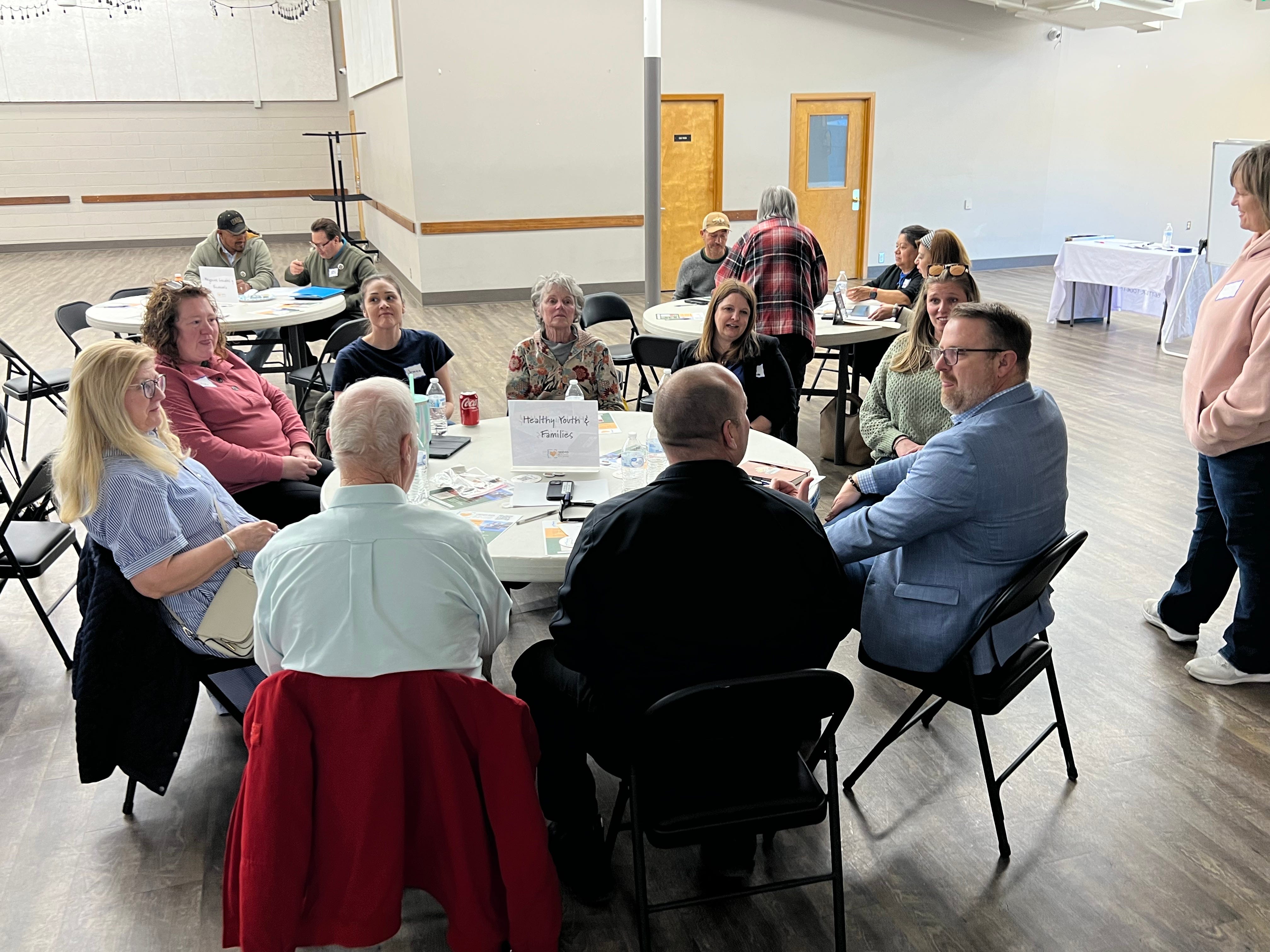
Last night I attended the Community Dinner and Action Planning Session with the 98848 Vision group. The goal of the evening was simple: bring people together to talk about where Quincy is headed and what priorities should guide the community over the next five years.
The organizers had been promoting the event for a couple weeks. It went out through their mailing list, the Chamber of Commerce email, and social media. We mentioned it on Good Morning Quincy WA NewsCast for several weeks.
When I left home to attend last night I was hoping to see the community center would be packed.
They even had dinner provided. The burritos from Rich’s Tacos were excellent, and free food usually helps bring people out.
The turnout ended up smaller than I expected (or hoped) and based on the leftovers smaller than the coordinators had anticipated.
That was personally disappointing, because the conversations that happened in that room were thoughtful and productive. People rolled up their sleeves and worked through real ideas that will influence the direction of our community for the next 5 years. So many important conversations were happening that would have benefitted from more voices for or community being involved
Those discussions will help shape priorities for Quincy in the coming years.
And that shapes the story of everyone who lives here.
What really stuck with me though, happened shortly after I left the meeting. About five minutes later I ran into a friend who is normally very active in the community. Someone who cares about what’s happening here and is usually involved. They had no idea the meeting was taking place.
That moment gave some credibility to the first theory. Sometimes people simply don’t know the opportunity is there.
One of the reasons we started Good Morning Quincy WA and WelcomeToQuincyWA.com is to help solve that problem. A community works better when people know what’s happening around them.

The second reason people don’t get involved is that many decisions feel distant.
City planning conversations. School facility discussions. Community initiatives. Those things can sound abstract when you hear about them in passing.
But they shape very real parts of life here. They influence the schools your kids attend, the parks your family uses, the businesses that open, the opportunities available for young people, and the direction Quincy grows over time.
They shape the setting where our stories unfold and the opportunities available to your story.
Will you play a game with me really quick? May I show you how close these decisions are for all of our stories. We’ll do this like some of those post I see on FaceBook
Give yourself 1 Point for everything you have used, Look forward too or have benefitted from:
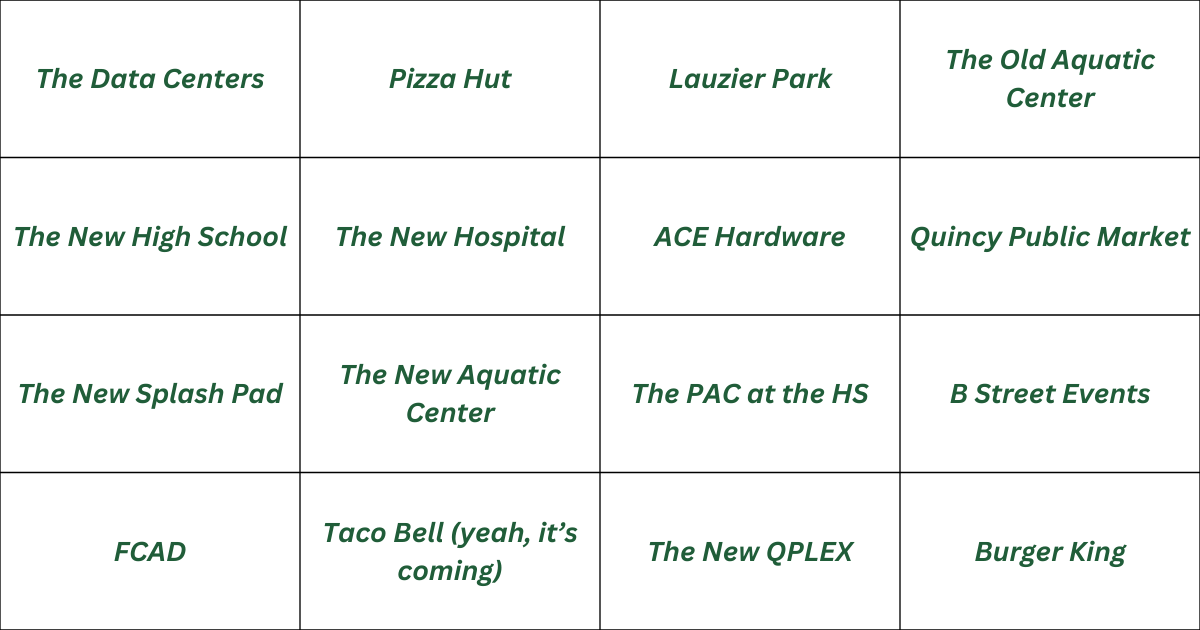
You can keep your count to yourself or share in the comments, but all of these things were originated in these groups and effect most of us. Honestly, if you live in and around the 98848 you had to give yourself a point for the Data Centers because they have impacted us all in positive ways that most people are not even aware of.
Even Akins Market has grown and changed incredibly in the 18 years I have lived here because of many of these decisions. It is all tied together.
There are likely things you would like to see in our community: amenities, services, businesses and opportunities.
All of those start with choosing to get involved at a community level that lets you start writing more of your own story by helping to write our collective story.

The third reason is probably the most human of all.
Most people only get involved when something finally bothers them enough to act.
It’s easy to take the path of least resistance. Life is busy. Work, kids, schedules, responsibilities. Community meetings rarely land at the top of the list and who cares as long as it doesn’t impact my daily life (read concerns)
I have been there, honestly, I probably have lived in that head space most of my life.
See if this sounds familiar to your story:
I have worked every day of my life since I was 16 (with obvious exceptions), 30 years later I have worked more 50 – 70 hours weeks than 40 hours weeks. I have worked a lot of holidays and weekends.
I am tired by the time my day ends. I just want to go home and see my family, play with my kids, maybe spend some time with a friend. There is lot to do around the house, kids have commitments I need to take them to, wife has comments and we are already running hard on the time between getting off work and sleep. On the rare occasion I have free time; because as you know being off work does not actually mean free time, I want to sit and have a minute to read or watch a movie.
The last thing I want is another commitment or “to do” encroaching on my already over loaded schedule and over stretched mind.
I bet you can relate, maybe not word for word or your story is stretched even harder but I am guessing you understand the feeling.
It is just simpler, cleaner and takes less out of you to go along with things that seem outside of your immediate scope of responsibility, I totally get that.
So people show up when they’re frustrated. When something surprises them. When a decision has already been made that they don’t like. But by that point the conversation has often been happening for months, sometimes years.
The story is already moving.
Changing it becomes much harder.
So now your story has been altered with something that feels like it was outside your control. That is frustrating, it makes you angry and uncomfortable, that is now part of your story too.
Sure you can get online and complain. You can yell and scream about it being unfair or no one consulted you. The victim card is a popular option, but is that part of your story, or do you want it to be.
I heard a wise man once say
When it comes to your health, you really only get two choices. Both of them cost you something. Both take time, effort, and money. The only real difference is when you decide to pay.
The first option is to invest in your health now. That means putting time and energy into the basics we all know matter—eating better, moving your body regularly, getting enough sleep, managing stress, and staying on top of preventive care. None of those things are flashy, and none of them happen overnight. But small, consistent choices stack up over time. They build resilience, help prevent chronic disease, and extend what doctors call your healthspan (not just how long you live, but how many of those years you actually live well.)
The second option is to wait and pay for it later. When we ignore our health for long enough, those small issues tend to grow into bigger ones—heart disease, diabetes, cancer, and other conditions that are often preventable with lifestyle changes earlier in life. And once you’re dealing with those, the cost goes way up. Medications, doctor visits, hospital stays, and time away from work add up quickly. The reality is that seven out of ten deaths in America are tied to lifestyle-related, preventable diseases, and more than half of personal bankruptcies in this country involve medical debt.
In other words, you’re going to invest in your health one way or another. The only real decision is whether you want to make those investments now, on your own terms, or later when the bill gets a lot bigger.
That was my long winded way of saying that writing the rest of your story works the same way, you can put into it up front, and the story will be something you got to help direct. If you wait until for the story to direct you, then how it influences your story will be something all together differently.
Don’t get me wrong, you DO NOT need to be in every board, committee, advisory group, and volunteer leadership role. You don’t have to be at all the school committees, nonprofit boards, planning groups, community events or anything close. You don’t have that kind of time, no one has that kind of time.
I will argue that everyone might consider finding one group, one issue, one board, one committee, one thing that you are interested in or are invested in what they are talking about. In that, you can start writing more of your story.
If everyone took on just one thing to be interested and engaged with, our story would be a lot cooler.

Quincy doesn’t run on institutions or organizations. It runs on neighbors. It runs on people who care enough to show up once in a while and say, “Hey, I think this place matters.”
The people you see on those boards and committees aren’t superheroes. They’re just people who decided at some point that this place is part of their story, and they wanted to help shape it.
And the reality is, the story of Quincy is still being written.
There are conversations happening right now about what the next five years of this community could look like. What we build. What we improve. What opportunities exist for the next generation growing up here.
Those decisions are going to shape the backdrop of our lives here for a long time.
You’re already part of the story whether you mean to be or not.
The only real question is whether you want a hand in writing it.
If that idea resonates with you, there’s another opportunity coming up. The 98848 Vision group is holding a follow-up conversation on Monday, April 13 at 5:30 PM (1730 hours) where the discussion continues and more community input is welcome.
You don’t have to have all the answers, I sure don’t!
You don’t have to commit to a board.
You just have to show up and be part of the conversation.
Because whether we think about it this way or not, the story of Quincy is still being written.
And you’re already part of it.