
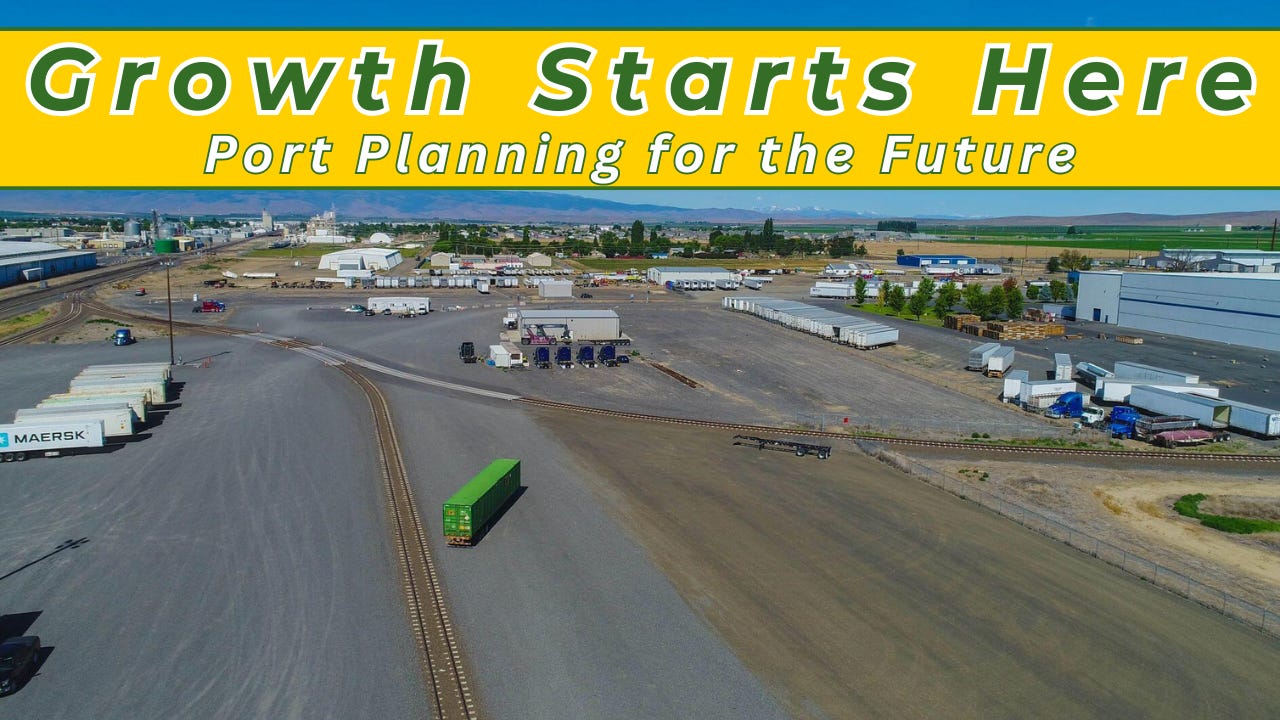
Growth in the 98848 rarely starts with a ribbon cutting.
Long before a new business announces its arrival, before a warehouse goes up, and before new jobs appear, there are years of planning, engineering, grant applications, land purchases, and infrastructure investments happening behind the scenes. Most residents never see that work taking place, but it often determines whether future opportunities come to Quincy or go somewhere else.
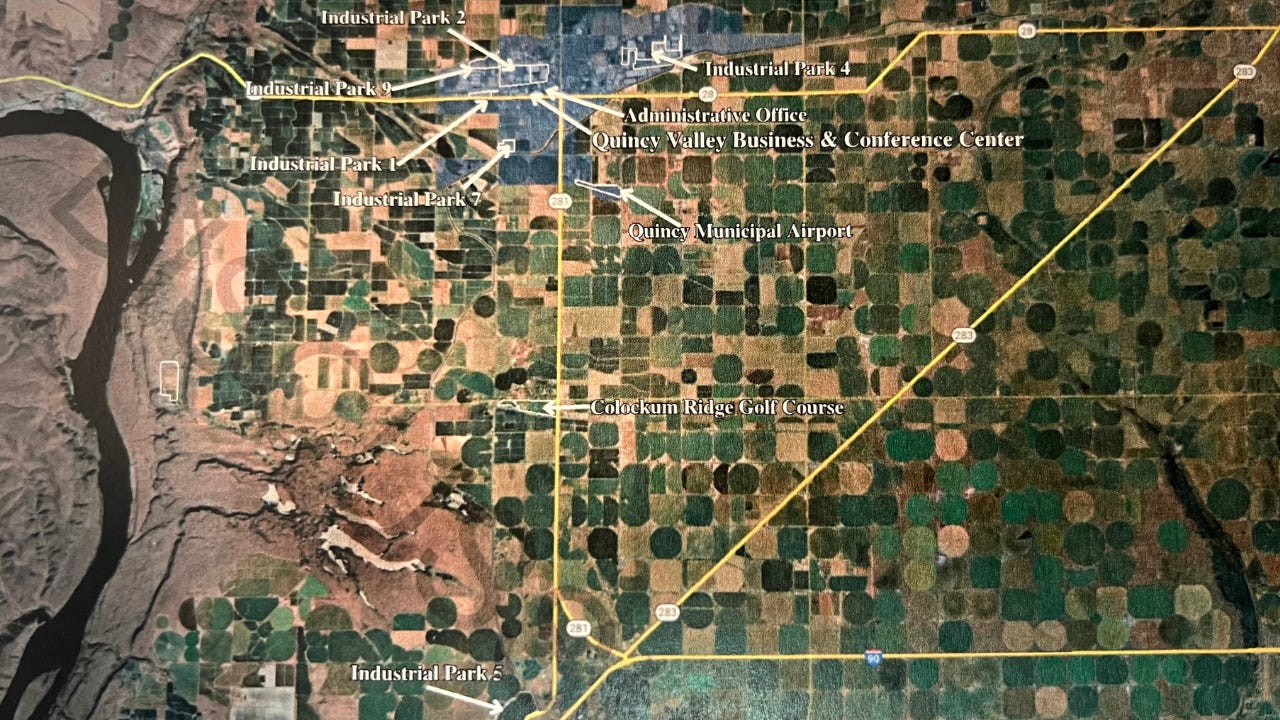
That reality is on full display in the Port of Quincy’s purposed Comprehensive Scheme of Harbor Improvements. While the document covers everything from industrial property management to recreation facilities, one theme appears repeatedly throughout its pages: the Port continues to invest heavily in transportation infrastructure, particularly rail, as part of its long-term vision for economic development.
TL;DR
The Port of Quincy continues to prioritize rail and intermodal transportation infrastructure.
Planning documents identify rail expansion as a major component of future economic development.
The Port has secured state and federal funding to support rail-related projects.
Port leaders view transportation infrastructure as a key factor in attracting and supporting future employers.
Many of the investments being made today are intended to support growth that may not occur for several years.

Building Growth Before Growth Arrives
One of the challenges facing any growing community is that infrastructure must often be built before it is needed.
Businesses considering a community for expansion do not simply look for available land. They examine transportation networks, utility capacity, workforce availability, and whether the infrastructure necessary to support their operations already exists.
The Port of Quincy has spent decades assembling industrial properties and developing transportation assets designed to attract employers to the region. The Port’s comprehensive scheme shows that effort continues today, with rail infrastructure remaining one of the organization’s major priorities.
The document identifies continued development of the Port’s intermodal rail system as a key focus moving forward. While rail projects may not generate the same public attention as a new business announcement, they often play a significant role in creating the conditions that make those announcements possible.
For industries involved in agriculture, food processing, manufacturing, and distribution, transportation costs can have a direct impact on business decisions. Reliable access to rail service can provide companies with an efficient way to move products throughout the Pacific Northwest and beyond.
Why Rail Matters in the Quincy Valley
For many residents, railroads are simply part of the landscape. Trains pass through town, crossings occasionally cause delays, and rail lines quietly operate in the background.
For businesses, rail represents something much larger.
Rail infrastructure allows large volumes of products to move efficiently across long distances. Agricultural commodities, processed foods, industrial materials, and manufactured goods can often be transported more economically by rail than by truck alone. This country was built on the backbone of the railroad, and freight rail remains one of the most cost-efficient ways to move large volumes of products across long distances today.
The Port’s planning documents reflect an understanding that transportation options remain one of the Quincy Valley’s competitive advantages. The Port has already invested heavily in developing intermodal facilities that connect truck and rail transportation. Those facilities help businesses move products through the region while creating opportunities for future industrial growth.
According to the comprehensive scheme, rail expansion projects have also attracted significant support from both state and federal funding programs. Those grants help bring outside dollars into the community while improving infrastructure that can serve local industries for decades.
The growth people see tomorrow often depends on infrastructure investments made years earlier.
Sidebar: What Is an Intermodal Facility?
I had to look it up when I started reporting on the Port of Quincy; so in case you don’t know. An intermodal facility is a transportation hub where freight can be transferred efficiently between different modes of transportation, most commonly rail and trucks.
Think of it as a connection point. Products may arrive by truck from a farm, food processor, warehouse, or manufacturer and then be loaded onto rail cars for shipment across the country. The process can also work in reverse, with goods arriving by rail and being transferred to trucks for local delivery.
Intermodal facilities help businesses move large quantities of products more efficiently while providing greater flexibility in how goods reach customers. For communities like Quincy, they can become an important economic development asset by giving local industries access to broader transportation networks and helping reduce transportation costs for companies moving products throughout the region.
Thinking Years Ahead
One of the more interesting aspects of the Port’s comprehensive scheme is its long-term perspective. Many of the projects outlined in the document extend years into the future. Some are currently underway, while others remain part of broader planning efforts designed to prepare the region for future opportunities.
That approach reflects the reality of economic development.
Major employers often evaluate communities years before making investment decisions. Infrastructure projects can take years to design, fund, permit, and construct. Communities that wait until demand arrives frequently find themselves competing against locations that prepared earlier.
The Port’s continued emphasis on rail infrastructure suggests local leaders believe transportation capacity will remain an important factor in attracting future investment to the Quincy Valley.
Rather than focusing solely on today’s needs, the Port of Quincy appears to be preparing for opportunities that may not fully materialize until years from now.
The Infrastructure Most People Never Notice
Infrastructure is rarely exciting.
Most people do not drive past a rail project and think about economic development. Few residents spend their evenings reading transportation plans or capital facilities documents. Yet many of the opportunities communities enjoy later are the result of infrastructure decisions made years earlier.
Roads, water systems, sewer systems, power infrastructure, and transportation networks often operate quietly in the background. When they work well, people hardly notice them. When they are missing, growth becomes much more difficult.
The Port’s comprehensive scheme serves as a reminder that much of economic development happens long before the public sees the results. While new buildings and business announcements tend to capture headlines, the infrastructure supporting those investments often tells a deeper story about where a community believes its future lies.
What This Means to You
For residents of the 98848, rail expansion may not feel like an issue that directly affects daily life. It was not long ago that I would have said exactly that.
However, transportation infrastructure influences many of the things that do matter to families and businesses. It affects economic competitiveness, job creation, industrial growth, and the ability of local companies to reach customers efficiently.
The investments outlined in the Port’s planning documents are intended to strengthen the foundation that supports the regional economy. While the benefits may not always be immediately visible, they can influence future employment opportunities, business growth, and tax revenues that help support public services.
In many ways, infrastructure planning is an investment in possibilities. It creates options for future employers and gives communities the ability to compete for opportunities when they arise.
Looking Beyond Today’s Construction Projects
The next time a major employer announces an expansion, a new company chooses Quincy, or another industrial project breaks ground, it may be worth remembering that those moments rarely happen overnight.
They are often the result of years of preparation, planning, and investment that most people never see. This is the work that shaped our lives in massive ways here, the work that brought the Data Centers 20 years ago. That conversation started a decade before we every saw anyone break ground.
The Port of Quincy appears to understand that reality. Its latest planning documents show an organization continuing to invest in the infrastructure that supports long-term growth, even when those investments happen quietly and largely outside public view. While residents of the 98848 often see the finished product of economic development, the Port’s rail strategy offers a glimpse into the work that happens long before the ribbon is cut.
