
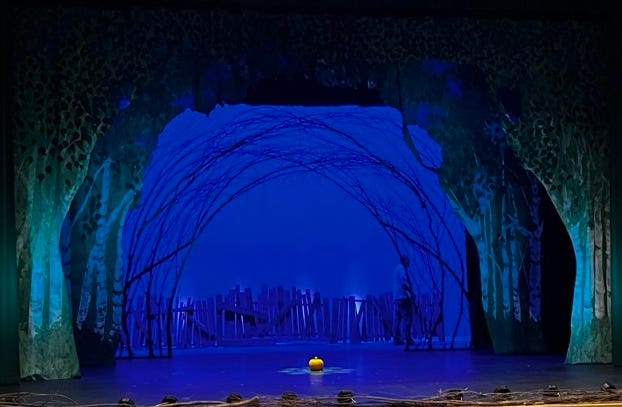
The lights were low, the stage was framed by twisted branches, and a handful of gravestones stood quietly in the shadows. A single pumpkin sat near the center of the stage, almost innocently, while the lighting cast an unsettling glow across the Quincy High School Performing Arts Center. There wasn’t a single actor on stage yet, but something about the scene suggested that the 98848 was about to take a trip somewhere decidedly less comfortable than our last visit to the theater. Whatever was waiting beyond those curtains, I was fairly certain we weren’t in Bomont, Utah, anymore.
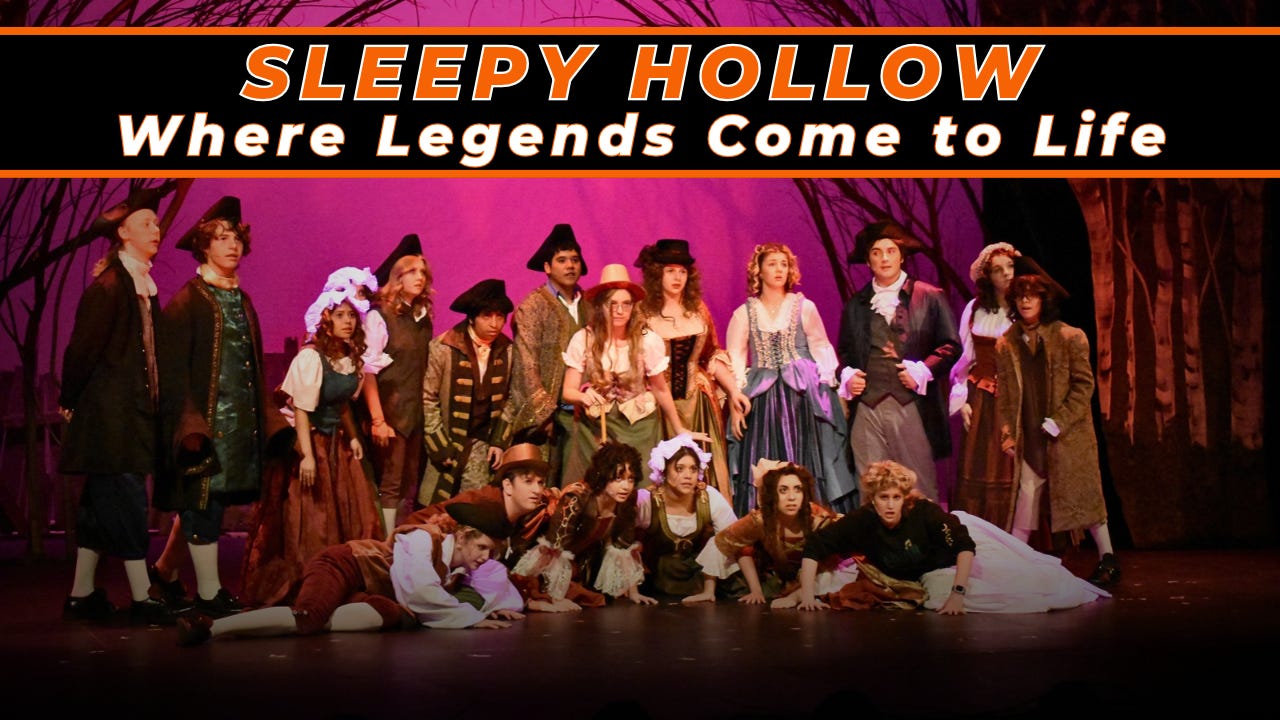
Last spring, we all kicked off our Sunday shoes and got a little Footloose. We laughed, we cheered, sang along, and since then, a few more people have even learned the official line dance. This fall, Quincy High School Theatre is taking us in a very different direction, just as Halloween wraps up for the year, with Washington Irving’s The Legend of Sleepy Hollow.
Most of us grew up with some form of the tale. Your experience might have been Disney’s The Legend of Sleepy Hollow, with Bing Crosby’s iconic voice as the narrator, Tim Burton’s Sleepy Hollow, led by the equally iconic Johnny Depp, or even the television series Sleepy Hollow, which I thoroughly enjoyed. Some people’s exposure might have been limited to hunting the Headless Horseman during World of Warcraft’s annual Halloween event.
I would wager very few of us have actually read the original work by Washington Irving. Irving wrote a spooky, humorous folktale about Ichabod Crane, a superstitious schoolteacher competing with Brom Bones for Katrina Van Tassel’s affection. I mention this because, whatever your point of reference, you should expect a different experience. From the television series to Burton’s adaptation and even Disney, we’ve seen wildly different interpretations of this classic tale, all of which were freely and loosely adapted, to say the least.
QHS Theatre is here to take us on a different exploration of this classic tale, with less headless mercenary and more Ichabod Crane.
TL;DR
The Production: Quincy High School Theatre presents The Legend of Sleepy Hollow, opening Friday, November 6, at the Quincy High School Performing Arts Center.
The Story: A theatrical adaptation that leans into Washington Irving’s original combination of superstition, romance, comedy, and mystery rather than the Hollywood versions of the Headless Horseman.
The Cast: Jarrod Miller stars as Ichabod Crane, alongside Owen Yeates as Brom Bones and freshman Emma Yeates as Katrina Van Tassel.
Behind the Scenes: Approximately 35 students have invested an estimated 150 hours each, representing more than 5,000 combined hours of preparation.
Performances: November 6, 7, 12, and 13 at 7 p.m., with 2 p.m. matinees November 7 and 14.
Tickets: $15 adults, $10 seniors and military, $7 students, and $5 students with ASB cards.
Why It Matters: This production showcases the remarkable talent, dedication, and creativity of our local students while offering the community an entertaining evening at the theater.
A Different Kind of Darkness
Director Haliey M. Weber was kind enough to let me sneak into an early dress rehearsal this week, giving me an opportunity to experience the production before opening night. I wanted to see what these students had been working on and share a little of that experience with our community.
I was already aware of the production because my daughter is part of the backstage crew. Like many parents involved in school activities, I’ve become familiar with the routine of practices, late-night pickups, and listening to stories about what happened during rehearsals. However, I also recognize that many people around town may not realize these performances are happening unless they have a student directly involved. That is unfortunate because our high school theater productions deserve a much larger audience.
Walking into the PAC, I was immediately struck by the stage itself. After the colorful energy of Footloose and the theatrical adventures of Puffs, this production announced itself as something entirely different before anyone spoke a word. The scenery was relatively simple. Twisted branches framed the stage, small gravestones added a touch of uneasiness, and carefully chosen lighting created an atmosphere that felt almost unsettling. Nothing was particularly elaborate, but every element worked together to establish the world we were about to enter.
I wasn’t entirely sure what to expect. I’ve always enjoyed the legend of the Headless Horseman, but my familiarity with the story comes largely from its many adaptations. The school’s early promotional material mentioned comedy and romance, two elements that aren’t necessarily what come to mind when most people think about Sleepy Hollow.
I knew this wasn’t going to be Tim Burton’s interpretation, and I certainly wasn’t expecting Hollywood-level special effects. What I didn’t anticipate was just how effectively the students would draw me into a story that was both familiar and surprisingly different.

The opening moments are unusual. Rather than immediately introducing the main characters and launching into the action, the production begins building its story through a combination of dialogue, atmosphere, and narration. At first, I found myself trying to determine exactly what I was watching. Different characters delivered narration from various places on stage, sometimes speaking from the shadows while the audience’s attention was directed elsewhere. It took a few minutes to settle into the rhythm, but once I did, I found the approach fascinating.
This was not the straightforward ghost story I had expected. And, for anyone wondering, this is a play, not a musical. I had temporarily forgotten that QHS traditionally produces a play and a musical each school year. After last spring’s Footloose, I suppose part of me was still expecting someone to break into song. Instead, the students used their voices in an entirely different way.
An Ichabod Crane You May Not Recognize
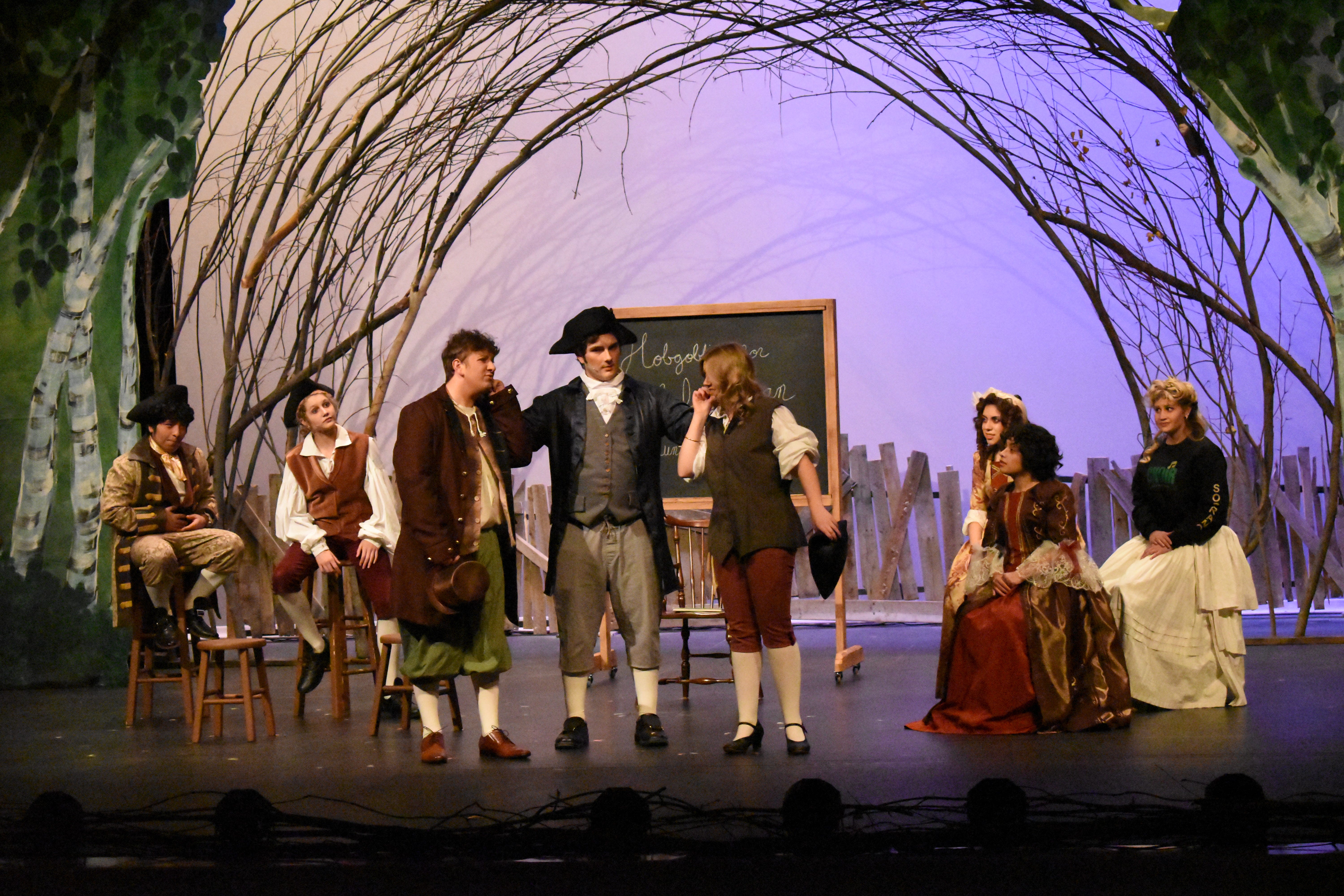
At the center of the story is Ichabod Crane, brought to life by Jarrod Miller. Although Jarrod is no stranger to QHS Theatre, this was my first opportunity to watch him perform on stage. He typically participates in the school’s plays while working with the technical crew during musicals. I missed last year’s production of Puffs, so I was particularly interested in seeing him tackle such a recognizable character.
And Ichabod Crane is quite a character. Forget the more heroic or serious interpretations you may remember from television and film. This Ichabod is an awkward, superstitious schoolteacher who doesn’t quite fit into the community around him. He’s a dreamer, constantly imagining a grander future for himself, while frequently struggling to navigate the people and situations directly in front of him.
He also likes to sound intelligent. Unfortunately for Ichabod, his enthusiasm for impressive vocabulary occasionally exceeds his understanding of the words he’s using. This becomes a recurring joke throughout the production, with the townspeople frequently questioning his peculiar choices of language.
It’s a wonderfully ridiculous character trait, and Jarrod handles it with a straight face. That may sound simple, but delivering deliberately absurd dialogue without breaking character takes considerable discipline. Jarrod manages to portray Ichabod’s awkwardness and inflated sense of sophistication while maintaining the character’s sincerity. He doesn’t play Ichabod as someone trying to be funny. He plays him as someone who takes himself quite seriously, which makes the humor work.
Opposite him is Owen Yeates as Brom Bones, a familiar face for anyone who attended last spring’s Footloose. Owen played Ren McCormack in that production, bringing considerable energy and personality to the lead role. Watching him step into Brom Bones was particularly interesting because the character requires a very different approach.
Where Ren was the rebellious outsider challenging the rules of a small town, Brom is firmly established within his community. He’s confident, competitive, used to being the center of attention for the ladies and determined to win Katrina Van Tassel’s affection. It’s an opportunity for Owen to demonstrate a different side of his acting ability, and he embraces the change.
Rounding out the central trio is freshman Emma Yeates as Katrina Van Tassel. Emma may be familiar to audiences who have followed Quincy Valley Allied Arts productions, but this marks her first year with QHS Theatre. She steps into a significant role alongside more experienced high school performers and delivers an impressive performance.
Watching younger students step into these productions is always exciting because we get to see the beginning of what may become several years of growth on our local stage. Emma certainly makes a strong first impression.
The Gossips, the Dreamer, and an Unexpected Dog
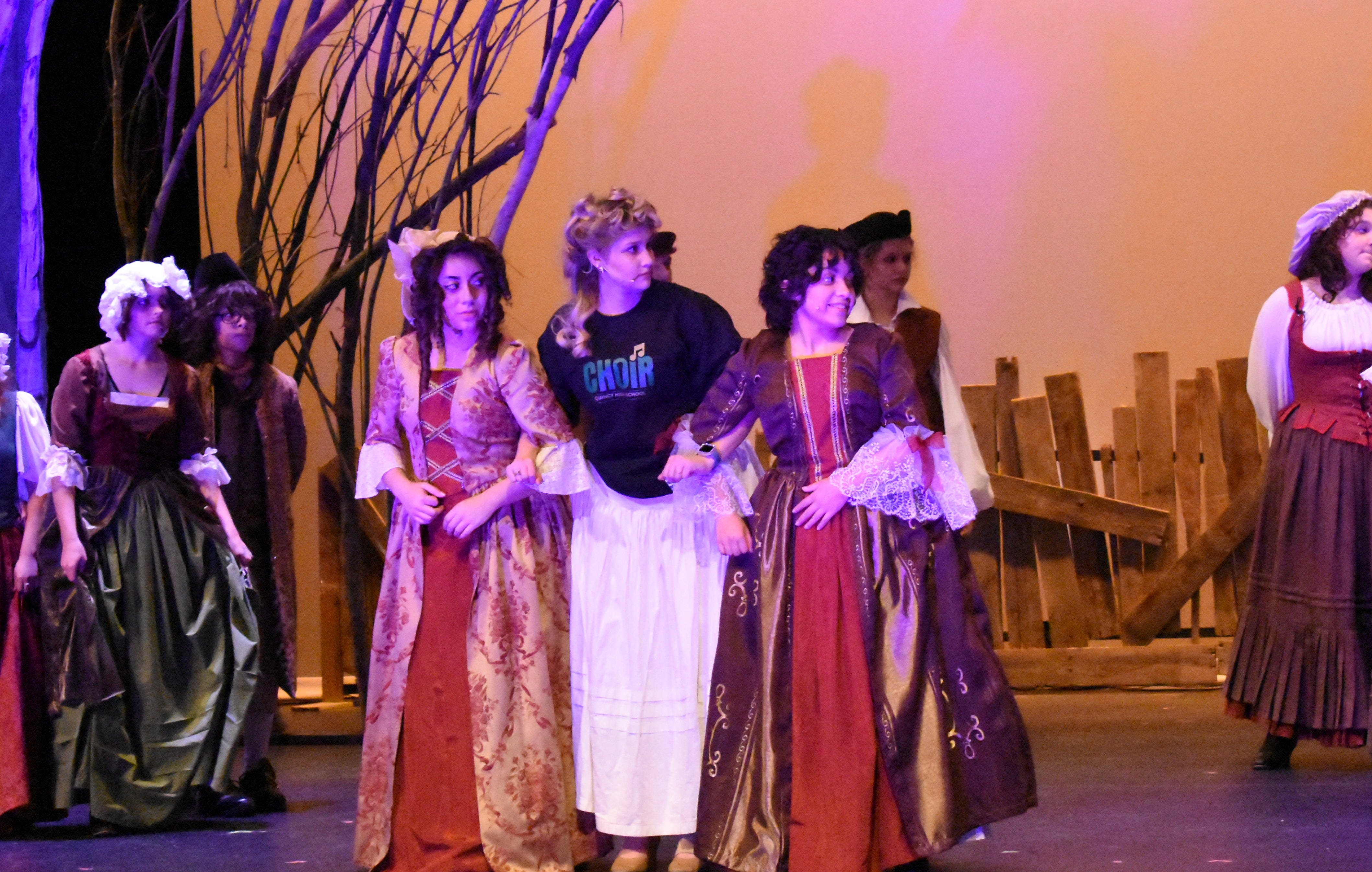
One of the most interesting elements of this adaptation is how the story is told. Four town gossips, played by Belle Rollins, Jasmine Vazquez Navarro, Summer Hobson, and Ruby Gonzalez, serve as a kind of living narration throughout the production.
They aren’t simply characters who occasionally comment on the action. They help move the story forward, providing context, explaining relationships, and guiding the audience through events that might otherwise be difficult to follow. Sometimes they stand in the shadows, delivering lines while other characters occupy the spotlight. At other moments, the action pauses to allow them to explain what is happening.
It reminded me of the Muses in Disney’s Hercules, who provide commentary and help carry the audience through the story. We’ve seen similar storytelling techniques in recent local productions, including Joseph and the Amazing Technicolor Dreamcoat and elements of Footloose.
What makes this production particularly interesting is that the gossips aren’t the only characters who occasionally serve that purpose. Other townspeople step into narration as well, creating a storytelling style that feels appropriate for a village where everyone knows everyone else’s business. And there is certainly plenty of business to know in Sleepy Hollow.
Another fascinating element involves Ichabod’s fascination with Cotton Mather, the historical Puritan minister associated with the Salem witch trials. In this production, Cotton Mather, played by Michael Pascual, becomes something of a voice inside Ichabod’s head.

Rather than simply referencing the historical figure, the production places him physically on stage, where he interacts with Ichabod while remaining invisible to everyone else. It’s an entertaining theatrical choice that offers another glimpse into Ichabod’s unusual mind. Is he simply an imaginative dreamer? Is his obsession with superstition beginning to overwhelm his judgment? Or is there something else happening beneath the surface? The production leaves plenty of room for audiences to enjoy the oddity of these interactions.
Then there’s Brom Bones’ dog. Played by young Laurel Yeates, who isn’t yet a high school student, the dog provides some wonderfully unexpected moments of humor.
There’s something undeniably entertaining about watching a small child in a dog costume faithfully follow Brom around the stage, occasionally offering an enthusiastic bark. It shouldn’t necessarily work in a production filled with eerie lighting and ghost stories, but somehow it fits perfectly. In fact, that unexpected combination of humor and uneasiness became one of my favorite things about the entire evening.
I Wasn’t Expecting to Laugh This Much
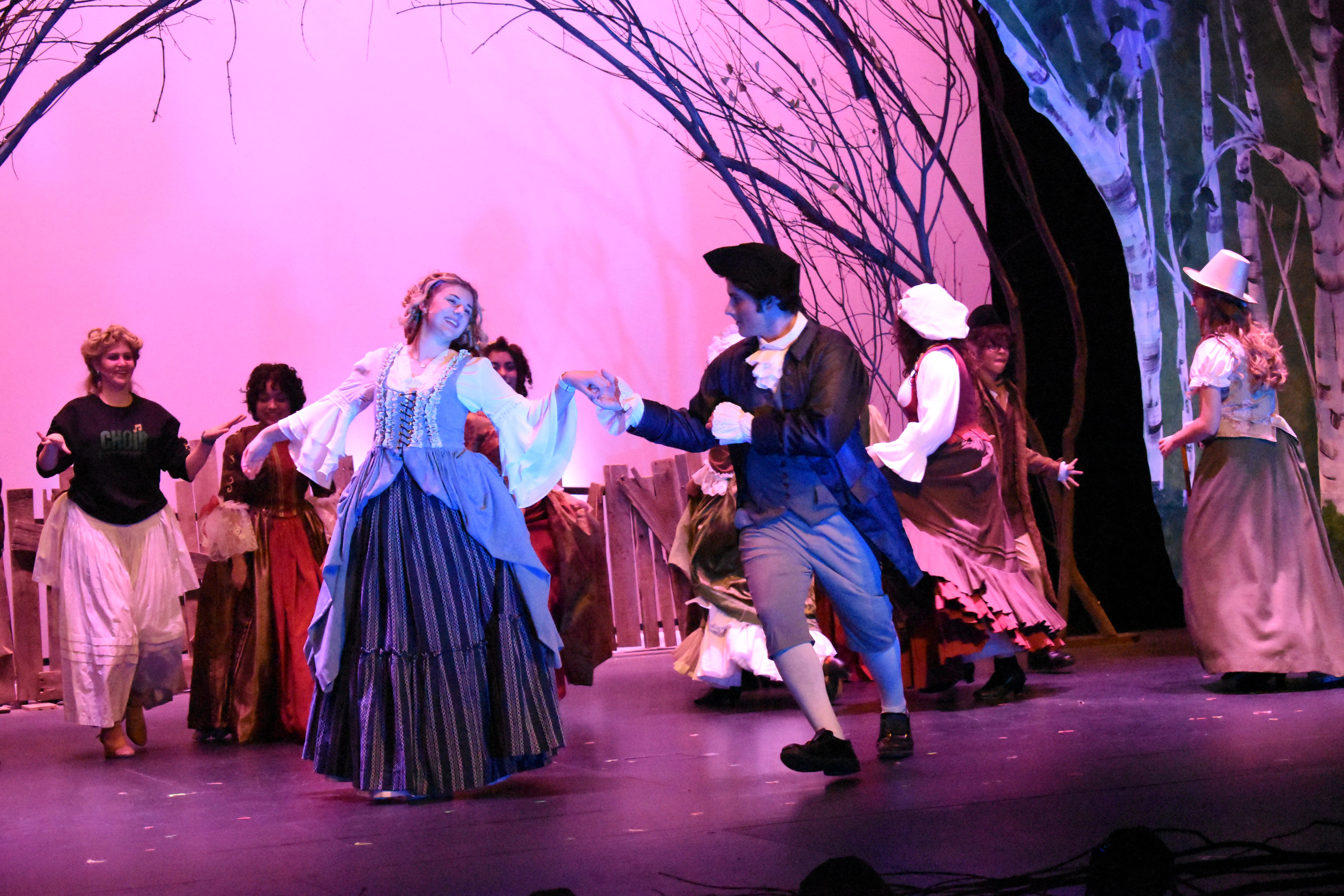
I went into The Legend of Sleepy Hollow expecting atmosphere, mystery, and perhaps a few chills. I did not expect to laugh out loud nearly as often as I did.
The production moves comfortably between genuinely unsettling moments and wonderfully silly humor. At times, the cast builds an atmosphere so effectively that you can almost feel the hair standing up on the back of your neck. Then, without warning, someone delivers a joke that completely catches you off guard.
Some of the humor is clever and subtle. Other moments venture directly into what I would affectionately describe as dad-joke territory. And I mean that as a compliment.
There were several moments when I found myself laughing while trying to take photographs. Considering I was essentially the only audience member beyond the directors and production staff, I’m fairly certain my reactions were noticeable.
To the students’ credit, they never broke character. They had been warned that I would be moving around the auditorium taking pictures, and I spent much of the rehearsal changing positions to capture different scenes. Even when I was close to the stage, they remained focused on their performances.
That level of concentration is impressive, particularly when you’re still working through the final stages of rehearsal. I won’t spoil the jokes or the moments that caught me off guard, but I suspect I’ll be laughing about gunpowder for quite some time. You’ll understand when you see the show.
Bringing the Headless Horseman to Life
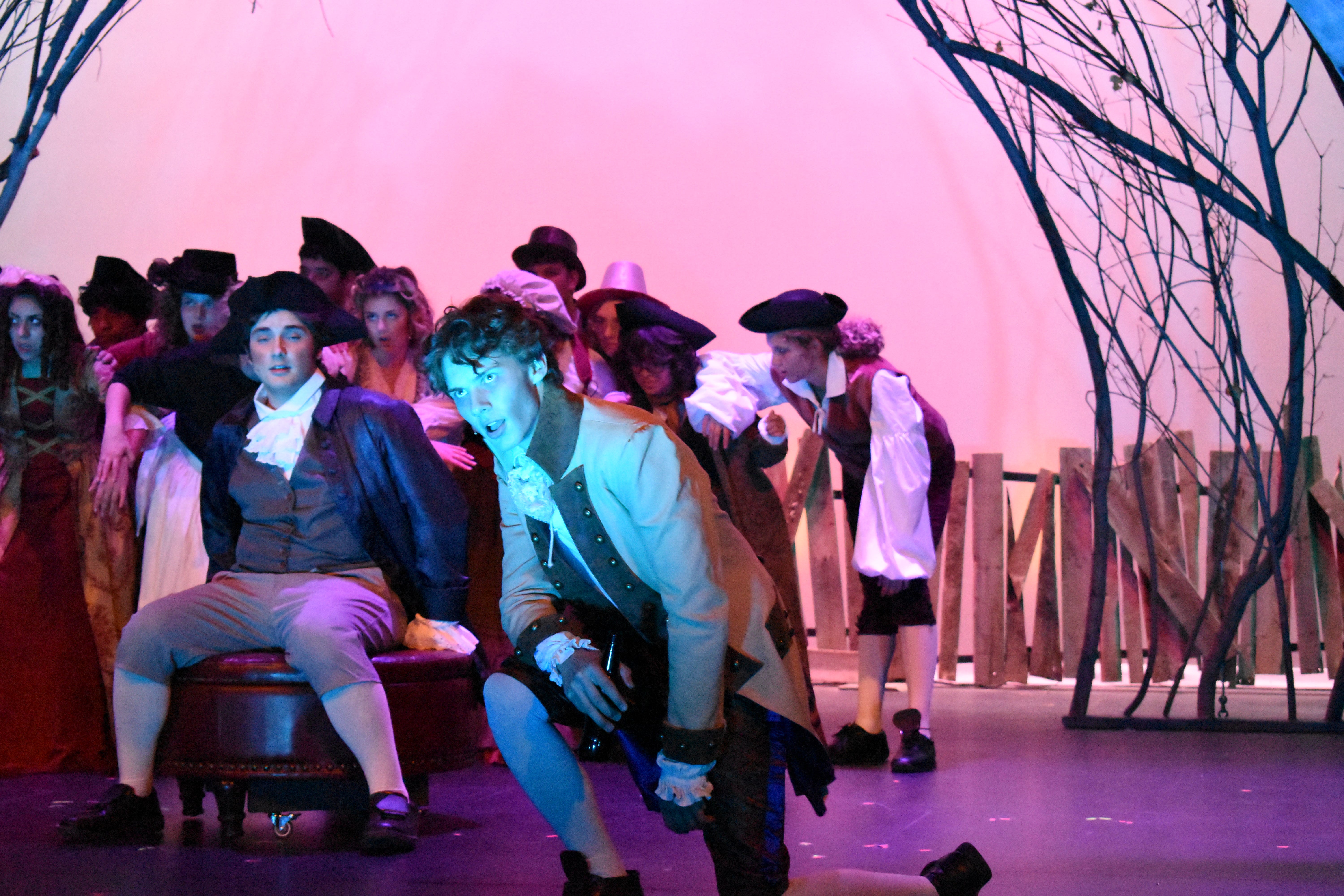
Of course, you can’t tell the story of Sleepy Hollow without addressing its most famous resident. The Headless Horseman.
For many people, the Horseman is the story. He’s the terrifying figure riding through the darkness, the legendary villain who has inspired generations of films, television programs, and Halloween decorations.
But in Irving’s original tale, the Horseman is part of a much larger story about superstition, jealousy, imagination, and the peculiar residents of Sleepy Hollow. This production embraces that broader story rather than turning the Horseman into its central character.
That presents an interesting challenge. How do you bring one of American literature’s most recognizable supernatural figures to life on a high school stage without the resources of a major film studio? The answer, apparently, is creativity.
I’m not going to reveal exactly how the production handles the Horseman because I don’t want to spoil the experience. However, I will say that the combination of lighting, carefully chosen props, and simple theatrical effects works remarkably well.
The production understands something important about suspense: sometimes what you imagine is more powerful than what you’re shown. The students and technical team create a genuine sense of dread around the Horseman’s presence without relying on elaborate machinery or excessive effects.
There are moments when the tension becomes surprisingly intense, particularly as the characters recount the legend. This isn’t a horror production filled with gore, violence, or jump scares. Most audiences will find it comfortably entertaining, although parents of very young children or children who are particularly sensitive to frightening scenes may want to exercise some discretion.
The intensity comes primarily from the performances and atmosphere rather than graphic content. And that makes the achievement all the more impressive.
The Magic You Never See
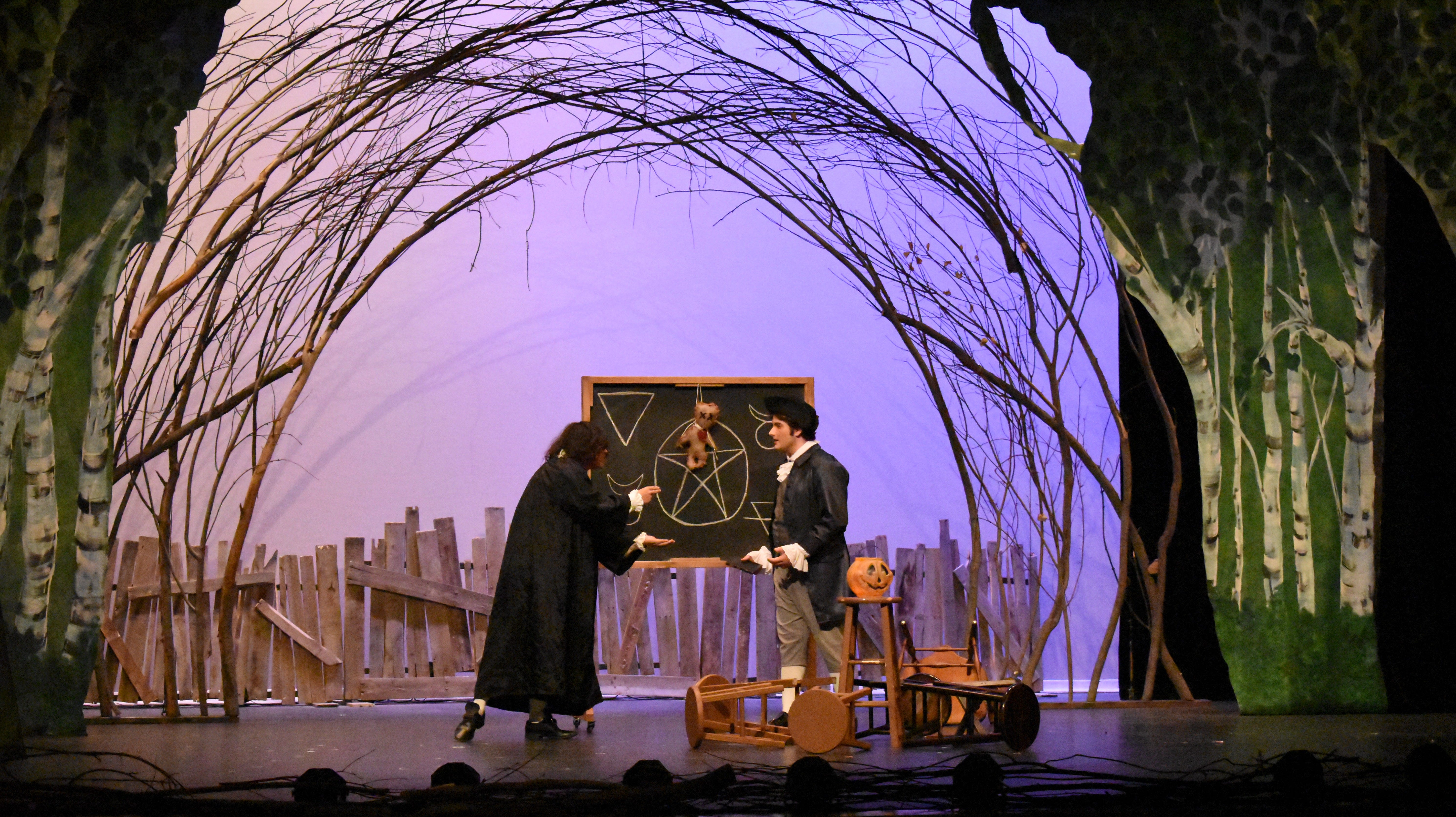
One of the greatest compliments you can give a theatrical production is that you forget how much work is happening behind the scenes. The scenery changes, the lights shift, the sound fills the auditorium, and the characters move through their world while the audience remains focused on the story.
When everything works together, it looks effortless. Of course, anyone who has ever participated in theater knows that effortless is usually the result of an extraordinary amount of effort.
The set for Sleepy Hollow is relatively minimalist, relying on a consistent backdrop of branches and natural elements while using lighting and carefully selected props to establish different locations. Simple wooden benches and a wooden pulpit help create the appropriate historical setting without cluttering the stage.
The lighting does much of the heavy lifting, shifting the mood from ordinary village life to moments of uneasiness and suspense. The sound design is equally clever.
Rather than relying entirely on recorded effects, the production frequently uses the students’ own voices to create eerie background sounds. Several performers contribute haunting vocal tones that blend into the atmosphere and help establish the mood. It’s a simple technique, but an effective one.
The costumes deserve particular recognition. Period clothing can be challenging because it must look appropriate to the setting while allowing actors to move comfortably through their performances. The costume team has done an outstanding job transforming these students into believable residents of an earlier era.

The clothing helps establish the characters’ personalities and makes it easier to forget that we’re watching teenagers portray adults from another time.
Costume designers Cassi Nelson and Susan Lybbert worked alongside a dedicated team of seamstresses, including Brenda Welch, Deyanira Brizuela, Diane Nelson, Karla Lopez Brizuela, Krista Miller, Kristina Hobson, Mickie Yeates, and Tanya Rollins. Their work is visible throughout the production, even if the countless hours spent creating and preparing those costumes remain hidden from the audience.
Director Haliey M. Weber leads the production, supported by Assistant Director and Choreographer Elyse Goslin, Music Director Kylie Youngren, and Technical Director Bryce Goslin.
Behind the scenes, student Stage Manager Valeria Valladolid Solis helps keep the production moving, while Lighting Designer and Operator Elizabella Perez, Sound Operator Nikita Rajamanikandan, and Props Lead Khiana Zapien handle essential technical responsibilities.
Student seamstresses Isabella Navarro and Nataly Santillan contribute to the costuming work, while the backstage run crew includes Abby Dowlen, Cassandra Santillan, Fernando Vidrio Ramirez, Jocelyn Bishop, and Lily Lambert. These are the students audiences rarely see, but without them, there is no show.
During my visit, I had an opportunity to speak briefly with Technical Director Bryce Goslin about some of the lighting decisions, set design, and technical challenges they were still working through.
This was an early dress rehearsal, so there were still adjustments to be made. A few microphone issues needed attention, lighting cues were being refined, and occasionally an actor needed an extra moment to find a line. Those are normal parts of the rehearsal process, and they offered a valuable reminder of just how much coordination goes into preparing a production for opening night.
The finished performance is only the visible portion of a much larger undertaking. And when you begin looking at the numbers, that undertaking becomes even more impressive.
More Than 5,000 Hours Behind the Curtain
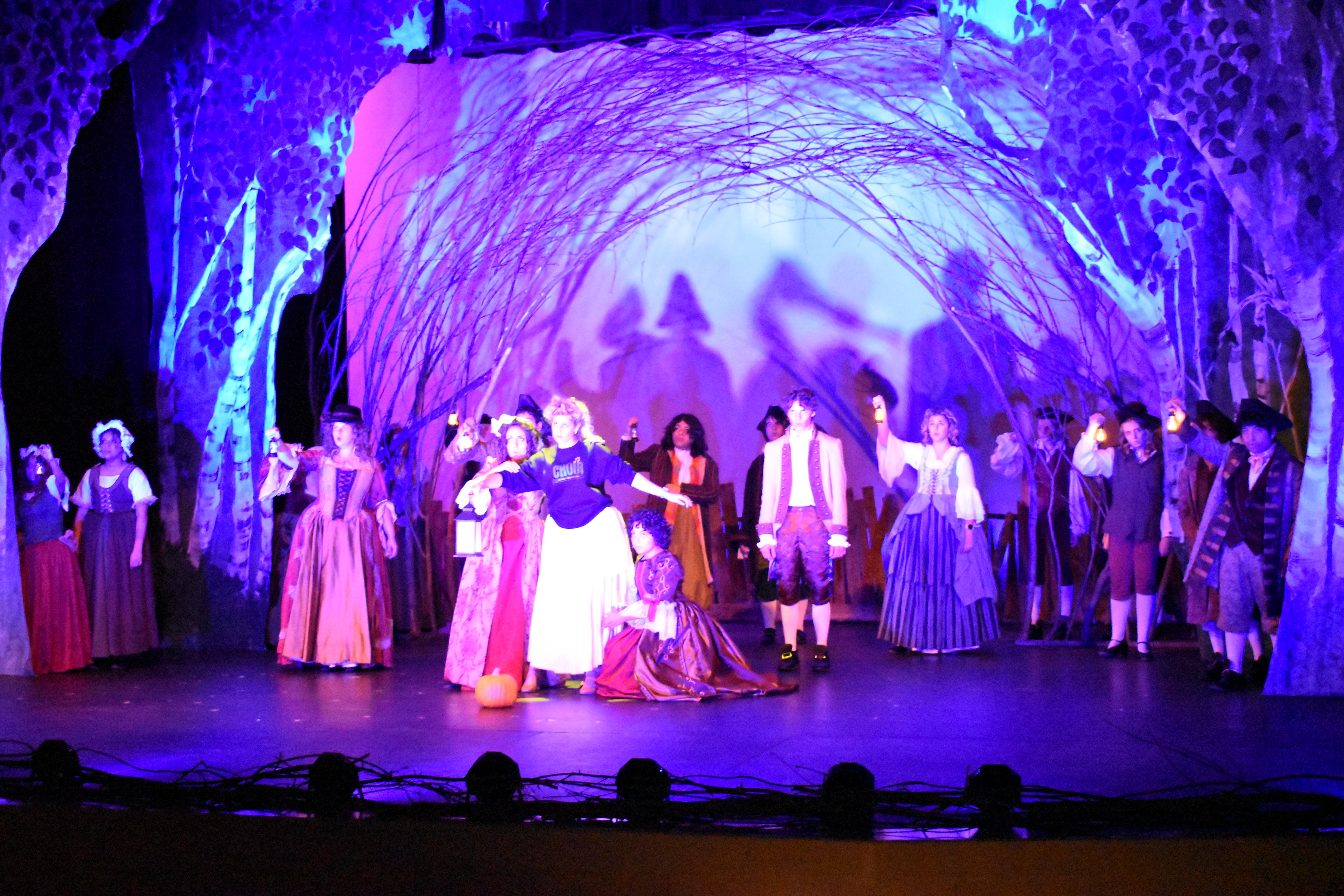
Let’s talk about something that might surprise you. Based on the number of students involved and the rehearsal schedule, I estimate that approximately 35 students have devoted roughly 150 hours each to preparing this production.
That’s more than 5,000 combined hours of student effort. Five thousand hours.
Those are estimates rather than official production totals, but even allowing for some variation, the scale of the commitment is remarkable. And that doesn’t include the countless additional hours contributed by directors, production staff, costume volunteers, and the many adults helping make the show possible.
Think about what that represents. These students are attending classes, completing homework, participating in other activities, and managing the normal responsibilities of high school life. Many are also involved in choir, band, athletics, or other school and community programs.
Some of them have been involved in theater for years. Others are just beginning. Yet they continue showing up, learning lines, practicing scenes, building sets, preparing costumes, managing equipment, and working together toward a common goal.
I witnessed something during the rehearsal that illustrated their commitment better than any statistic could. After completing a full run-through of the production, Director Weber asked the students whether they wanted to take a break before reviewing notes and making adjustments.
They didn’t. They were ready to keep working.
They had just finished performing the entire show, and rather than stepping away, they wanted to address the remaining details and continue improving. Opening night was approaching, and they knew there was still work to be done.
That enthusiasm says something about the students involved. It also says something about the environment their teachers and directors have created.
A Small Town With Remarkable Talent
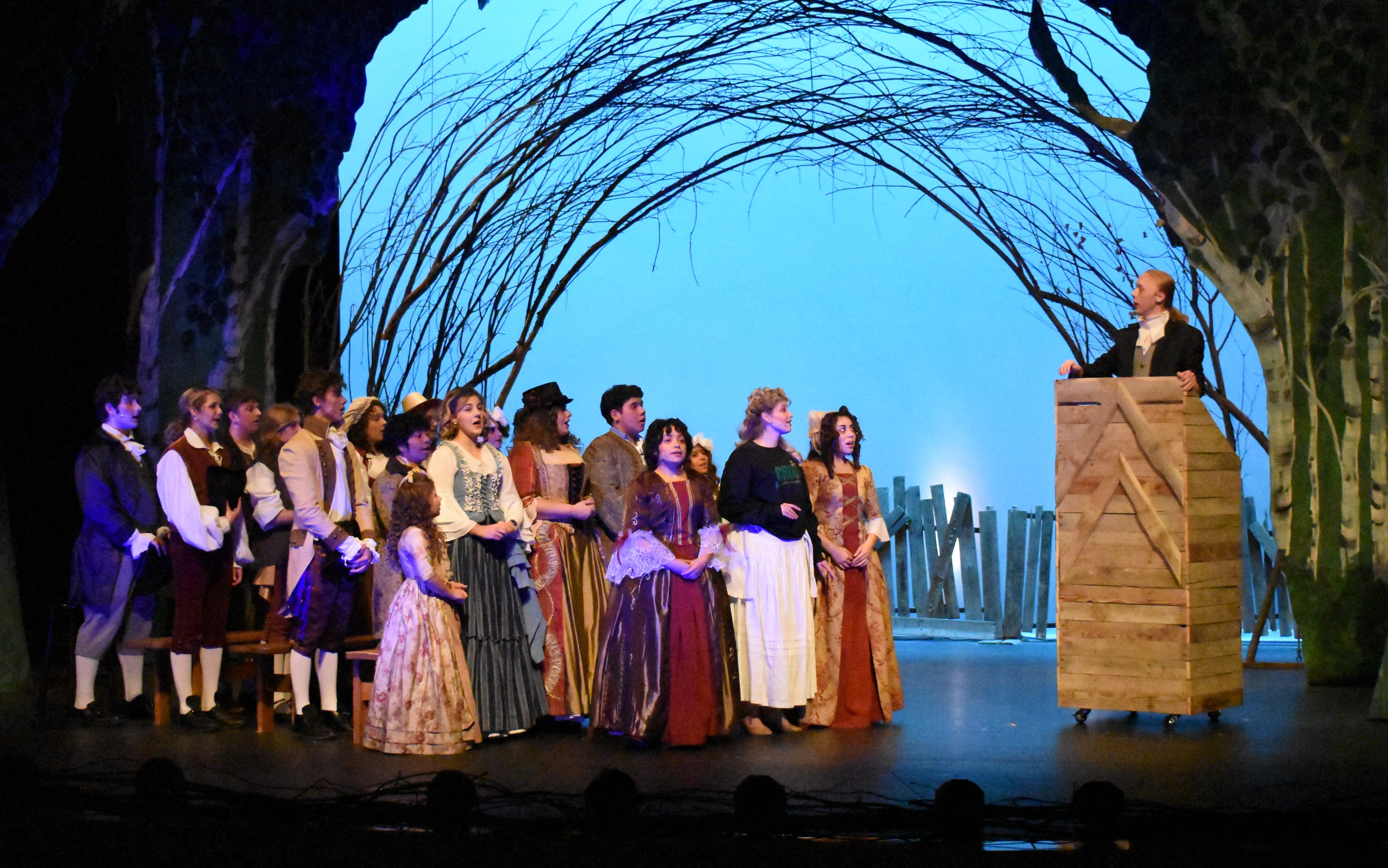
One of the things I enjoy most about attending local theater productions is watching familiar faces grow into new roles. Students who appeared in supporting parts a year ago return with greater confidence. Young performers who once seemed nervous become comfortable commanding the stage. Students who previously worked behind the scenes step into the spotlight, while others discover that their talents are best used backstage.
This year’s production includes a wonderful mixture of experienced performers and newer faces. Owen Yeates and Ruby Gonzalez were prominent performers in last spring’s Footloose, while students such as Belle Rollins, Jorge Salas-Ruiz, Sawyer Golay, Silas Hankins, Aubrey Miller, Annalise Coyle, and Daniel Sanchez will be familiar to many who regularly attend local performing arts events.
At the same time, younger students are stepping into the program and beginning their own theatrical journeys. What impressed me most was how naturally the cast worked together.
The story takes place in a small community where families know one another, everyone seems aware of everyone else’s affairs, and the social relationships between residents shape much of what happens. The students make that environment believable.
Their interactions feel comfortable and familiar, creating the impression of people who have lived alongside one another for years. That kind of chemistry is difficult to manufacture, but it becomes easier to understand when you consider how much time these students spend working together.
They aren’t simply memorizing lines. They’re learning to trust one another. They’re learning when to speak, when to listen, when to react, and when to allow someone else to carry a scene. They’re also learning how to recover when something doesn’t go exactly as planned.
Those skills matter far beyond the theater.
What This Means to You
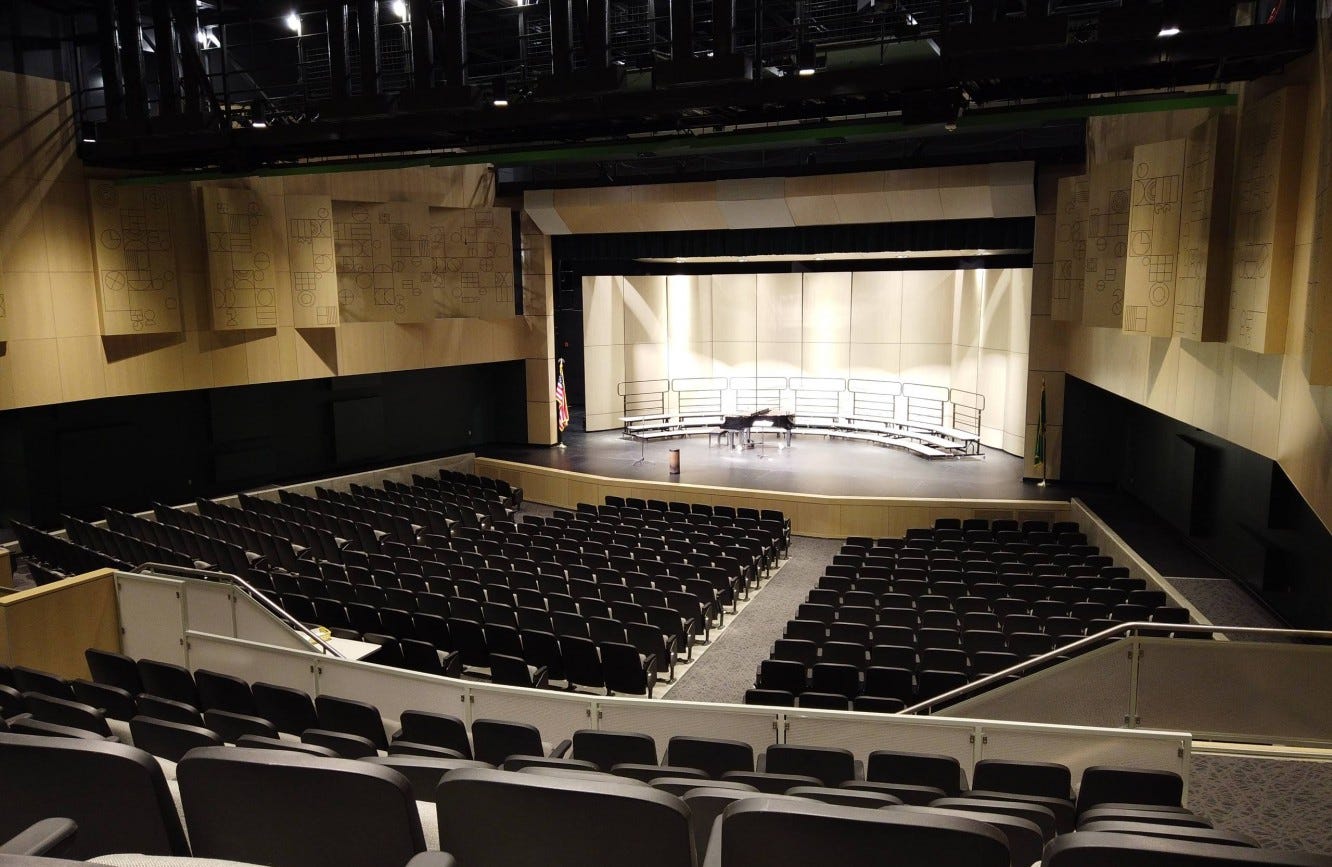
Quincy is a community that takes considerable pride in its students, particularly when they’re representing our schools through athletics, academics, and other competitive programs. We celebrate victories, recognize accomplishments, and show up to support young people who are working hard to achieve something. Our performing arts students deserve that same attention.
I’ve lived in communities across the country, and I can tell you that having a performing arts program and facility of this caliber in a town our size is something worth appreciating.
Years ago, our community made a significant investment in creating a Performing Arts Center capable of hosting productions like this. That investment wasn’t simply about constructing a building with comfortable seats, professional lighting, and a large stage. It was an investment in opportunity.
When a student steps onto that stage for the first time, they’re learning to stand in front of an audience and be heard. When a young person takes responsibility for lighting cues, sound equipment, or backstage operations, they’re learning that other people depend on them to do their job correctly.
When students spend months working toward opening night, they’re learning how to manage their time, solve problems, accept criticism, and continue improving even when they’re tired. Those lessons don’t disappear when the curtain closes.
They follow these young people into college, careers, relationships, and eventually leadership roles throughout our communities.
The student who learns to speak confidently in front of an audience may someday become a business owner presenting an idea to investors. The student managing a complicated backstage transition may become the employee who knows how to coordinate a team under pressure.
The young person who discovers the courage to audition for a role may find it a little easier to take another important risk later in life. These aren’t abstract benefits. They’re practical skills that help build capable, confident adults. And our community benefits from having young people who are learning them.

There’s another side to this that deserves consideration. You don’t have to be a parent, grandparent, or relative of someone in the production to attend. You don’t even have to know a single student involved.
The Quincy High School Performing Arts Center is one of our community’s entertainment resources, and these productions offer an opportunity to enjoy live theater without leaving town. Think about how often we talk about wanting more things to do locally. We want activities for families, opportunities for date nights, and entertainment that doesn’t require driving to Wenatchee or Moses Lake. Well, here’s one.
For the price of a theater ticket, you can enjoy an entertaining evening, support local students, and help demonstrate that our community values the opportunities we’ve worked to create. Attendance matters because an audience is part of the theatrical experience. The laughter, applause, and reactions from a full auditorium are something these students cannot recreate during rehearsal.
And when our young people look out into the audience and see neighbors, business owners, community leaders, and residents who came simply because they wanted to enjoy the show, that sends a message. It tells them their work matters beyond their immediate circle of family and friends. That’s the kind of community support that helps programs continue growing.
Your Invitation to Sleepy Hollow

Quincy High School Theatre’s production of The Legend of Sleepy Hollow opens Friday, November 6, at the Quincy High School Performing Arts Center.
Performances are scheduled for November 6, 7, 12, and 13 at 7 p.m., with afternoon matinees on November 7 and 14 at 2 p.m.
Tickets are $15 for adults, $10 for seniors and military personnel, $7 for students, and $5 for students with ASB cards.
Tickets can be purchased through the ticketing link on the QHS Theatre Facebook page, through NCW Tickets, or directly from students involved in the production.
For families considering bringing younger children, the show contains some intense and suspenseful moments surrounding the legend of the Headless Horseman. While it doesn’t rely on graphic violence or traditional horror effects, parents of children who are easily frightened should consider their child’s comfort level.
For everyone else, expect an entertaining combination of humor, mystery, romance, and a few wonderfully unsettling moments. And don’t be surprised if you find yourself laughing more than you expected.
When the Curtain Falls
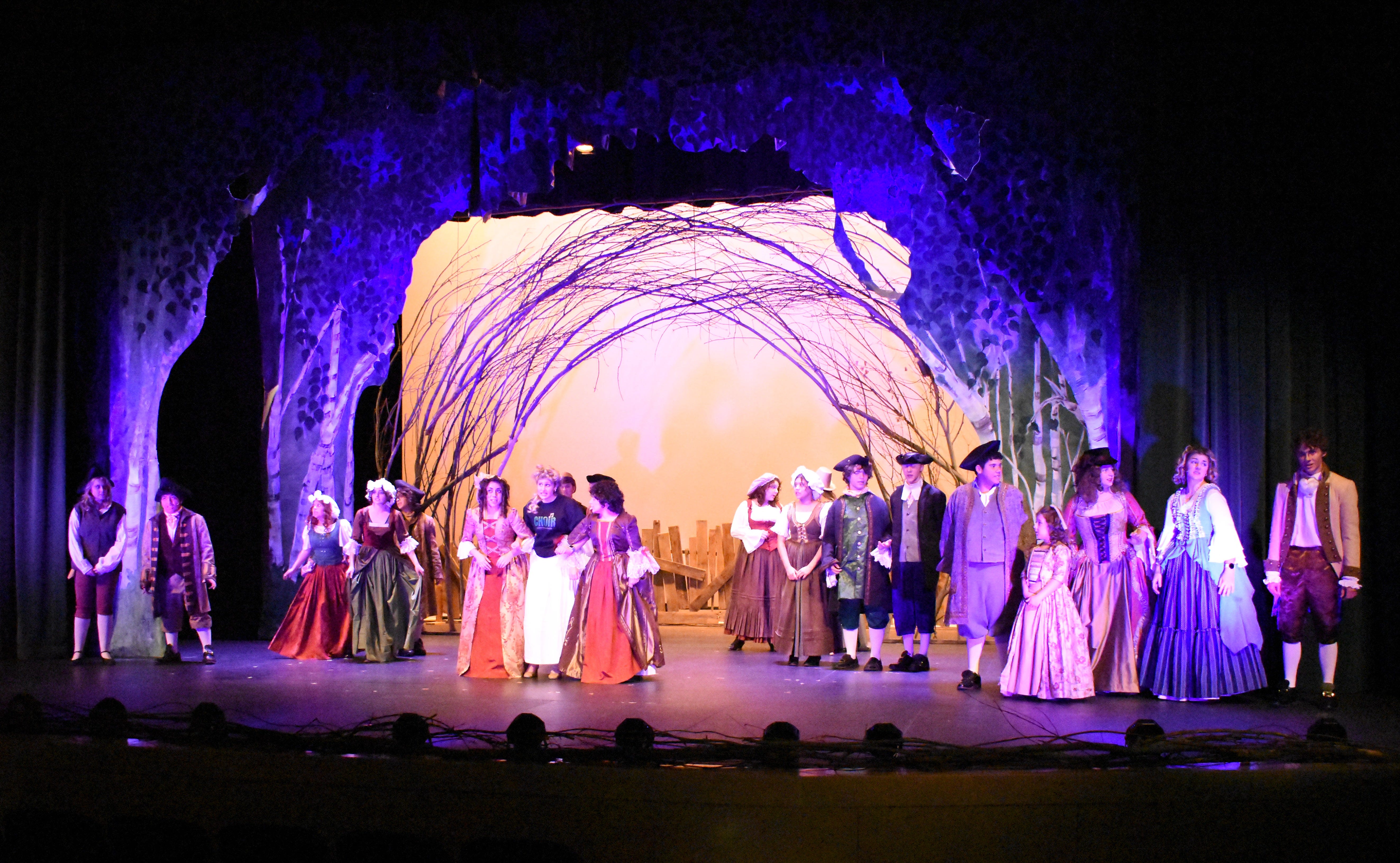
When I left the Performing Arts Center after the rehearsal, I was smiling. I was also thinking about how difficult it can be to find the right words to describe something you genuinely appreciate.
I’ve been involved in theater myself, both during school and as an adult, and I’ve spent years working with young people in different capacities. I understand how much courage it takes to step onto a stage and how much work goes into making a production appear effortless.
Yet even with that background, I continue to be impressed by what our local students accomplish. I spent much of the evening replaying different moments in my head, thinking about the performances, the technical creativity, the humor, and the extraordinary amount of work happening behind the scenes.
I also found myself looking forward to opening night, when I can return to the PAC, put down the camera, and simply enjoy the show.
There’s something special about watching young people discover what they’re capable of doing. Our students are still figuring out who they are, what they enjoy, and where their lives might take them. They’re balancing academics, activities, friendships, responsibilities, and all the uncertainty that comes with growing up.
Yet here they are, putting thousands of hours into creating something for the rest of us to enjoy. Sometimes I think we underestimate just how much our teenagers contribute to the community around them.
We see them at school, on athletic fields, working in local businesses, volunteering at events, and participating in programs throughout the 98848. It’s easy to focus on what they’re learning and overlook what they’re already accomplishing.
This production is another reminder that our young people have remarkable talent, creativity, and potential.
So when the lights dim at the Quincy High School Performing Arts Center this weekend, take a moment to appreciate everything that happened before the first actor stepped onto the stage. Remember the rehearsals, the late nights, the costumes, the technical challenges, and the students who kept working even when they were offered a break.
Then settle into your seat and enjoy the story. After all, there’s a certain schoolteacher waiting to introduce you to the peculiar residents of Sleepy Hollow, and somewhere beyond those twisted branches and gravestones, a legendary horseman may be waiting as well.
Last spring, our students invited the 98848 to kick off its Sunday shoes and dance. This fall, they’re inviting us into the shadows. And judging by what I saw during rehearsal, it’s an invitation worth accepting.