
In a community like the 98848, school is never just school. It is where our kids learn, yes, but it is also where they begin to imagine what kind of life might be possible for them after graduation. At the May 12 Quincy School Board meeting, the CTE report gave us a clear look at something much bigger than a list of classes. Quincy School District is not simply offering electives. It is building a bridge between classrooms, local employers, college opportunities, trades, certifications, and real careers — and that is something every parent and community member should understand.
TL;DR
Quincy’s Career and Technical Education program now serves the majority of high school students.
Local business, industry, healthcare, agriculture, technology, and skilled trade leaders help guide the programs.
CTE advisory boards help shape curriculum, equipment purchases, certifications, internships, and work-based learning.
The district is using CTE to connect students to both college and career pathways.
This is not the old “vocational track” model many adults remember from 20 years ago.
With national reading and math scores still struggling, Quincy is trying to make education more connected, practical, and relevant.
For the 98848, this is about workforce, opportunity, student confidence, and keeping more pathways close to home.
This Is Not the CTE Many Adults Remember
For a lot of parents, “CTE” may still sound like the old vocational model from 20 years ago. Back then, many schools treated career or technical classes as a separate track. College-bound students went one direction. Trade-bound students went another. Sometimes, whether anyone said it out loud or not, one path was treated as more valuable than the other.
That is not what Quincy School District described at this meeting.
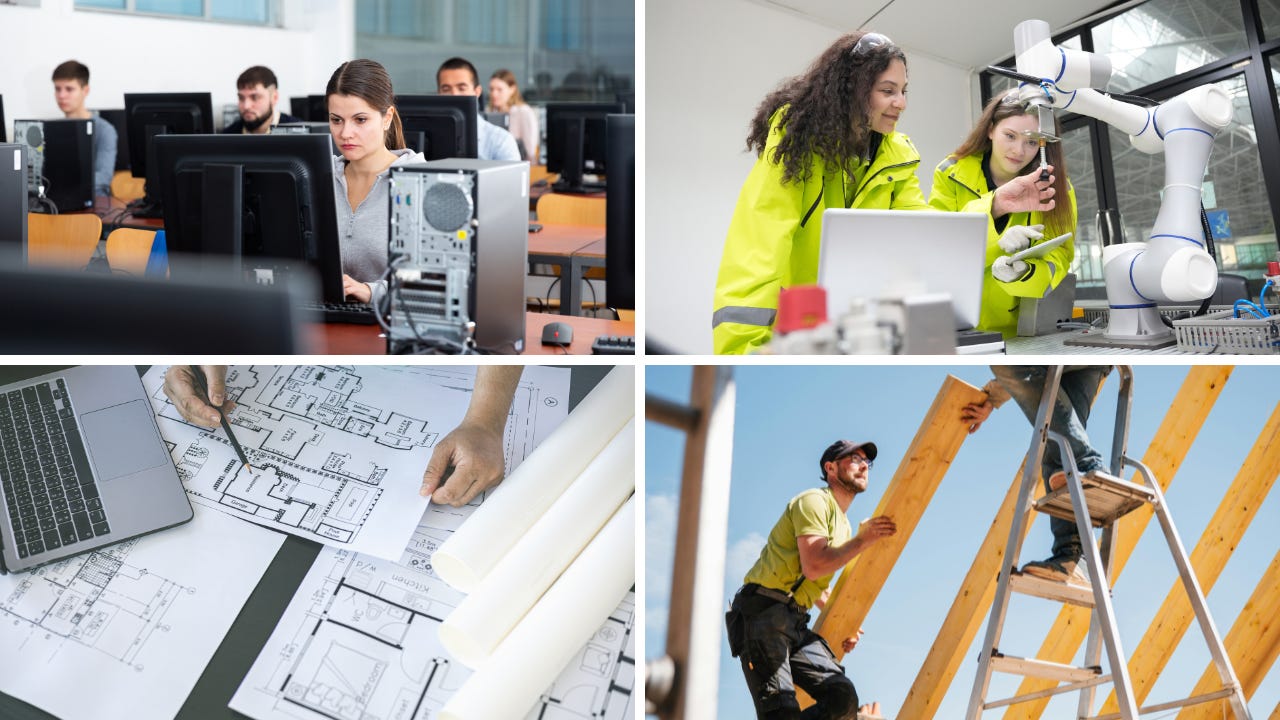
The current CTE model is much more integrated. It includes agriculture, business, marketing, IT, family and consumer science, ASL, health sciences, skilled trades, STEM, fire science, photo/video, certifications, dual credit, industry partnerships, work-site learning, and college planning. The district’s own four-year CTE summary says the program addresses 16 OSPI criteria, including student access, safety, instructional materials, leadership, advisory involvement, career guidance, work-based learning, program evaluation, and professional development.
Local Industry Is Helping Shape the Classroom
One of the most important pieces of the report was the role of CTE advisory boards. These are not just names on a page. These boards include local and regional people from agriculture, healthcare, construction, business, technology, education, EMS, and skilled trades.
The district presentation explains that advisory boards bring local industry professionals, community members, and educators together so students are learning current workplace skills. These boards are required to meet at least three times per year and help review goals, equipment, certifications, work-based learning, and program direction.
That matters because it means Quincy students are not only learning from textbooks. They are learning through programs being shaped by people who actually work in the fields students may enter one day.
The Classroom Is Being Connected to the Real World
During the presentation, CTE Director Elizabeth Averill and CTE Coordinator Ross Kondo talked about business site tours, guest speakers, mock interviews, resume preparation, internships, job shadows, and work experience. The district presentation lists those same areas as core ways advisory board members serve students, including business partnerships and work-based learning activities.
That is a big shift from education that only asks, “Did you pass the class?”
This model asks bigger questions. Can students see the job? Can they understand the pathway? Can they meet someone in that career? Can they earn a certification? Can they visit the workplace? Can they graduate with a clearer idea of what comes next?
For parents in the 98848, that should matter. Because one of the hardest things for students is not always ability. Sometimes it is visibility. They cannot pursue what they have never seen.
CTE Is Becoming a College Strategy Too
One of the most important points from the meeting was that Quincy’s CTE work is not being treated as an alternative to college. It is being used as part of the college and career system.
The four-year plan summary lists dual credit opportunities through Big Bend Community College, Wenatchee Valley College, and Central Washington University in business, marketing, IT, FACSE, ASL, health sciences, skilled trades, and STEM areas. It also lists certifications such as MOS, CompTIA A+, HubSpot, ServSafe, CPR/First Aid, AHA Certification, EMT/EMS credentials, YouScience Precision Exams, and others across different programs.
That means students may be able to leave high school with more than a diploma. Some may leave with credits, certifications, experience, contacts, and a clearer plan.
That is not less academic. Done well, it may actually make academics matter more because students can see where those skills connect to life after school.
How This Compares to Traditional Education Models
This is where the larger education conversation gets interesting. The traditional model many adults grew up with was built around general academics first, career application later. Students took math, English, science, and history, and then after graduation they were expected to figure out how those subjects connected to work, college, family, finances, and adulthood.
But nationally, the old model is under pressure. NAEP, often called The Nation’s Report Card, remains one of the clearest national snapshots of student performance. In 2024, national eighth-grade reading scores were lower than both 2022 and 2019 levels, and Washington’s 2024 eighth-grade math score was lower than its 2003 score.
That does not mean academics do not matter. It means schools are trying to figure out how to make learning stick, especially after years of pandemic disruption, attendance struggles, changing technology, and widening gaps between students.
So the question is fair: Is a more career-connected model better than the traditional classroom-first model?
The honest answer is that it depends on how well it is done. CTE should never become a shortcut around strong reading, writing, math, and science instruction. Students still need those foundations. But when career-connected learning is tied to strong academics, it can give students context. It can answer the question many kids silently ask: “When am I ever going to use this?”
That may be one of the strongest arguments for the direction Quincy is taking.

This Is Also About Keeping Opportunity Close to Home
At the meeting, district leaders talked about wanting students to have access to opportunities here instead of needing to leave the area for technical programs somewhere else. That is a very real rural issue. Bigger communities often have more programs, more exposure, more employers, and more visible pathways. Smaller communities have to build those connections more intentionally.
That is why the advisory board list matters. It includes people and organizations tied to agriculture, Microsoft, Sabey Data Center, WorkSource Central Basin, Confluence Health, Columbia EMS, Quincy Hardware & Lumber, local farms, colleges, healthcare, and more.
That is not just a school list. That is a community network.
And if that network is used well, it can help students see that opportunity does not only exist “somewhere else.” Some of it is already here. Some of it is nearby. Some of it can be built.
What This Means to You
For parents, this means it is worth paying closer attention to your student’s course choices, certifications, field trips, dual credit options, and work-based learning opportunities. CTE is not just “extra.” It may be one of the most practical parts of your child’s education.
For employers, this means the district is actively looking for community partners who can help students understand real work. That may be through advisory boards, guest speaking, tours, internships, job shadows, mock interviews, or simply helping educators understand what skills are needed now.
For the community, this means Quincy School District is trying to connect education to the future of the 98848 in a more direct way. This is about students, but it is also about workforce, local business, healthcare, agriculture, technology, trades, and whether young people can see a future that includes them.
Building More Than Classrooms in the 98848
When you step back and look at the full CTE presentation, this was never really about electives, certifications, or even career pathways alone.
It was about whether schools are preparing students for the world they are actually walking into.
For years, education often operated on a delayed timeline. Students sat through classes for twelve years with the promise that someday the lessons would connect to real life. Sometimes they did. Sometimes they did not. What Quincy School District is trying to build now feels different. The goal is to connect students to careers, college opportunities, industry leaders, certifications, and hands-on experiences while they are still inside the classroom.
That does not replace strong academics. It gives students context for why those academics matter.
And in a community like the 98848, where agriculture, healthcare, trades, technology, logistics, and industry all shape daily life, that connection matters. Because when students can actually see the pathways in front of them, they are more likely to believe those opportunities belong to them too.
That may end up being one of the most important things quietly happening inside Quincy schools right now.