
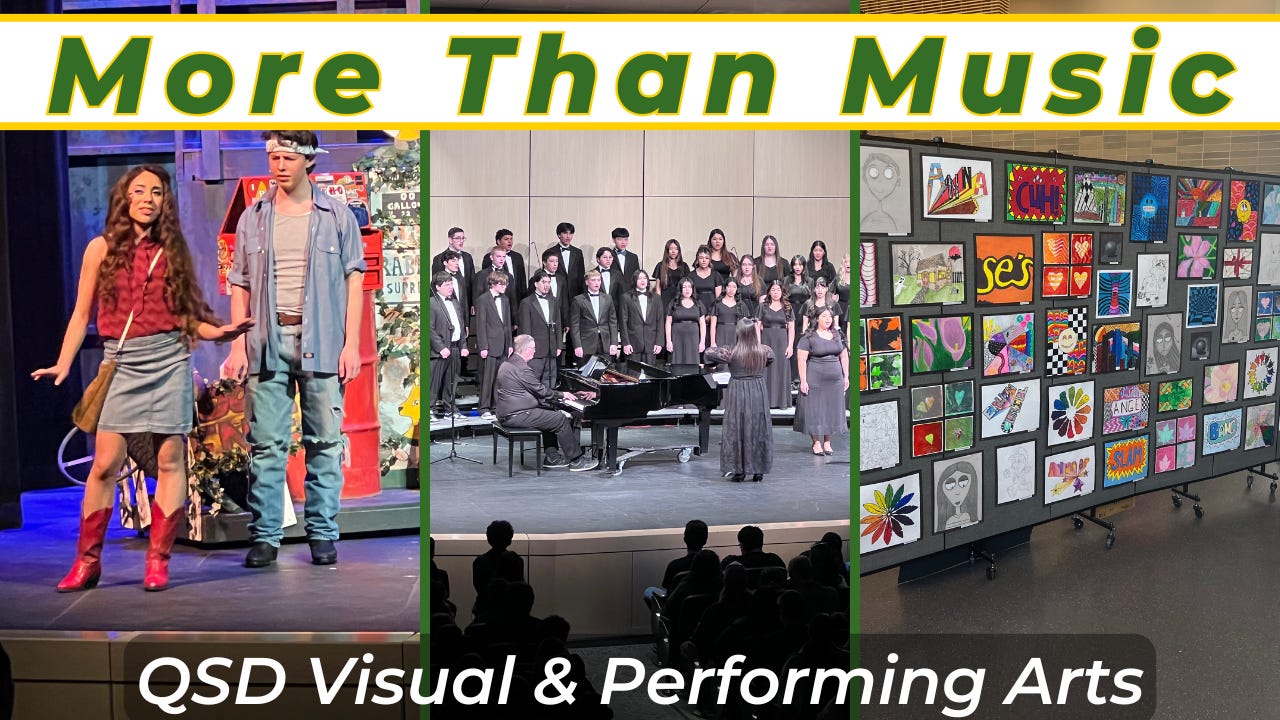
For many people around the 98848, the arts are something they notice a few nights a year. They see the marching band leading a parade, attend a school musical, admire student artwork at Arts Night, or hear the choir perform during the holidays. Those moments are easy to appreciate, but they only reveal the finished performance. During the Quincy School Board meeting on June 23, district leaders pulled back the curtain to show what has quietly been built over the past decade: a comprehensive K-12 visual and performing arts program that has become one of the district’s strongest examples of long-term planning, community support and student opportunity.
TL;DR
Quincy School District now offers visual and performing arts opportunities from transitional kindergarten through high school.
The district employs 11 arts educators this year and will add a 12th next school year.
Student participation and achievements continue to grow across music, theater and visual arts.
New middle school theater programming and expanded high school band offerings are planned for next year.
District leaders say the success reflects years of intentional collaboration rather than rapid growth.
Program leaders hope more community members attend performances and experience the programs firsthand.
Building Something Bigger Than Performances
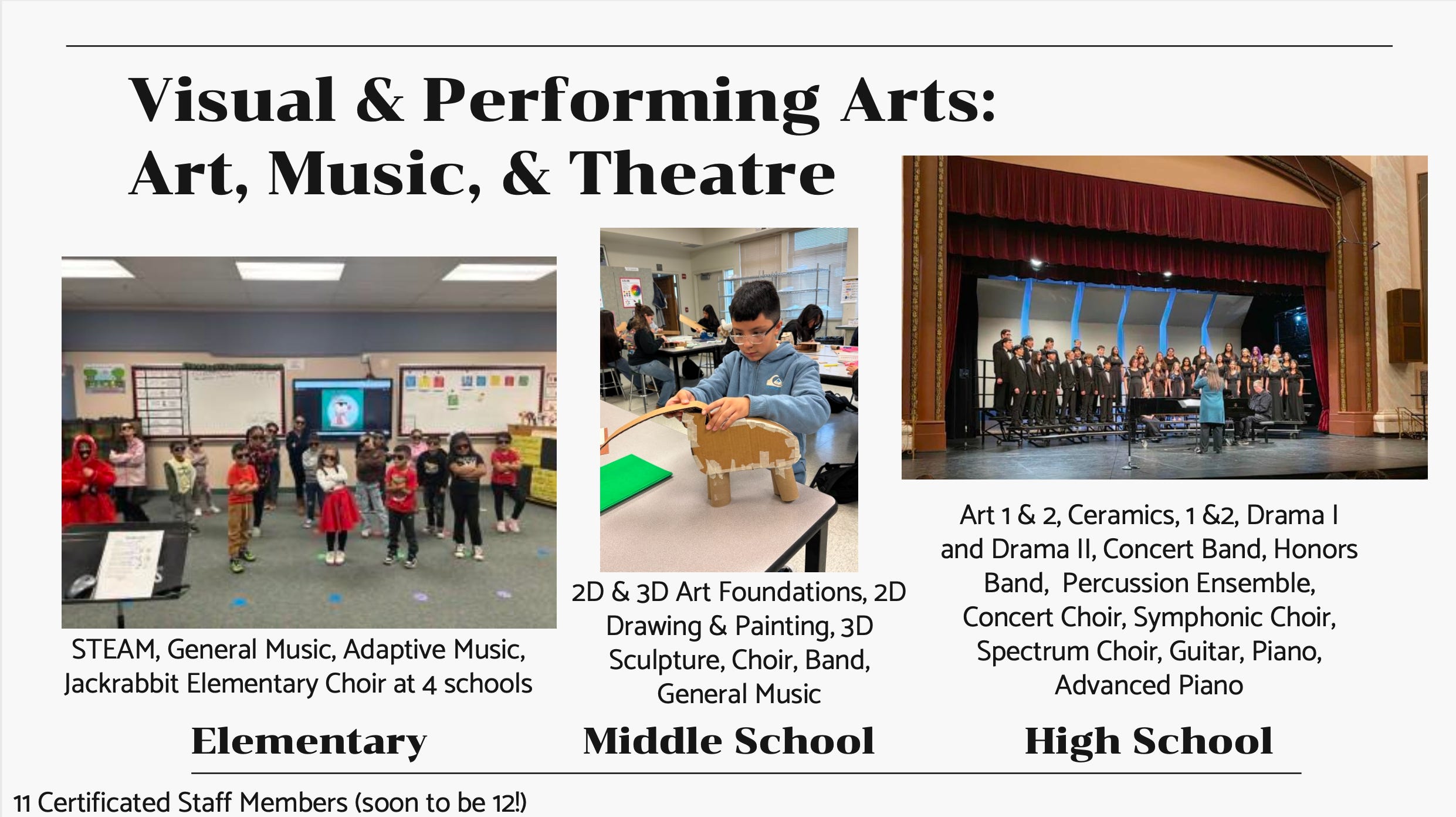
Kylie Youngren, Quincy High School choir director and the district’s K-12 Visual and Performing Arts facilitator, opened the presentation by explaining that the district’s arts program reaches students at every level. Elementary students participate through music, STEAM, adaptive music and Jackrabbit Choir. Middle school students have opportunities in band, choir and multiple visual arts courses, while Quincy High School offers a wide range of classes including concert and honors band, multiple choir ensembles, theater, ceramics, visual arts, guitar and piano. The district currently has 11 certificated arts educators and expects to add a twelfth for the 2026-27 school year.
Youngren emphasized that these programs are not simply extracurricular activities or elective classes. Like math, science and English, they follow national and state learning standards centered on creating, performing or presenting, responding and connecting. Those standards help teachers align instruction across grade levels while allowing each discipline to maintain its own identity.
That work has become increasingly intentional in recent years. When School Board Director Dayana Ruiz commented that the presentation showed a clear progression from elementary school through graduation, Youngren agreed that the district’s arts educators have spent the last several years focusing on better alignment.
“I would say especially within the last three years, there has been intentional work,” Youngren said. “I’m glad it’s recognized.”
That alignment extends beyond the classroom. Elementary music teachers have revised lesson planning so students receive consistent instruction across the district’s schools, while every elementary grade level, including transitional kindergarten and kindergarten, now participates in a concert or performance during the school year.
Success Measured in Students, Not Just Awards
The presentation included plenty of accomplishments that would be easy to celebrate on their own.
The district hosts nearly 20 concerts each year, produces two full-scale theatrical productions, organizes District Arts Night, participates in regional and state competitions, sends students to honor ensembles and festivals, performs in parades across Washington, and has expanded educational travel opportunities, including this year’s San Francisco tour.
Students continue to earn recognition across every discipline. High school art students captured top honors at the Regional High School Art Show. Theater students qualified for national competition and earned multiple Wenatchee Apple Awards. The Quincy High School band won first place at the Grand Apple Blossom Parade and received the Gold Standard Award at Spokane’s Lilac Parade. Both the band and choir reported their largest student participation in program history.
Yet some of the evening’s strongest moments came before any of those accomplishments were discussed.
Four Quincy High School students spoke directly to the board about what the arts have meant in their own lives.
Owen Yeates described participating in band, choir and theater, saying the programs “bring so much light to just everybody.”
Juan Ferreyra explained that music helped him discover his future career, leading him to pursue music education and trumpet performance at Central Washington University.
Belle Rollins said the programs taught her communication, teamwork and lifelong friendships, while Ruby Gonzalez told the board that choir and theater had given her confidence and opportunities she never expected.
“I think it’s so special that we have this in Quincy,” Gonzalez said.
For board members, those comments reinforced that the presentation was about more than trophies or performances. It was about the role the arts play in helping students discover interests, build confidence and prepare for life after graduation.

A Culture That Has Been Years in the Making
Superintendent Dr. Nik Bergman used the presentation to provide some historical perspective.
When Youngren joined Quincy School District in 2017, the secondary music program consisted of a single teacher. Next year, the district will have four secondary music educators, reflecting years of gradual investment rather than rapid expansion.
Bergman credited much of the program’s success to the culture among its educators.
“The vision was a robust, engaging K-12 music program,” he said. “When they’re in the room, there is no ego in the room. They build each other up, and as a result, that’s what you see.”
The district plans to continue building on that foundation next year. A new after-school theater program will launch at Quincy Middle School, creating an earlier pathway for students interested in theater before they reach high school. Expanded band instruction will also allow Quincy High School to offer additional advanced classes as enrollment continues to grow.
For a community the size of the 98848, that breadth of programming is unusual. Students are able to participate in multiple performing arts disciplines simultaneously, something Youngren noted is often more difficult in much larger school districts.
What This Means to You
For parents, this presentation offered reassurance that the district’s investment in arts education is producing opportunities that extend far beyond the classroom. Students are not simply learning to sing, act or paint. They are developing communication skills, teamwork, discipline, creativity and confidence while building connections with classmates and mentors.
For the broader 98848 community, the report also served as a reminder that many of these programs rely on local support. Booster organizations, volunteers, sponsors and audiences all play a role in sustaining the opportunities students enjoy. Community attendance at concerts, plays and exhibitions does more than fill seats. It encourages students, strengthens fundraising efforts and creates partnerships that help programs continue to grow.
When asked what resource topped her wish list, Youngren did not ask for additional funding, new equipment or larger facilities.
“I would really say butts in seats,” she replied, encouraging more residents to attend concerts, theater productions and community performances throughout the year.
Looking Beyond the Stage
The June 23 presentation was ultimately less about celebrating another successful school year than explaining how that success has been built.
Years of steady investment, collaboration among educators, support from district leadership and involvement from parents and community volunteers have produced a program that now reaches students from their earliest school years through graduation. Awards, performances and packed concert halls may be the public face of that work, but they are only the visible results of a much larger effort.
The next time residents of the 98848 watch the marching band step onto a parade route, attend a theater production at the PAC or walk through the student artwork displayed during Arts Night, they will be seeing more than a performance. They will be seeing the product of years of planning, collaboration and community support that continues to shape the next generation of Quincy students.
