
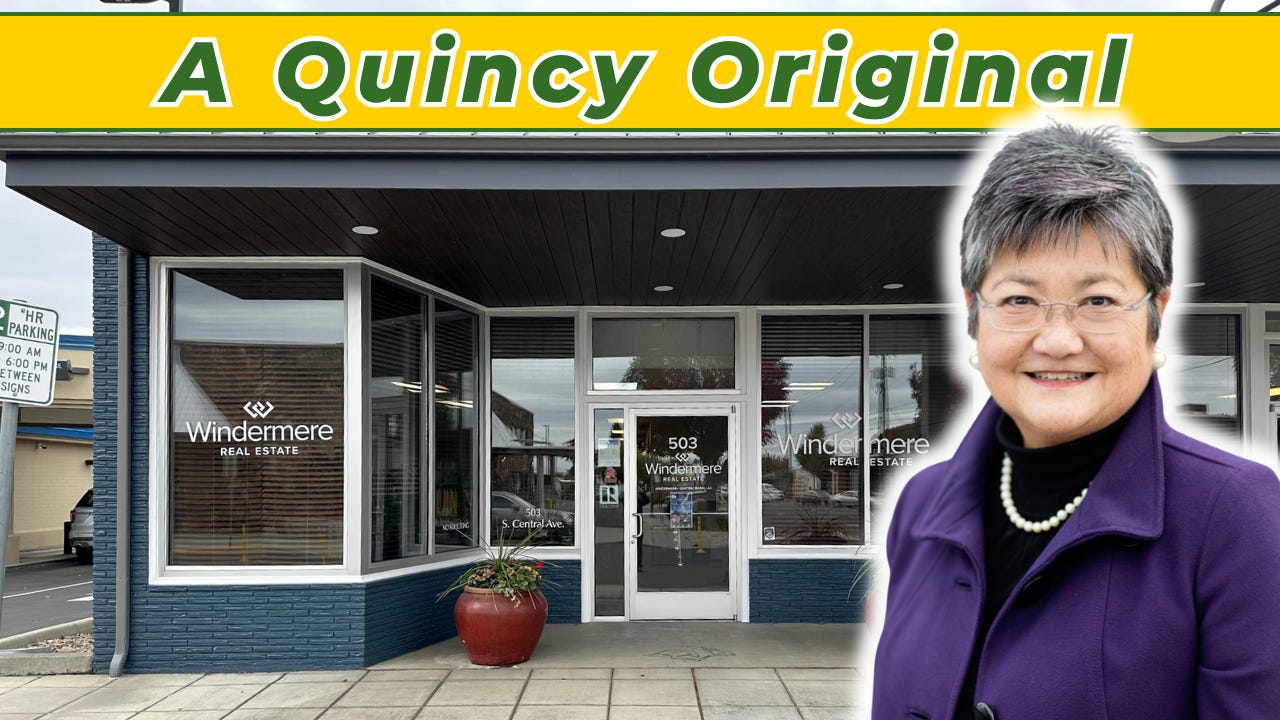
The first commission Deb Adams ever thought she earned never actually arrived.
It was 1987. She had just started in real estate after running a local children’s retail store, and one of her first deals was a vacant lot down in Sunland Estates. Excited about finally earning a commission, she went out and bought herself a new coat before the transaction officially closed.
Then the seller unexpectedly passed away.
The deal fell apart before closing, the commission disappeared, and Deb learned an early lesson about real estate.
“Don’t spend your money until you get it,” she said with a laugh.
Nearly 40 years later, Deb Adams is still helping families buy and sell homes across the Quincy Valley, and that early lesson still feels fitting for the way she approaches the business today: stay grounded, take care of people, and never assume anything is simple.
Before Windermere Real Estate / Central Basin became one of the most recognizable real estate offices in the area, Deb was simply a Quincy girl trying to figure out what came next after retail.
“What the heck, why not?” she remembered thinking when someone suggested she get her real estate license.
That decision turned into a nearly four-decade career.
It did not take long for her to realize real estate was not a business you could truly do halfway.
“You can’t do this business part-time,” Deb said. “Not if you’re going to take good care of people.”
Nearly 40 years later, she is still doing exactly that.
And somewhere along the way, Deb Adams became more than just a longtime realtor in Quincy. She became part of the fabric of the community itself.
A Quincy Jackrabbit Through and Through
Deb is not someone who simply works in Quincy. She is deeply rooted here.
Born and raised locally, she spent all 12 years of school in the Quincy School District and proudly calls herself a Quincy Jackrabbit. Those roots matter because for Deb, Quincy has never just been a market or a place to build a career. It has always been home.
She could have left. Real estate opportunities exist almost everywhere, and larger markets often mean larger commissions. But Deb said money was never really the deciding factor.
“I probably could make a lot more money someplace else,” she said. “But it’s a good community. Good people.”
That sense of connection is part of why she stayed through decades of change, growth, and transformation in the Quincy Valley.
Why People Come Back
At one point in the conversation, Deb described Quincy with a single word:
Comfortable.
Not stagnant. Not boring. Comfortable in the way a place feels when people know each other, support each other, and stay connected over time.
That idea surfaced again and again throughout the interview.
Deb talked about running into former students years later and hearing how something she did impacted their lives. About seeing kids grow up, become adults, and raise families of their own. About staying in one place long enough to witness the ripple effects of relationships over decades.
“You hope that you’re able to be a positive impact on at least one person,” she said. “When you can hear about it and see it later, it is rewarding.”
It is also part of why so many people who come to Quincy end up staying longer than they expected.
During the conversation, I mentioned to Deb that I originally came here for construction work nearly 20 years ago and fully expected to leave after a couple of years. Instead, my family stayed.
Like many others, we discovered that Quincy feels different once you become part of the community itself.
People know your kids. They recognize your family at local businesses. They show up when someone needs help. Relationships become rooted over time instead of temporary.
That is difficult to explain to someone who has never lived in a small town like this, but once people experience it, many do not want to leave.
Deb has watched generations grow up here. She has seen families leave and eventually return home. She has watched kids become parents, students become business owners, and longtime neighbors become lifelong friends.
In a town like Quincy, people are not just passing through each other’s lives for a moment.
If you stay long enough, you get to see the ripple effects.
Watching Quincy Evolve
Over the course of Deb’s career, Quincy has changed dramatically.
She remembers when the area was almost entirely defined by agriculture and farming. A strong, hardworking community, but one that also faced challenges in sustaining long-term economic growth. Deb’s earlier involvement with city government gave her a firsthand look at how difficult it could be to balance budgets and support a growing community.
Then Microsoft arrived.
“It’s hard to believe Microsoft came here 20 years ago,” Deb said. “Can it really be 20 years already?”
Like many longtime residents, Deb has watched Quincy balance growth with preserving its agricultural roots. But she also understands what diversification has meant for local families and the future of the community.
“In order to survive, just like anything, you need to diversify,” she said.
The arrival of the data centers brought jobs, growth, new housing developments, and opportunities that simply did not exist before. Quincy changed from being solely an agricultural town into something broader and more economically diverse.
Still, Deb believes the core of Quincy remains the same.
“The people,” she said. “I think it’s the people.”

Taking Care of People
Today, Deb primarily works in residential real estate, but her work extends into commercial sales, commercial property management, vacant land, and surrounding communities including Ephrata, George, Crescent Bar, Soap Lake, Moses Lake, and beyond.
But one thing she feels strongly about is that local knowledge matters. Just because an agent technically can sell in another city does not mean they should.
“Our job is to take good care of people,” Deb explained. “If we’re not familiar with an area, then it’s not in that client’s best interest.”
That perspective comes from experience. Early in her career, Deb helped friends buy a home in Ephrata before she truly knew the market well. During that process, she learned about flood zone concerns she had not previously understood.
The experience reinforced something she still believes today: clients deserve someone who knows the area, understands the details, and knows the questions to ask.
In rural communities like Quincy, those details can matter more than many people realize. Propane systems, irrigation issues, flood zones, utility setups, zoning concerns, and local infrastructure are all things that someone unfamiliar with the area could easily overlook.
The Importance of Listening
After nearly 40 years in the industry, Deb believes one of the most important skills in real estate is not salesmanship. It is listening.
“You have to be able to listen,” she said.
Every buyer is different. Every seller is different. Some clients are highly emotional. Others want straightforward numbers and facts. Some need reassurance. Others need guidance slowing down and thinking through a decision carefully.
Deb sees her role not as someone making decisions for clients and more as someone helping them fully understand their options.
“It’s not our house,” she said. “It’s not our decision. We need to be able to guide people.”
That guidance often means taking extra time, laying out the positives and negatives clearly, and helping clients understand not just what they want today, but how a decision fits into their larger life goals.
Helping First-Time Buyers Think Long-Term
Deb said first-time buyers often enter the process believing they know exactly what they want.
Then they find the right house, and it turns out to be completely different than what they originally pictured.
For her, the bigger question is always why.
Why does this home matter? How does it fit the buyer’s life? What are their long-term goals? Is this a forever home, a starter home, or an investment that helps them build toward the next step?
“It’s the why,” Deb said. “Think through the why.”
Sometimes the right first house is not the dream house. Sometimes it is simply the right next step.
Selling a Home Has Changed
Deb says selling homes today looks very different than it did even 20 years ago.
Back then, yard signs played a major role in attracting buyers. Today, nearly everything happens online first. Photos matter more. Presentation matters more. Buyers often decide whether they are interested before ever stepping inside the house.
The process itself has also become far more complex over the years.
“ Oh my goodness, yes,” Deb laughed when talking about the amount of paperwork now involved in modern real estate transactions.
The process has become more detailed and more regulated, but she believes many of those changes are ultimately designed to better protect buyers and sellers. One thing that has not changed, however, is the emotional side of selling a home.
“You can’t get your heart set on a certain number because the market’s going to dictate what the number’s gonna be,” she said.
For sellers, preparation and realistic expectations matter. Deb encourages clients to focus on their goals, prepare their home well, and stay open to guidance throughout the process.
“If you take good care of people, then it’ll be okay.”
Reputation Matters in a Small Town
In a community like Quincy, relationships matter.
Deb said many of her clients come to her because they already know her, know someone she has helped, or have seen her involvement in the community over the years.
“I’ve always said that if you take good care of people, then it’ll be okay,” she said.
That philosophy shapes not only how she works with clients, but how she approaches her business overall. She wants people to feel comfortable seeing her around town long after the deal closes.
“We intend to be here and live in this community,” she said. “We want to be able to say hi to people at the grocery store and feel good about it.”
That kind of reputation is built slowly over time.
One client at a time. One relationship at a time.

Building Windermere Around Relationships
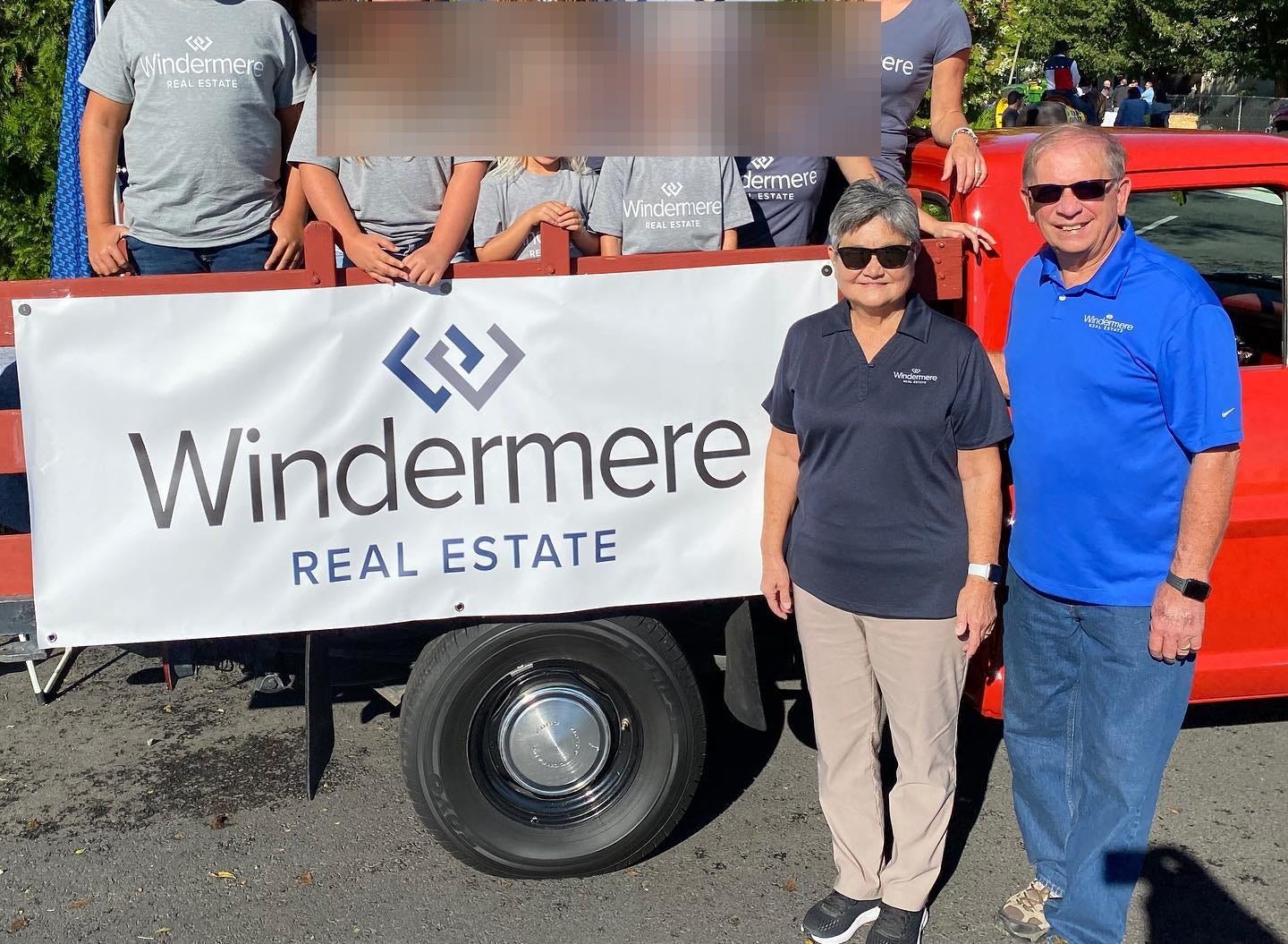
Over the years, Deb has also helped shape Windermere Real Estate / Central Basin into something that reflects the values she believes matter most in a small community.
Today, the company serves clients throughout Quincy, Ephrata, George, Crescent Bar, Moses Lake, and surrounding areas, with offices in both Quincy and Ephrata. The office handles residential real estate, commercial properties, property management, land sales, and investment opportunities across the region.
But Deb says the culture inside the office matters just as much as the transactions themselves. The agents who work there are expected to focus on people first.
“We intend to be here and live in this community,” Deb said. “The people that work for me, they’re not in the business for themselves. They’re in the business to help people.”
That mindset shapes how the office approaches clients, negotiations, and long-term relationships.
In a larger city, a real estate transaction may be a one-time interaction. In Quincy, there is a good chance you will continue seeing those same people at football games, grocery stores, school events, restaurants, and community fundraisers for years afterward.
“We want to be able to say hi to people at the grocery store and feel good about it,” Deb said.
That long-term accountability, she believes, changes how business should be done in a small town.
Windermere Real Estate / Central Basin is also currently the only real estate office in Quincy that maintains active membership in the Realtor organization, something Deb believes helps her agents stay informed about changing laws, industry standards, ethics requirements, and policy changes affecting buyers and sellers both locally and nationally.
For Deb, staying informed is part of taking care of clients well.
And after nearly 40 years in the business, that remains the standard she continues to build around.
Deep Community Involvement
Both Deb and her husband Tom have spent years deeply involved in the Quincy community.
Tom has served on the hospital board, worked extensively with track and school activities, and helped improve athletic facilities in the district. Deb has been involved with Rotary, the Chamber of Commerce, and numerous community efforts over the years.
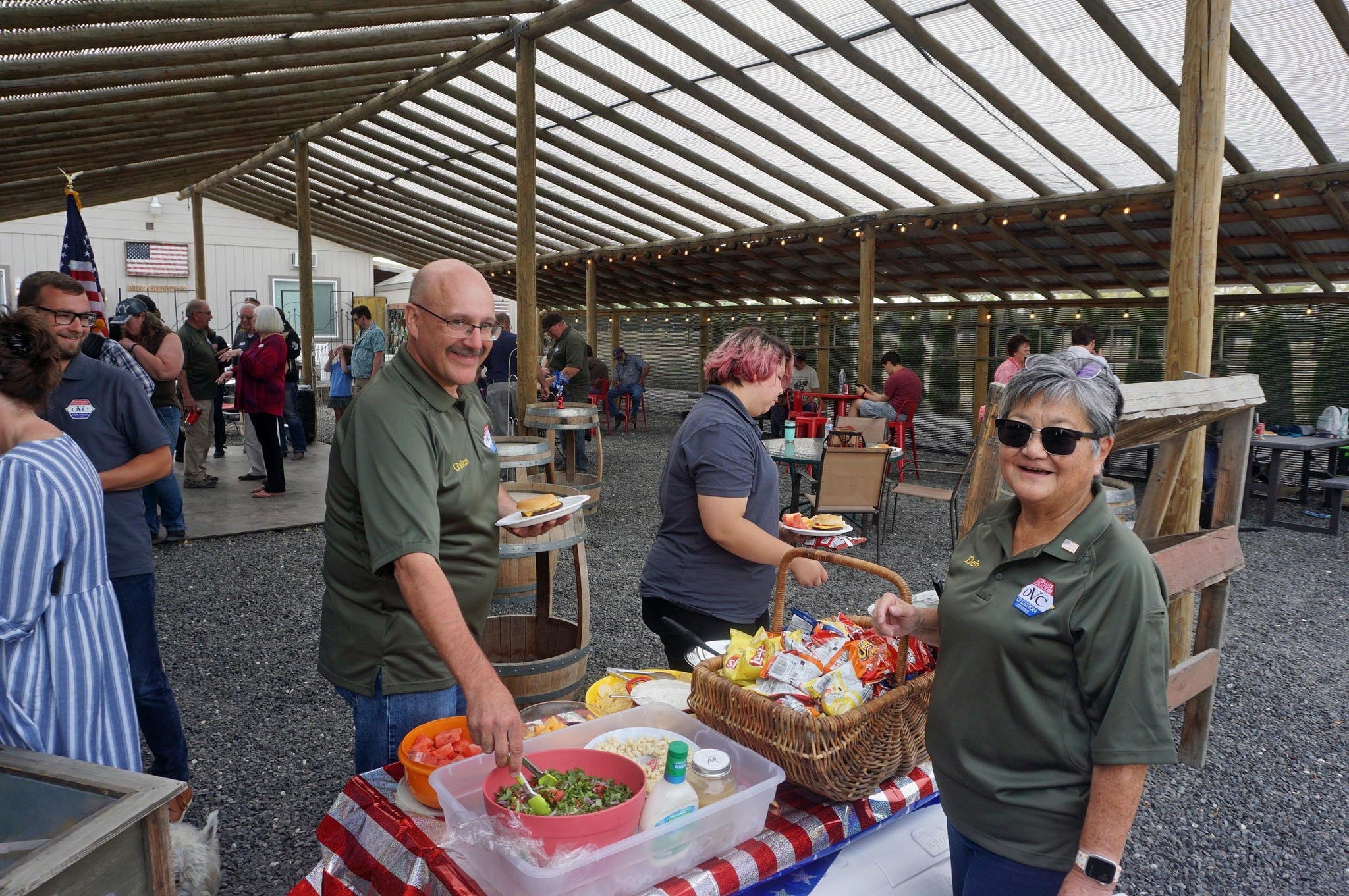
More recently, much of their focus has gone toward supporting Veterans Operation Creation, a local organization helping veterans and their families. The connection began almost accidentally when Deb learned that Daniel Chisholm, founder of the organization, was a Marine veteran.
“I said, ‘Can I help?’” she recalled.
Over the past four years, that involvement has grown into a major commitment for both Deb and Tom. She said the work has helped her better understand the experiences veterans carry and the importance of building stronger community support around them.
“I’ve learned a lot about how we can help our local veterans and their families,” she said.
Still Not Done
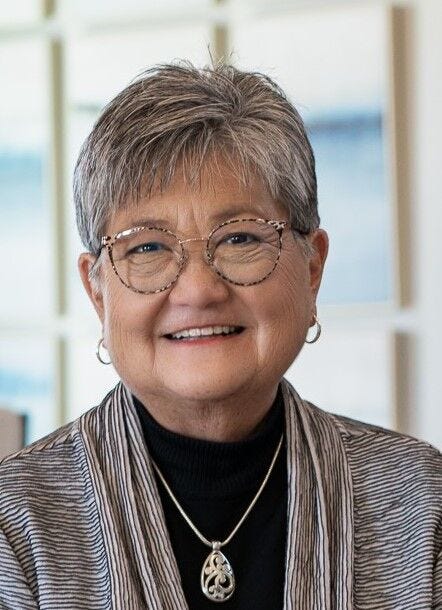
People ask Deb when she plans to retire. She is not entirely sure. For Deb, the work has never just been about selling houses. It has always been about helping people navigate major moments in their lives.
“I don’t know what I’d do,” she said with a laugh. “I’m not gonna sit at home and watch soap operas and eat bonbons.”
For her, purpose still matters. There are still clients to help, projects to support, deals to work through, and grandkids to watch compete in sports and activities.
Success, she says, is not one final destination.
It is helping someone close a difficult deal. Supporting a local organization. Watching family succeed. Solving the next challenge.
“There’s always something else that I need to do,” she said.
After nearly 40 years in business and a lifetime in Quincy, that mindset may explain why Deb Adams has become more than just a longtime realtor in the community.
One client at a time. One relationship at a time. One community project at a time.
Deb Adams has spent nearly 40 years helping people build lives in the Quincy Valley while quietly building one of her own alongside them.
And after all this time, she still is not done.
About Windermere Real Estate / Central Basin
For decades, Windermere Real Estate / Central Basin has helped families, homeowners, investors, and businesses navigate real estate across Quincy, Ephrata, George, Crescent Bar, Moses Lake, and surrounding communities. With deep local roots and a strong focus on relationships, the team provides residential real estate, commercial real estate, land sales, and property management services throughout the region.
Located in the communities they serve, Windermere Real Estate / Central Basin believes real estate is about more than transactions — it’s about helping people make good decisions for their families, businesses, and future.
To learn more, visit Windermere Real Estate / Central Basin or stop by their Quincy or Ephrata offices.