
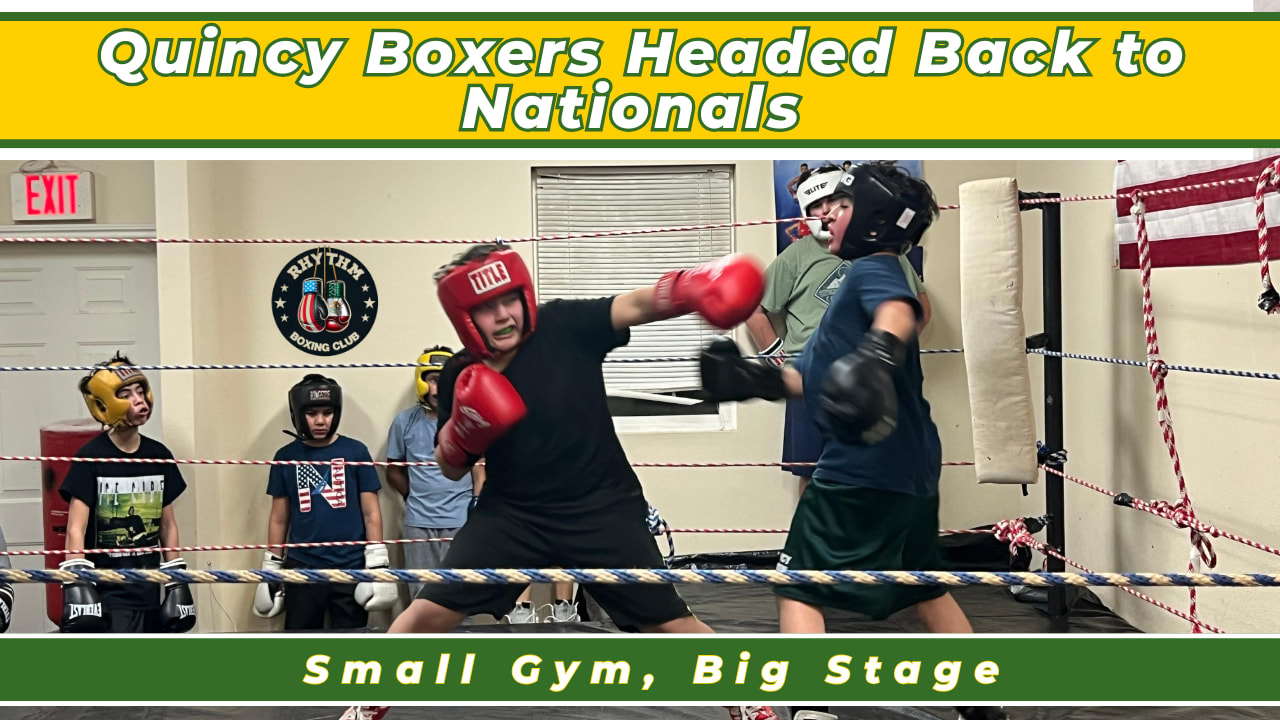
Most of our community probably has no idea that we have a boxing gym here in town.
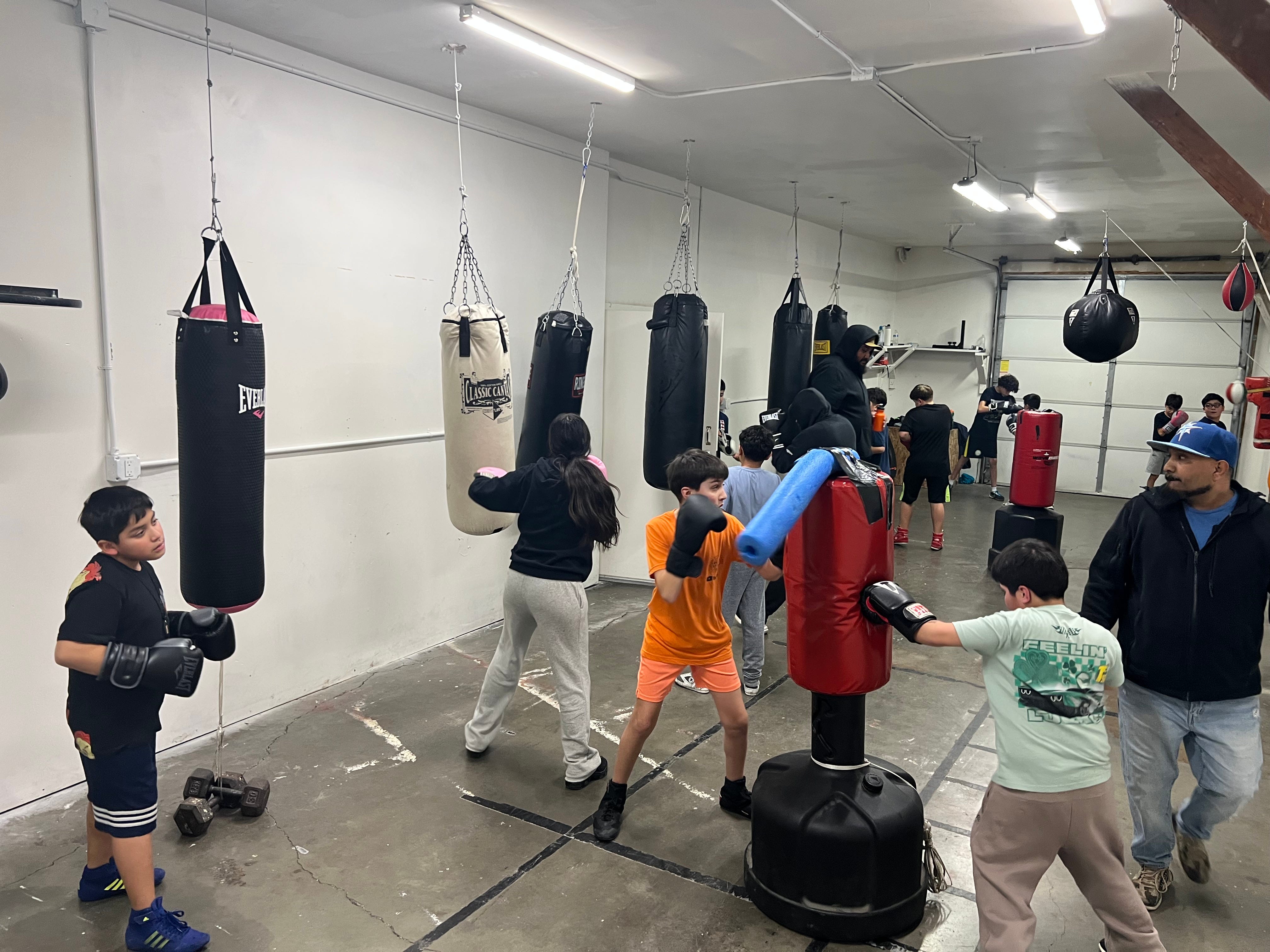
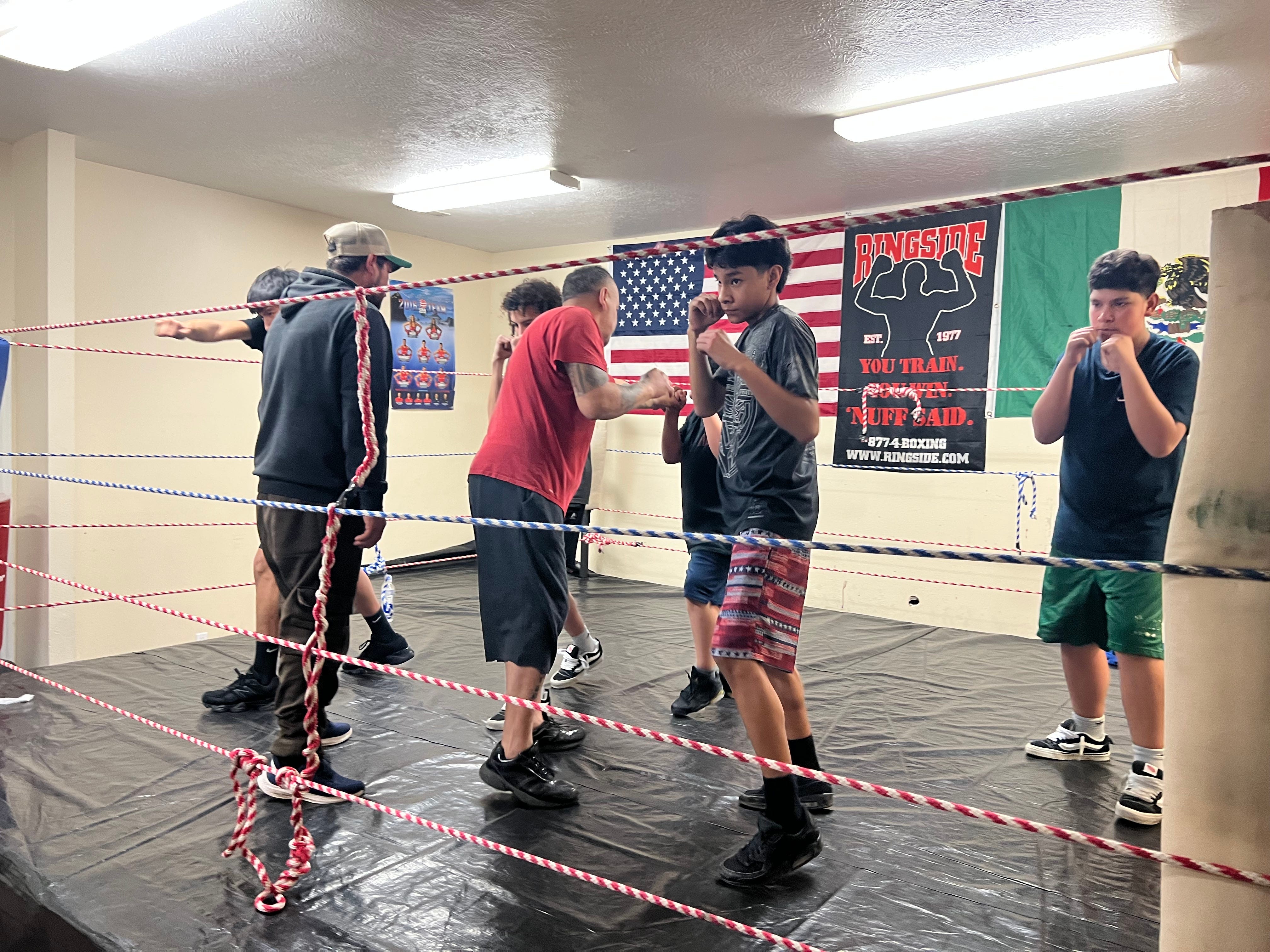
The first time you step into Rhythm Boxing, it doesn’t look like much. You walk down a narrow hallway before you ever see the ring. There’s no big lobby, no flashy signage. Then you round the corner and it comes into view — one lone boxing ring. A few warmup mitts off to the side. In another room, heavy bags hang in a row. Speed bags mounted against the wall. That’s it.
It’s unassuming.
And that’s exactly the point.
Rhythm Boxing isn’t about pomp or show. It’s about work.
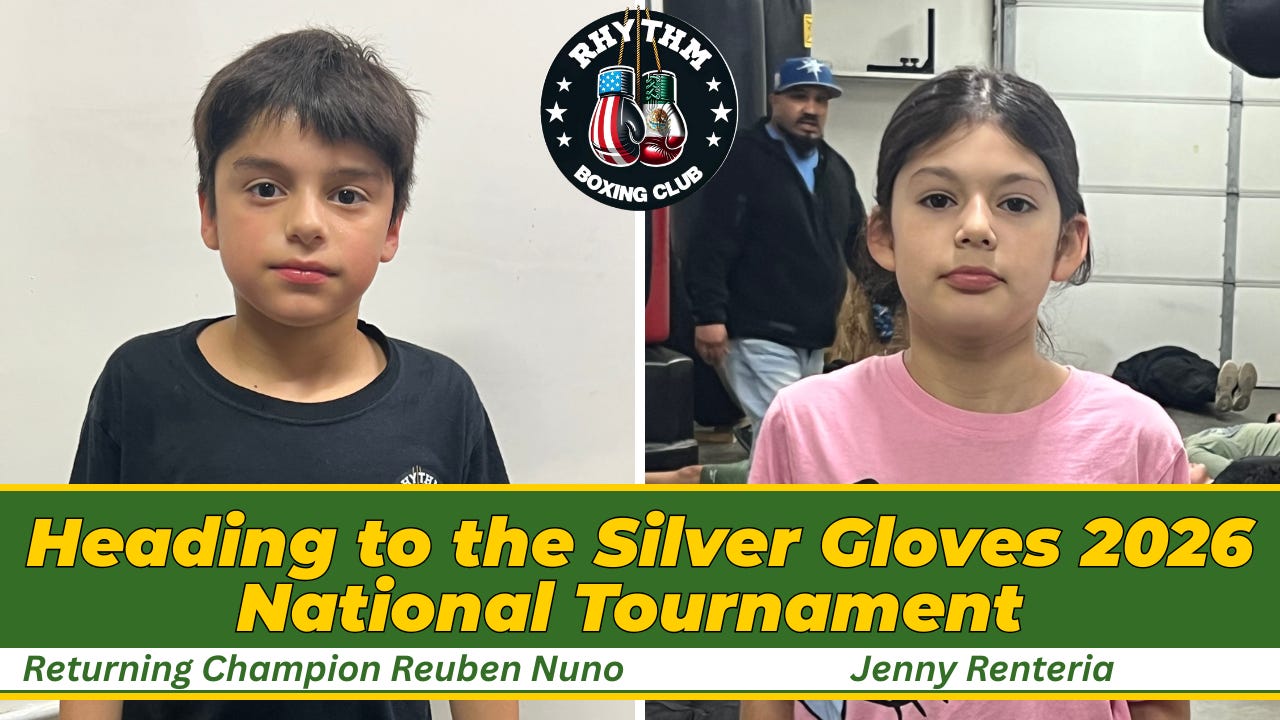
From that modest gym, Coach Samuel Alejandrez is preparing to take two young Quincy athletes to the Silver Gloves 2026 National Tournament in Independence, Missouri, February 24–29. Eleven-year-old Reuben Nuno returns as a defending 2025 national champion. Ten-year-old Jenny Renteria will make her first appearance on the national stage.
For a small town like Quincy, that’s something worth noticing.
Built for the Right Reasons
Rhythm Boxing began less than three years ago because Alejandrez’s son wanted to learn how to box. Alejandrez himself had never competed in the sport. He’s open about that. What he did have was life experience, a willingness to learn, and a commitment to guiding young people the right way.
“I’m still learning,” he said. “They make mistakes. I make mistakes. We get better together.”
Word spread. Kids started showing up. Today, about 15 young athletes compete regularly, and on busy nights the gym can fill with 30 kids. Coach Sam will outgrow the gym before long.
Alejandrez is quick to shift attention away from himself.
“Rhythm Boxing is not about Coach Sam,” he said. “It’s about the boxers. Without them, I’m not a coach.”
That humility is part of the culture. So is discipline.
An Alternative to Screens and Isolation
Alejandrez doesn’t hesitate when asked why something like Rhythm Boxing matters in a small town like Quincy.
“It’s very important,” he said.
He points to something many parents quietly worry about — how much time kids now spend sitting still. Devices are everywhere. Phones. Tablets. Gaming consoles. Hours can disappear inside bedrooms and living rooms. For some kids, entire afternoons and evenings are spent behind a screen, interacting more with virtual worlds than the real one outside their front door.
“In today’s technology, you have so many other options,” Alejandrez said. “You can be stuck at home playing video games. All of a sudden you think you can go outside and do whatever that game was showing you.”
He isn’t condemning technology outright. But he sees firsthand what happens when young people trade movement for motionless scrolling. Stamina fades. Confidence can shrink. Social skills sometimes stall.
Inside the gym, it’s the opposite.
There are no screens. No controllers. No pause buttons.
There is running. There is sweat. There are teammates pushing each other to finish one more sprint. There are coaches correcting technique and kids learning how to take instruction. There is structure, and there are expectations.
In a community like Quincy — where families work hard and kids need positive outlets — having a place that channels energy into discipline instead of distraction matters. It gives young people a space to move, to struggle, to improve, and to belong.
“It’s giving them another option,” Alejandrez said.
On busy nights, when 25 or 30 kids fill the gym, that option becomes visible. Instead of isolated in separate rooms staring at separate screens, they are together — breathing hard, working through something difficult, building resilience side by side.
For Alejandrez, that may be as important as any medal.
Because long after the trophies are put away, the habits remain.
More Than Throwing Punches
For parents who hear “boxing” and immediately think “fighting,” or worry about the safety of boxing, Alejandrez is direct.
“Anyone can throw hands,” he said. “But boxing is about discipline.”
Inside Rhythm Boxing, there are rules. No swearing. No disrespect. Even yawning during instruction draws attention — not because of ego, but because focus matters. Sparring is done with headgear, mouth guards, wraps, and supervision.
Safety is non-negotiable.
“If you throw a punch wrong, you can break your hand,” Alejandrez said. “Technique matters.”
Coach Sam tells parents boxing is safe, it is very safe. There’s a lot of equipment out there that can be used to make it safe. Accidents could happen in any sport, you can get seriously hurt in football, baseball, basketball and even running track.
Could someone get hurt in training or the ring, absolutely, with the risk similar to any sport, especially contact sports.
I (Brent) would personally love to see boxing come back as a school sport.
An Old-School Approach
Spend one practice inside that gym and you’ll understand quickly: this is not recreational cardio.
Conditioning comes first. Often for an hour or more.
The athletes run. They stop for jumping jacks. They run again. Drop for pushups. Sprint. More calisthenics. Line drills. Battle ropes. Then more running.
It’s steady, demanding, and relentless.
“In boxing, if you can’t breathe, you can’t fight,” Alejandrez said.
Only after that do they move into shadowboxing and combinations. Sparring comes later, with headgear, mouth guards, hand wraps, and supervision.
The atmosphere is intense but controlled. The fighters push each other. They battle inside the ring. But when the round ends, they shake hands. There’s no carrying grudges out the door. Warriors in the ring. Teammates outside it.
For Alejandrez, the deeper lesson isn’t about knocking someone down. It’s about building yourself up.
“Anyone can throw hands,” he said. “Boxing is about discipline. Commitment. Sacrifice.”
If a fighter says they want to compete at a certain weight, they learn what it takes to get there. If they ask for a fight, they’re expected to show up ready. If they yawn during instruction, they might find themselves running again — not as punishment, but as a reminder that focus matters.
He believes strongly that what they build in that gym carries into life.
And the results show.
He recalls a 14-year-old who walked into the gym weighing 245 pounds, simply wanting to lose weight. When that young man eventually left the program, he weighed 175 and had built habits that stuck. Other kids who once struggled to last 15 minutes now push through two-hour sessions. Parents report improved attitudes and stronger work ethic at home.
“If you show up here,” Alejandrez tells them, “you’re almost forced to get better.”
Representing Quincy
The road to nationals required more than just hard workouts. Fighters had to advance through state and regional competition. State competition was held in Wenatchee. Four Rhythm boxers made it to regionals. Two advanced to nationals: Reuben and Jenny.
For Reuben, this will be his third trip and a chance to defend his title. For Jenny, it will be her first time stepping into a national tournament ring.
Alejandrez keeps preparation simple.
“Stay ready so you don’t have to get ready,” he said.
There’s no dramatic shift in training. No last-minute overhaul. Just consistent work — the same approach that has built the program from the beginning. The same approach that helped them get to nationals is what will carry them through their fights. Changing things up before a competition messes with the Rhythm (pun intended) but rhythm matters a lot in boxing.
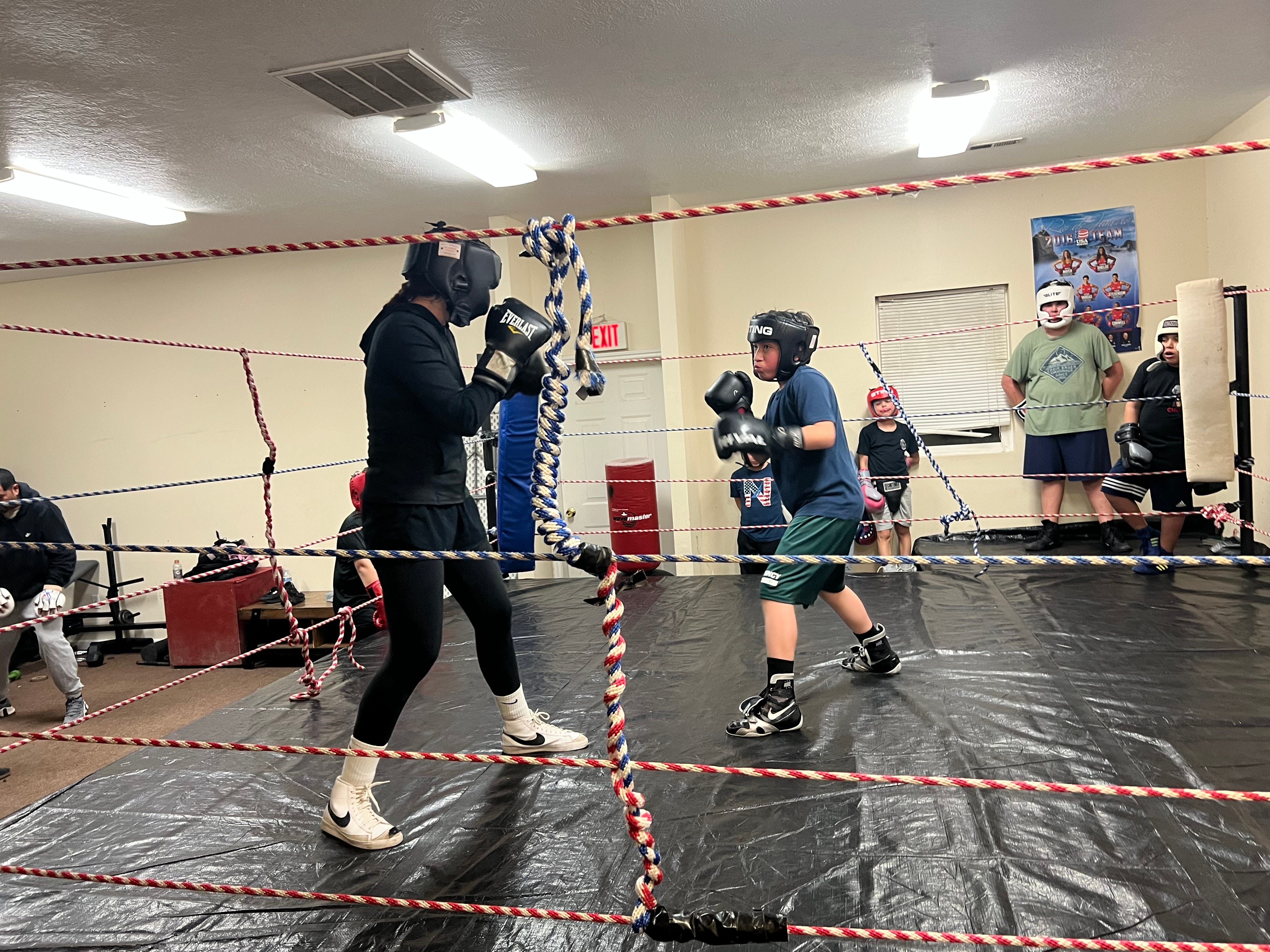
Although Rhythm Boxing has largely operated quietly, Alejandrez said he was excited when asked to talk about the gym and the upcoming trip.
“I want people to know that my boxers are here,” he said.
He has never chased attention for himself. If anything, he prefers to stay in the shadows. But as Quincy continues to celebrate success in wrestling, basketball, and other sports, it’s worth recognizing that two more young athletes will soon carry the town’s name onto a national stage.
From a quiet hallway and a single ring in Quincy, Washington, they’ll travel across the country to compete against some of the best youth boxers in the nation.
It started with a son who wanted to box.
Now it’s a program building discipline, confidence, and opportunity for dozens of kids — and sending champions out into the world.
And most of us probably never even knew it was there.