
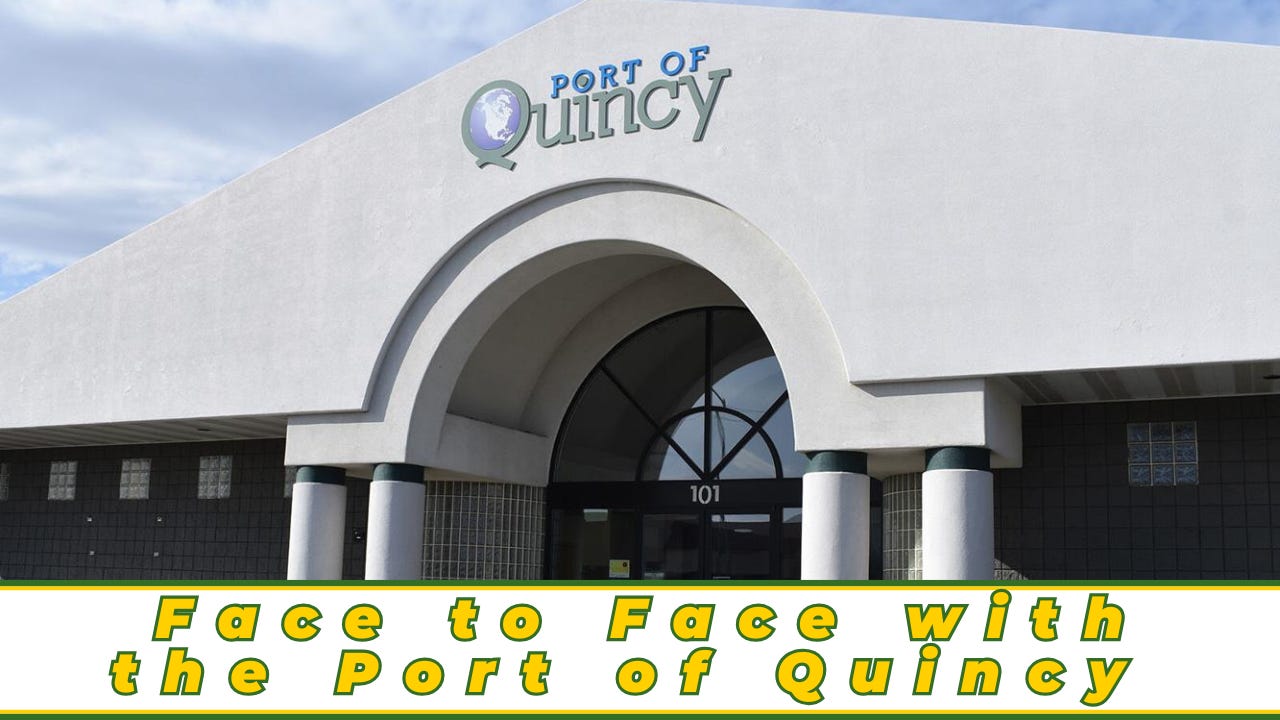
I attended the regular Port of Quincy commission meeting this week and had a moment I wasn’t expecting.
Somewhere between irrigation software upgrades, water availability letters, land option extensions, and discussions about event center sponsorships, I realized something simple and a little embarrassing:
I wasn’t entirely sure I could clearly explain what the Port of Quincy actually does
I talk about “the Port” in stories. We all hear about “the Port” when development comes up. But if someone stopped me at Akin’s or Safeway and asked, “So what does the Port really do?” I’m not sure I could have given a clean answer.
And I suspect I’m not alone.
Getting to know The Port of Quincy
So let’s slow this down and look at what a port district is, what it does in a town like Quincy, and why it matters to you.
First, the Port of Quincy is not about boats. In Washington State, port districts are public agencies created by voters to promote economic development. They are separate from city government. They have elected commissioners. And their job is to build and manage the kinds of infrastructure that help businesses operate and grow.
The Port of Quincy was formed in 1958 and covers a large portion of the Quincy and George area. Its mission centers on industrial development, trade promotion, and supporting economic opportunity in the region. In practical terms, that means land, utilities planning, freight movement, and facilities.
If the City of Quincy handles streets, police, and day-to-day municipal services, the Port focuses on the infrastructure that makes large-scale economic activity possible.

The Intermodal Terminal
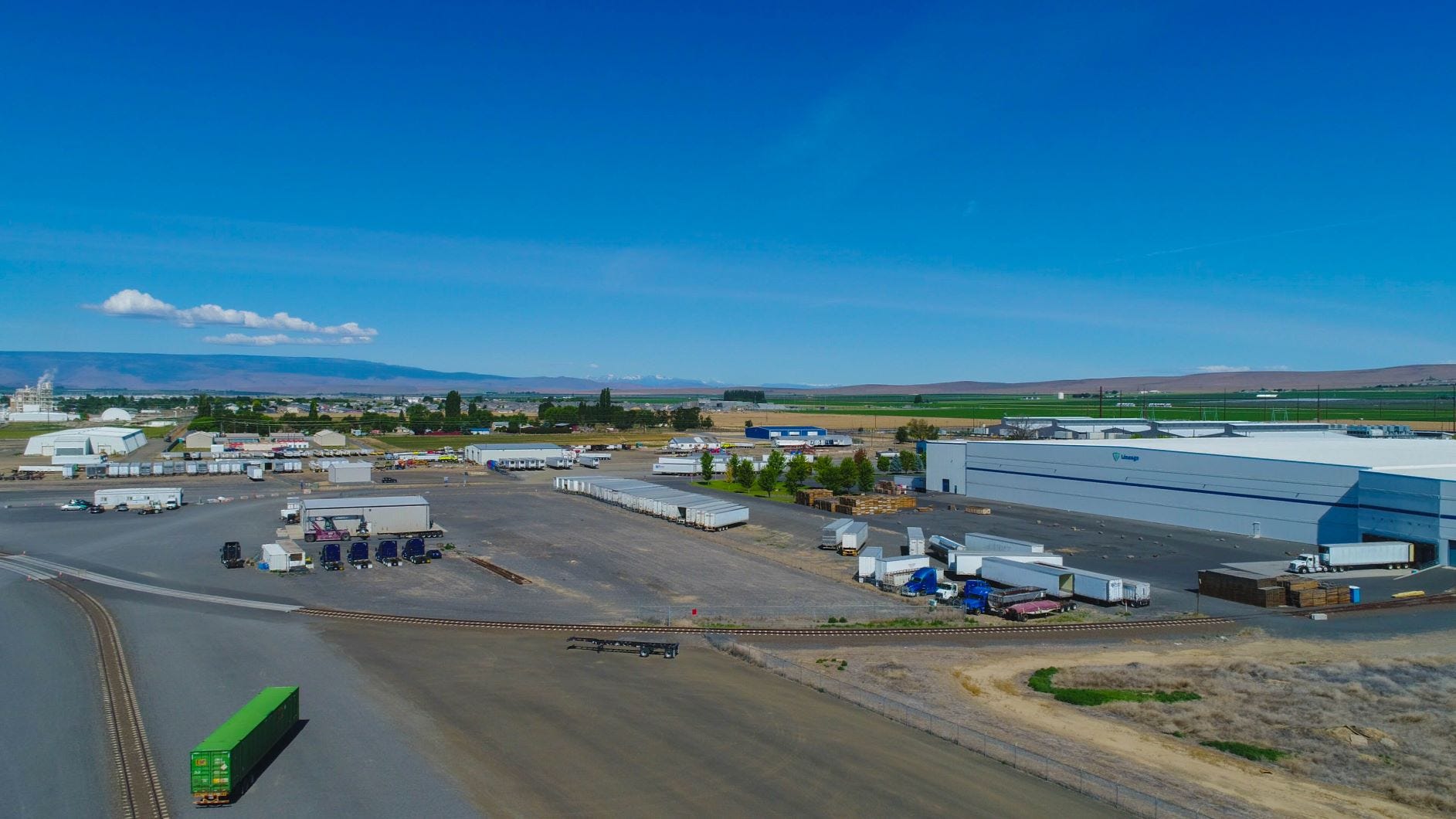
One of the most important — and least visible — examples of that is the intermodal terminal. The Port operates a rail-connected freight terminal that allows containers to move in and out of Quincy efficiently. It ties into major rail lines and highways, which makes Quincy viable for agriculture, cold storage, and industrial operations. Most residents will never see it up close, but without that kind of freight infrastructure, many of the businesses here simply wouldn’t be here.
The Business & Event Center
The Port also oversees the Business & Event Center. At this week’s meeting, commissioners discussed how to handle sponsorship or discounted rental requests. The conversation wasn’t about whether to support the community. It was about how to do it fairly and consistently. They are working toward a clearer application process that asks groups to explain how their event connects to economic development or tourism. There was discussion about whether to cap sponsorship amounts or evaluate requests case by case. It may sound small, but that’s public policy in action — trying to support local activity while being careful with public dollars.
Colockum Ridge Golf Course
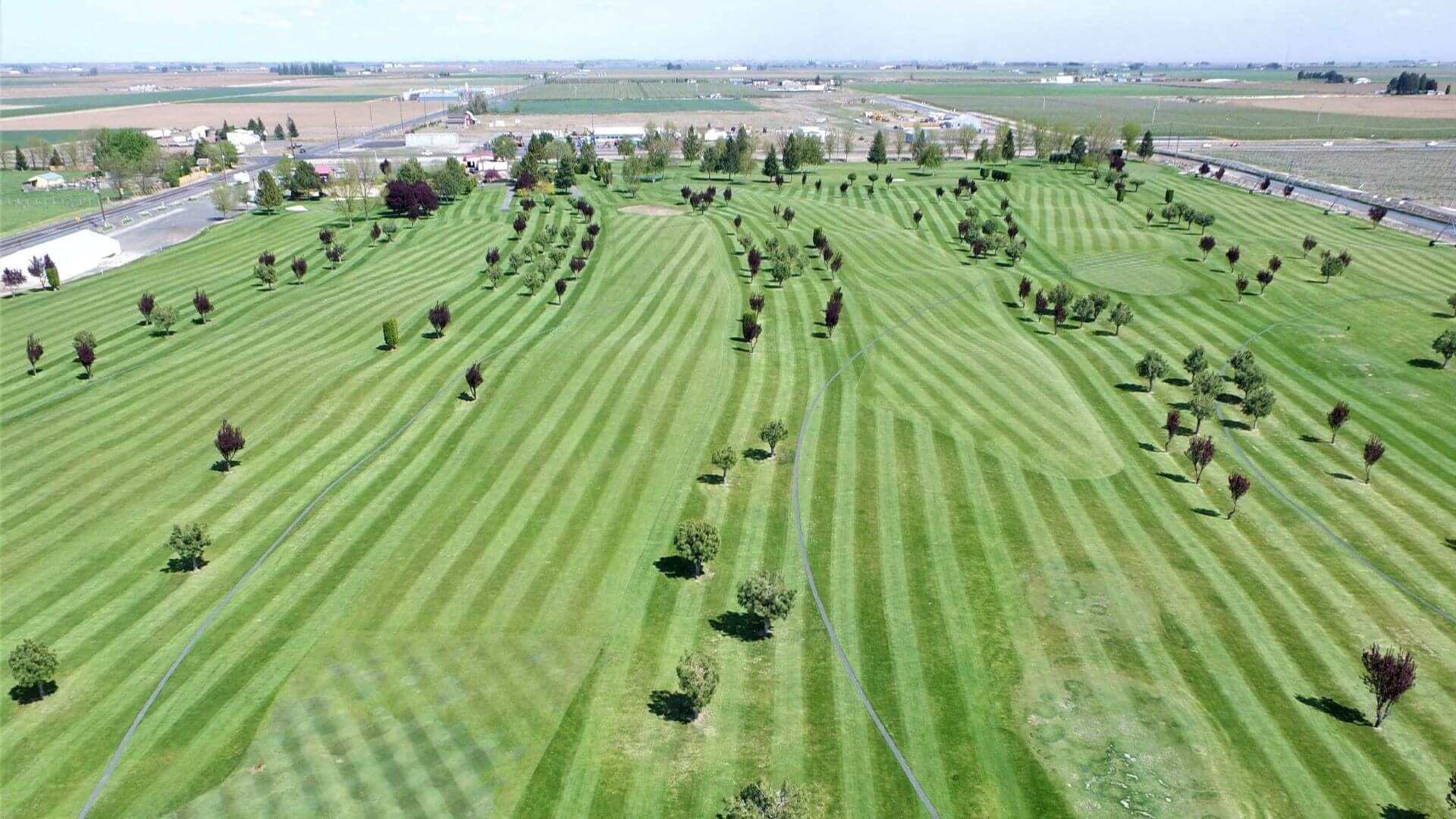
Then there’s the Colockum Ridge Golf Course, which also falls under the Port. This week commissioners approved a roughly $27,900 upgrade to the golf course’s irrigation control system. The current system is about twenty years old, and the vendor is no longer supporting it. The cost covers new software, hardware components, setup, training, and support. It wasn’t flashy. It was practical. Systems age, and when support disappears, public agencies don’t have the luxury of waiting until something fails.
The Far Less Visible… but more important
Water was another major topic of discussion. Commissioners talked about a pending letter referencing 700 acre-feet of available water, the cost of reuse water, and how different water permits and delivery systems might fit together. The conversation was careful and measured. No big declarations, just the reality that growth — especially industrial growth — depends on water lining up legally, physically, and financially. If you’ve followed any conversation about development east of 10, you already understand how foundational water is.
There was also discussion about preparing a bid package for infrastructure work and coordinating with the Utilities and Transportation Commission regarding a road crossing. Questions about signage, safety requirements, and timing came up. These are the kinds of details that rarely make headlines but can significantly affect project cost and timelines.
Land options were discussed as well. Commissioners talked about extending option timelines on certain parcels so they aren’t forced into early decisions. In plain terms, that means buying time while larger pieces — water, power, permitting — continue to move. It’s strategic positioning more than headline material, but it shapes what Quincy can or cannot do in the coming years.
Why This Matters to Regular People
Sitting in that meeting, what struck me most was how much of the Port’s work is invisible until it isn’t. When the Port secures land, plans water delivery, upgrades infrastructure, markets facilities, or negotiates timelines, it eventually shows up in the things we all feel — jobs, business growth, tax base stability, and the overall direction of the community.
You don’t have to follow every acronym or regulatory agency to understand this: the Port of Quincy plays a significant role in shaping what Quincy becomes.
If You’ve Never Been to a Port Meeting…
If you’ve never attended a Port meeting, you’re not alone. Until recently, I hadn’t either. Meetings are typically held twice a month at the Port office on F Street. They are procedural. They are sometimes technical. But they are also where long-term decisions begin.
This week reminded me that covering a community means sometimes admitting what you don’t know — and then doing the homework.
So consider this the start of that homework, out loud.
Because the next time someone says, “The Port is working on that,” I’d like more of us to understand what that actually means.
TL;DR – What You Should Take Away
· The Port of Quincy is a public agency focused on economic development, not boats or docks.
· It manages major infrastructure like the intermodal terminal, business facilities, industrial land, and the golf course.
· Decisions about water, land options, and infrastructure directly affect future growth in Quincy.
· Many of the Port’s actions are behind the scenes — but they shape jobs, business opportunity, and long-term stability.
· Port meetings are public, and they are where many of Quincy’s biggest long-term decisions begin.