
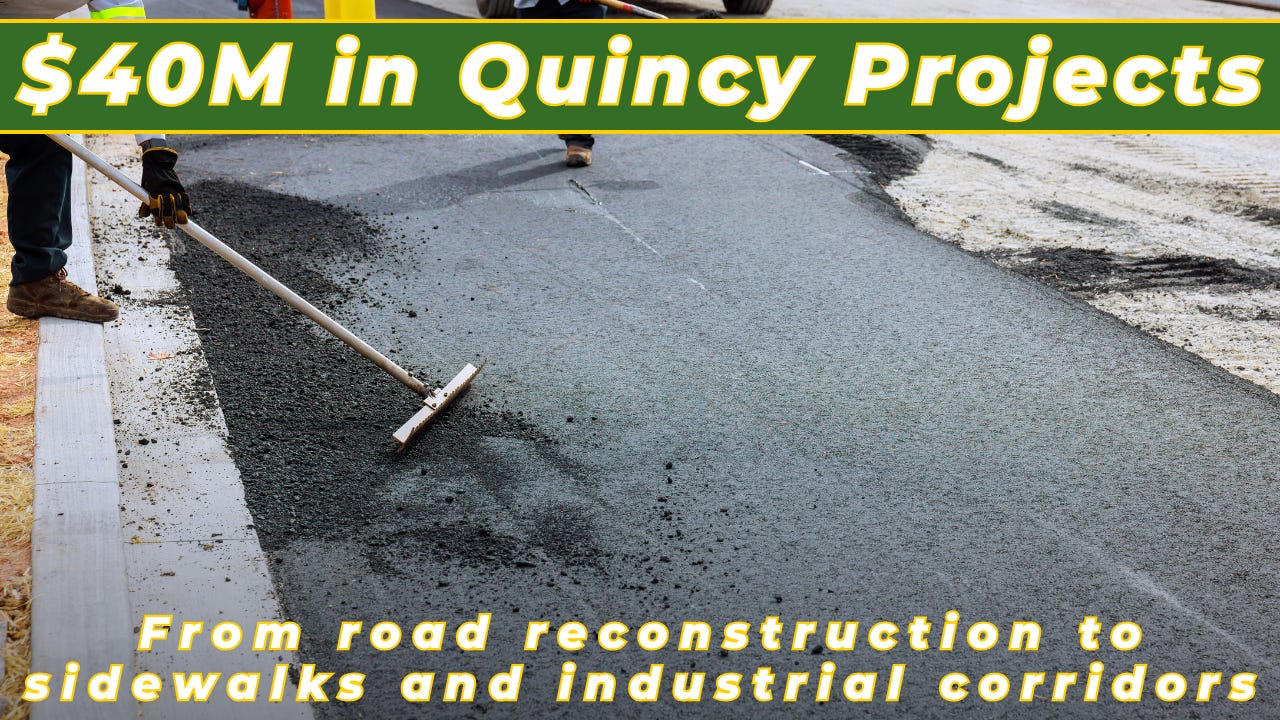
For most people in the 98848, transportation projects usually become visible when orange cones show up, roads get torn up, or traffic gets rerouted. But long before that happens, there’s a planning document quietly shaping what Quincy could look like years down the road.
The City of Quincy’s Six-Year Transportation Improvement Program outlines more than $40 million in planned street, sidewalk, trail, and infrastructure projects between 2023 and 2028. And while the document itself is mostly engineering language, funding tables, and project numbers, the bigger story is about growth, safety, accessibility, and preparing Quincy for what the community is becoming.
TL;DR
• Quincy’s six-year transportation plan outlines more than $40 million in planned infrastructure projects through 2028.
• Major focuses include road reconstruction, overlays, ADA accessibility upgrades, sidewalks, trails, stormwater systems, and industrial growth corridors.
• The largest project is a proposed $21 million reconstruction of M Street NE stretching toward the county boundary.
• Several projects are designed specifically to support heavy truck traffic and future industrial expansion.
• Other projects focus on safer pedestrian access, neighborhood connectivity, and quality-of-life improvements.
• The plan affects nearly every part of Quincy, from SW neighborhoods to industrial corridors and downtown connectors.
• Many projects rely heavily on local funding, showing how much infrastructure responsibility falls on the city itself.

This Is More Than Paving Roads
At first glance, transportation improvement plans can feel like little more than spreadsheets. But when you step back, this document tells a much bigger story about where Quincy believes it is headed.
Some projects are straightforward maintenance. Streets like Alder Street SW, Birch Street SW, J Street SW, Division Street SW, Columbia Way, and 1st Avenue SE are slated for overlays or resurfacing work. These are the kinds of projects most residents notice immediately because they directly impact daily driving, vehicle wear, and neighborhood appearance.
But other projects point toward Quincy’s continued expansion.
The city is planning entirely new roadway connections in growing areas, including the extension of R Street SW, T Street SW, and 10th Avenue SW. There are also plans to construct new roadway links like C Street NE between 3rd and 6th Avenue NE.
Those projects are less about fixing old infrastructure and more about preparing for future development and traffic flow.
Quincy Is Still Building Around Growth
One of the clearest themes throughout the plan is that Quincy is continuing to wrestle with rapid growth.
The transportation document repeatedly references stormwater systems, widened roads, heavy truck traffic, industrial reuse water systems, and expanded utility infrastructure. This is not the language of a city standing still.
One project in particular stands out.
The proposed reconstruction of M Street NE carries a projected cost of more than $21 million and stretches from Central Avenue North to the city/county boundary line. The scope goes far beyond simple paving. Plans include roadway widening, all-weather pavement, curb and gutter installation, stormwater handling systems, a 16-inch water main, industrial reuse water, and wastewater infrastructure.
That project alone signals how seriously the city is planning for continued industrial and commercial expansion north of town.
In practical terms, projects like this are about making sure Quincy can continue handling growth tied to agriculture, food processing, warehousing, and data center development without overwhelming existing roads and utilities.

Safety and Accessibility Keep Showing Up
Not every project is about growth or heavy industry.
A significant portion of the transportation plan focuses on accessibility and pedestrian safety throughout the 98848.
The city included a dedicated ADA Ramp Improvement Program to upgrade ramps throughout Quincy to current standards. There is also a broader Sidewalk Improvement Program that includes sidewalk installation, curb and gutter work, and stormwater handling infrastructure.
Another project calls for pedestrian-activated crossing signals with flashing beacons at F Street SE/SR-28 and 6th Avenue.
Those projects may not generate the same attention as a multi-million-dollar road reconstruction, but they matter deeply to families, seniors, students, and anyone trying to safely move through town without a vehicle.
The transportation plan also includes development of a Non-Motorized Transportation Plan intended to connect city blocks through trail paths.
That may sound small on paper, but long term, projects like that shape how walkable and connected a community feels.
Quincy’s Southwest Side Is Getting Major Attention
One area that appears repeatedly throughout the document is southwest Quincy.
Projects planned there include:
R Street SW and T Street SW expansions
13th Avenue SW reconstruction and widening
Division Street SW overlay
3rd Avenue SW roadway improvements
Alder, Birch, and J Street resurfacing
The 13th Avenue SW project is especially notable because it includes widening the roadway to accommodate multiple through lanes, turn lanes, sidewalks, lighting, school warning signs, and stormwater systems.
That is the kind of project that reflects both current traffic concerns and expectations for future residential and commercial growth.

Even the “Beautification” Project Says Something
Buried among the utility and roadway projects is something easier to overlook: the Quincy West Gateway Beautification Project along SR-28/F Street SW.
The project includes landscaping, irrigation, and updated “Welcome to Quincy” signage.
On paper, it is only a $300,000 project. But projects like this matter because they shape first impressions. They influence how residents feel about their city and how visitors experience Quincy when entering town.
It is another reminder that infrastructure is not only about traffic flow. It is also about identity.
What This Means to You
For residents across the 98848, this transportation plan offers a glimpse into where city leaders believe pressure points already exist — and where they expect Quincy to continue growing.
Some people will mostly notice smoother roads and fewer potholes.
Others will see safer pedestrian crossings, better sidewalks, improved accessibility, and more connected neighborhoods.
Businesses and industrial operators will likely pay close attention to projects involving freight corridors, heavy truck routes, utility expansion, and industrial infrastructure.
And for taxpayers, one thing becomes very clear reading through the document: Quincy is carrying a substantial amount of these transportation investments through local funding. While some projects include state or discretionary funding support, the overall program relies heavily on local dollars.
The larger reality is this: transportation planning is really community planning. Roads determine where growth happens, where businesses expand, how safely kids can move through town, and how connected neighborhoods feel.
The Roads Quincy Builds Now Shape the Quincy People Will Live In Later
Most people will never read an 18-page transportation improvement document filled with engineering codes and funding tables. But the decisions inside it will quietly shape daily life in the 98848 for years to come.
The roads we drive, the sidewalks kids walk on, the intersections people cross, the truck routes businesses depend on, and even the way Quincy welcomes people into town all start here — long before construction crews arrive.
And if this plan tells us anything, it is that Quincy is not planning for the community it used to be. It is planning for the one it believes is still coming.
