
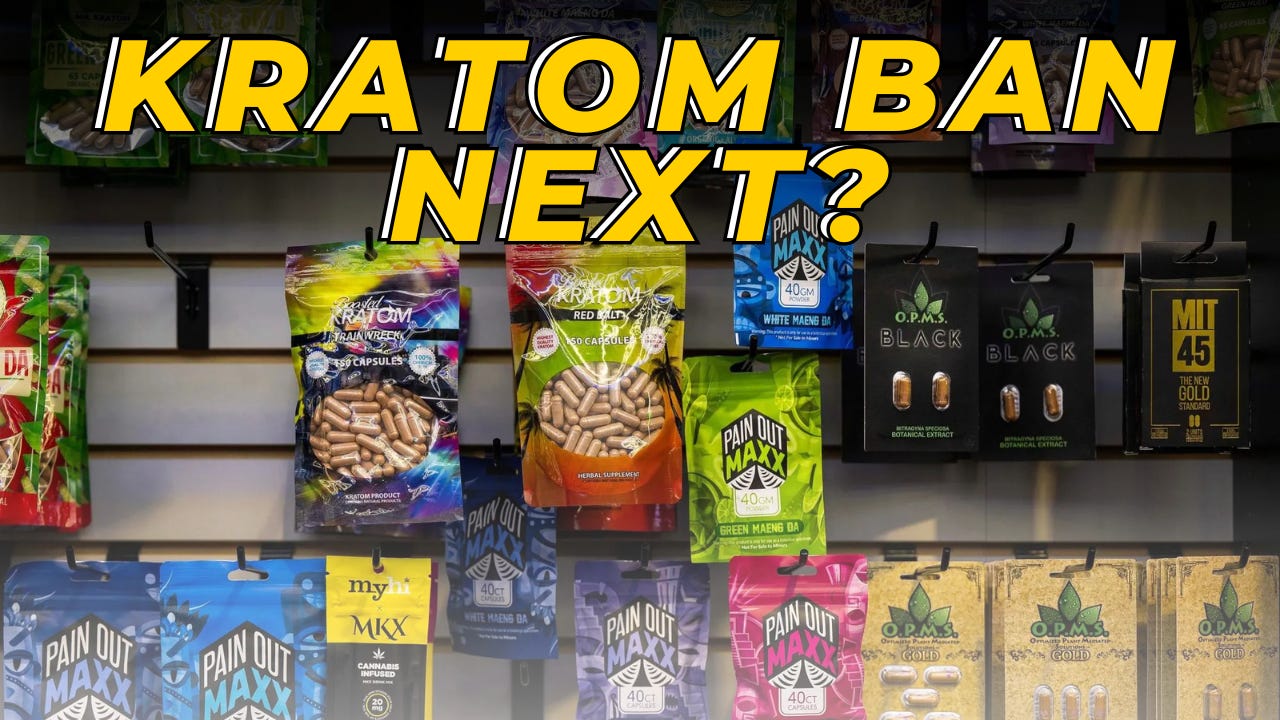
QUINCY — Kratom products sold in gas stations, convenience stores and smoke shops could soon be prohibited in Quincy as the city becomes the latest Grant County community to consider a ban urged by local public health officials.
The Quincy City Council unanimously supported moving toward a possible ban Tuesday night following a presentation from the Grant County Health District focused on youth access, increasingly potent kratom products and the lack of state regulation governing their sale.
No ban was adopted Tuesday, and kratom remains legal to sell in Quincy. Councilman Tom Harris recommended that city staff prepare a draft measure for the council’s next meeting, followed by a public hearing at a subsequent meeting. The rest of the council supported moving the proposal forward.
Reese Lovett, a health educator with the Grant County Health District whose work primarily focuses on youth marijuana and vaping prevention, told the council that kratom has become increasingly common in the same convenience stores, gas stations and vape shops where other products targeted by prevention programs are sold.

Kratom comes from Mitragyna speciosa, a tree native to Southeast Asia and part of the coffee family. Its leaves have traditionally been chewed or brewed into tea, but products now appearing in American stores can look considerably different. Lovett showed council members examples of pills, powders, drink mixes and small bottles resembling energy shots.
The plant contains compounds including mitragynine and 7-hydroxymitragynine, commonly known as 7-OH, which interact with opioid receptors. Lovett said lower doses can produce stimulant-like effects such as alertness and energy, while higher doses can produce opioid-like effects including sedation and euphoria.
Health officials placed particular emphasis on concentrated and synthetic products containing high levels of 7-OH rather than only traditional botanical kratom. Lovett compared the difference to marijuana flower and highly concentrated THC products, explaining that processing can dramatically increase the concentration of an active compound.
The products are also not difficult to find, according to the Health District. Lovett said staff recently looked for kratom while conducting assessments of Grant County retailers and estimated roughly 60% to 80% of the gas stations and convenience stores they examined carried some form of the product. He said kratom was found at nearly every vape or smoke shop assessed.
Unlike alcohol, tobacco and regulated marijuana, health officials said there is currently no comparable statewide system governing kratom retail sales or conducting routine compliance checks to determine whether stores are selling it to minors.
That accessibility is one reason the Grant County Board of Health adopted Resolution 26-06 in May, encouraging the Grant County commissioners and incorporated cities throughout the county to consider prohibiting the sale and distribution of kratom products.
Quincy is far from the first community to respond. Warden, Royal City, Mattawa and neighboring George have adopted bans, while Spokane and Spokane Valley have also prohibited kratom sales. Moses Lake took a less restrictive approach, choosing to limit sales to customers 21 and older rather than imposing a complete prohibition.
George’s experience offers a particularly close comparison for Quincy. Grant County Health District officials presented essentially the same concerns to the George City Council earlier this summer, and council members subsequently directed staff to prepare an ordinance. On July 16, George unanimously adopted Ordinance 2026-01, prohibiting the sale, advertisement and distribution of kratom products within city limits.
Grant County commissioners are also considering a prohibition covering unincorporated portions of the county, with a public hearing scheduled Sept. 8.

Lovett pointed Quincy council members to national poison center data showing a steep rise in reported kratom exposures. U.S. poison centers recorded 14,449 kratom-related exposures from 2015 through 2025, according to Centers for Disease Control and Prevention data, including 3,434 in 2025 compared with 258 a decade earlier.
Council members questioned Health District officials about how kratom-related medical emergencies are identified, whether other substances are commonly involved and whether the products can impair someone behind the wheel.
Health officials acknowledged that polysubstance use complicates overdose cases because people may also have alcohol, opioids or other drugs in their systems. Michelle Burrell of the Grant County Health District told council members kratom has nevertheless become a growing concern among medical and public health officials across Washington.
“It is high on the radar,” Burrell said, adding that health officers around the state are seeing increased rates.
Lovett said naloxone, commonly sold under the brand name Narcan, can help reverse opioid-like overdose effects associated with kratom products. He also said high doses can cause drowsiness and slower reactions that could impair someone’s ability to drive.
Council members spent considerable time questioning how a local prohibition would be enforced. One member raised concerns about banning a product without having a system comparable to tobacco or alcohol compliance checks.
Lovett said other communities have addressed enforcement through financial penalties that increase with repeated violations, coupled with education for retailers. He encouraged Quincy officials to contact cities that have already enacted bans to learn how their police departments and city staffs are handling enforcement.
The discussion also broadened beyond kratom when a council member asked whether other unregulated substances sold at convenience stores and smoke shops are on the Health District’s radar.
Health officials acknowledged that banning one product does not prevent another from emerging. They described public health prevention as an effort to remain ahead of new products as they appear, while identifying kratom as one of their primary concerns at present.
The council ultimately moved beyond simply hearing the presentation when Harris recommended beginning the city’s legislative process.
“One of the things I was wondering is if we could tonight possibly just move this thing a little bit forward,” Harris said, suggesting a draft be brought back for council review before setting a public hearing.
Council members unanimously agreed with Harris’ recommendation, and city staff confirmed the proposal will return at a future meeting.
The action puts Quincy on a path similar to the one George followed earlier this summer, but it does not guarantee a ban will ultimately be adopted. Council members will still have an opportunity to review the proposed language, consider enforcement provisions and hear from the public before taking final action.
For now, kratom remains available for sale in Quincy. With several Grant County cities already imposing bans, Moses Lake restricting sales to adults 21 and older, and county commissioners preparing to consider restrictions in unincorporated areas, Quincy has become the latest battleground in Grant County’s growing fight over whether kratom should remain on local store shelves.