
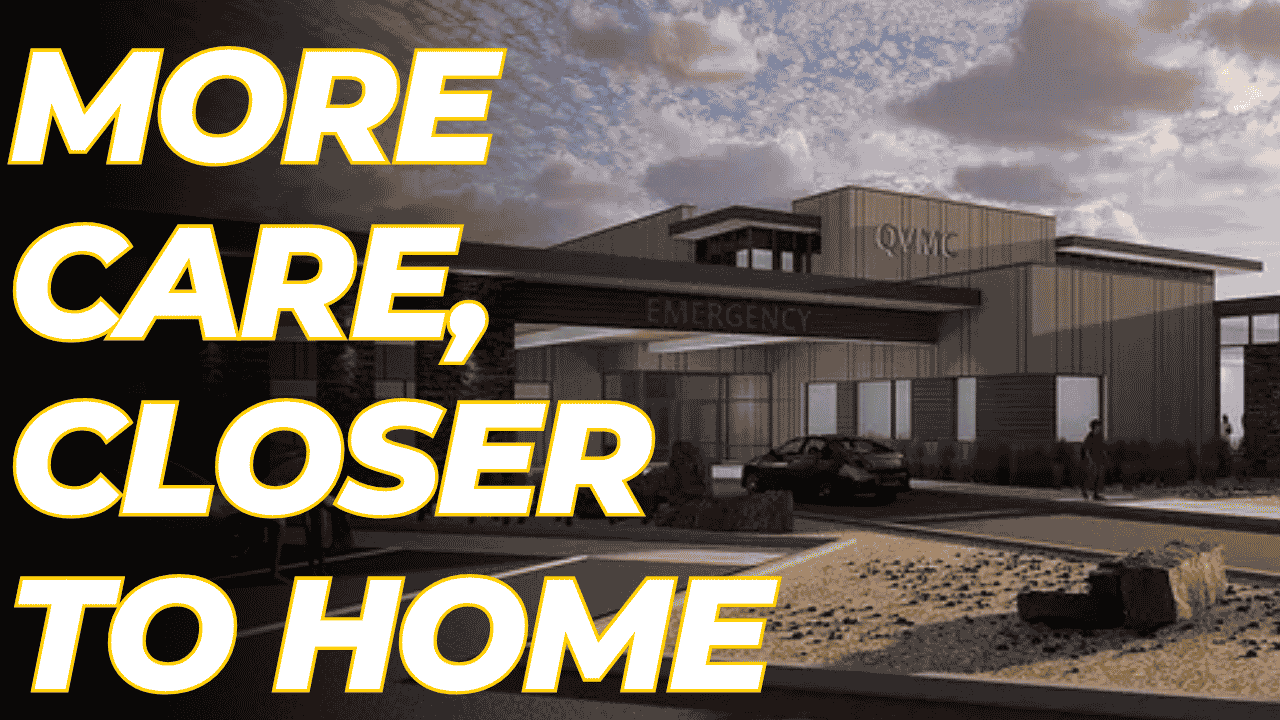
For years, the biggest question surrounding Quincy Valley Medical Center was whether the community could build a new hospital. With construction largely behind it and the new facility now in operation, a different question is beginning to take its place: What can Quincy actually do with the hospital it built? The answer is beginning to show up in patient-care numbers and department reports, including 17 MRI scans performed in July, wound care referrals arriving from providers outside the area, growing physical therapy use and local patients making use of hydrotherapy equipment that was not available in the old facility. Individually, each represents one hospital service. Together, they offer an early look at how health care in the 98848 is beginning to change inside the new building.
TL;DR
QVMC performed 17 MRI scans in July, exceeding the hospital’s stated monthly minimum of 12. Hospital leaders said MRI has met its required minimum every month since the service began.
MRI and ultrasound services are now alternating on Mondays, adding diagnostic services that previously required many local patients to travel elsewhere.
QVMC’s wound care program has grown from 41 visits in its first year to approximately 2,400 visits annually, growth that began well before the move into the new hospital.
July wound care referrals included patients sent to Quincy from Providence, Wenatchee Foot & Ankle and Kadlec.
Physical therapy visits increased 9% in the annual program review discussed by commissioners.
The hospital’s hydrotherapy capabilities are providing another rehabilitation option locally, with patients already comparing the new equipment with programs they have used elsewhere.
The developments offer an early measure of the new hospital based not on the building itself, but on what QVMC can provide inside it.

Seventeen MRIs and Fewer Trips Out of Town
One of the clearest examples of the change came from a relatively simple number in QVMC’s July departmental reports. The hospital performed 17 MRI examinations during the month, exceeding the 12 examinations hospital leaders said are required each month. CEO Glenda Bishop told commissioners QVMC has met the minimum during each month the service has been available and said the early utilization supports the hospital’s decision to bring MRI service to Quincy.
The significance is easier to understand from the patient’s side of the appointment. MRI service has historically meant leaving Quincy for many local patients, often traveling to Wenatchee or another community for imaging before returning to their local provider. During the board’s discussion of the new service, one person at the meeting remarked that it had been nice not having to go to Wenatchee. Bishop agreed.
QVMC is also alternating MRI and ultrasound services on Mondays, expanding the diagnostic work that can be performed locally. The arrangement does not eliminate the need for residents to travel for specialized medical care, nor does it mean every imaging need can now be handled in Quincy. It does, however, add another service that can keep some appointments closer to home.
The early utilization matters because specialized services have to be sustainable in a rural hospital. Expensive equipment or contracted services provide little benefit if there is not enough demand to support them. Seventeen MRIs in July do not establish a long-term trend, but meeting the hospital’s stated minimum every month since the service began gives QVMC an early indication that the demand is there. Bishop told commissioners the numbers showed that “the time was right” to add the service.
Wound Care Is Bringing Some Patients to Quincy
The MRI program tells one version of the rural health-care story: providing a service locally so residents do not always have to leave town. QVMC’s wound care program is increasingly showing the other side of that equation, with some medical providers outside the immediate community sending their patients to Quincy for treatment.
During the annual program review presented at the August meeting, commissioners heard that QVMC’s wound care program recorded just 41 visits during its first year. The program has since grown to approximately 2,400 visits annually. Hospital leaders attributed the increase to growing awareness of the service and stronger relationships with medical providers who refer patients for wound care.
The July referral report provides a glimpse of how far those relationships now extend. Bishop highlighted two referrals from Providence, which she said were QVMC’s first Providence wound care referrals of 2026. Wenatchee Foot & Ankle also referred a patient during the month, and two referrals came from Kadlec. Bishop described the outside referrals as evidence of the program’s growing regional reputation.
“When I tell you folks that regionally, this program is recognized as the best of the best, I’m not just making that stuff up,” Bishop told commissioners while pointing to the providers sending patients to Quincy. Her description is QVMC’s assessment of its program rather than an independent regional ranking, but the referrals themselves provide a measurable indication that medical providers outside Quincy are choosing QVMC for some of their patients.
That represents a notable position for a small rural hospital. Much of the discussion around rural health care understandably focuses on preserving enough local services to prevent residents from having to travel. A specialty program receiving referrals from larger communities reverses that familiar pattern by making Quincy the destination for some patients.

The Wound Care Growth Started Before the New Hospital
It would be tempting to look at the growth from 41 wound care visits to approximately 2,400 annually and attribute it to the new facility, but the history does not support that conclusion. QVMC staff developed the wound care program over a period of years, and much of its growth occurred before the hospital moved into its new building.
That distinction is important when considering what the new hospital is making possible. A new building cannot create a successful medical program on its own. It can provide staff with better space, equipment and infrastructure, but the clinical programs still depend on the people who develop them, the providers who refer patients and the community members who use them.
The annual program review gave commissioners some insight into that work. In discussing development of the hospital’s infusion program, Lupe Cortez wrote that she had focused on building something sustainable and making policies practical enough to work in real situations rather than merely on paper. She identified patient safety, risk reduction and support for staff as central considerations in that work.
Wound care therefore provides a useful example of the relationship between the old QVMC and the new one. The program was built through years of work in the former hospital. What the new facility provides is an opportunity for an established service to continue developing alongside additional clinical capabilities that were difficult or unavailable before the move.
Physical Therapy Adds Another Tool for Recovery
QVMC’s physical therapy department is also showing signs of growth. During the annual review, hospital leaders reported that physical therapy visits increased 9%, while the department’s report described the move into the new building as a positive change after the lengthy planning and transition process.
Among the department’s newer capabilities is hydrotherapy. Rather than introducing that service to commissioners through another statistical report, Bishop shared an encounter she recently had while attending dinner at the Quincy Senior Center. Several seniors sitting at her table began discussing their experiences with QVMC’s hydrotherapy program and comparing the equipment with similar programs they had used elsewhere.
Bishop said the seniors spoke positively about the staff and specifically commented on the hydrotherapy equipment, including how smoothly and quietly it operated. She joked that anyone wanting to hear appreciation for the new hospital should spend $12 and have dinner at the Senior Center, but said the unsolicited comments about hydrotherapy stood out because the residents were comparing the local program with rehabilitation experiences in other communities.
The conversation at one dinner table is not a formal patient satisfaction survey, and it would be a mistake to present it that way. What it does provide is a small example of how a piece of equipment purchased as part of a major hospital project eventually becomes something much more ordinary: a tool a local resident uses while recovering from an injury, surgery or medical condition.
That is ultimately where the value of rehabilitation equipment has to be measured. The important question is not whether it looked impressive when the new hospital opened, but whether therapists can use it effectively and whether patients benefit from having the service available close to home.

A New Building Changes More Than the Equipment
The August annual program review also included a broader assessment of what moving into the new hospital has meant for departments that were already serving patients before the move. In the clinic report, Rebecca Ramsey credited the new facility with providing improved space, updated equipment and a better layout, which she said contributed to increased efficiency, improved patient flow and a more comfortable care environment.
Those changes are less visible than an MRI machine or hydrotherapy equipment, but they may prove just as important over the life of the hospital. Most patients will never know whether a department has a more efficient layout or whether employees can move more easily between work areas. They will notice if appointments run more smoothly, if equipment is available when needed and if the environment makes receiving care easier.
That represents a significant change in how the community can begin evaluating the hospital project. During construction, progress was easy to see. Residents could watch the building rise, follow construction milestones and eventually walk through the finished facility. Now that the doors are open, many of the meaningful measures will be found in departmental reports, patient volumes, new services and the experiences of people receiving care.
The hospital building is not becoming unimportant. Rather, it is beginning to serve the purpose for which it was constructed, allowing attention to shift from the project itself to the medical care being delivered inside it.
Not Every Number Is Moving Up
The August reports also provide an important reason not to treat the new facility as a simple success story in which every service automatically grows.
QVMC’s July radiology activity overall was lower than the same month a year earlier, with hospital leaders discussing lower Emergency Department utilization as one factor affecting departments throughout the organization. Commissioners also examined a year-over-year decline in July emergency visits, although Bishop noted that July 2025 had been unusually high compared with both 2023 and 2024. She suggested wildfire smoke, reduced outdoor activity and the absence of events such as Watershed may also have affected the 2026 numbers.
That context matters because hospitals do not operate in isolation from the communities around them. Emergency visits, imaging, laboratory work and other departments can rise or fall together depending on patient activity. A new building does not guarantee higher utilization, and higher utilization is not necessarily the appropriate measure of success for every hospital department.
What the MRI, wound care and rehabilitation examples demonstrate is narrower but still significant. QVMC now has capabilities that either were not available locally before or are operating in a substantially different environment, and residents and outside providers are beginning to use them. Whether those services remain sustainable and continue growing will take longer to determine.
What This Means to You
For residents of the 98848, the value of these changes may not become apparent until a physician orders an MRI, a wound refuses to heal or someone in the family needs weeks of rehabilitation. At that point, the location of the service becomes much more than a line on a hospital department report.
Travel is one of the hidden costs of rural health care. An appointment outside Quincy can mean gasoline and additional driving, but it can also require time away from work, arranging child care, finding transportation or asking a family member to make the trip. For an older adult or someone recovering from an injury, the trip itself can become an additional burden.
That does not mean QVMC should attempt to provide every medical service locally. Rural hospitals are part of a larger regional health-care system, and patients will continue to need specialists, procedures and higher levels of care available in Wenatchee, Moses Lake, the Tri-Cities and other medical centers. The challenge is identifying the services that can be provided safely and sustainably in Quincy and that meet enough local or regional demand to justify bringing them here.
The early MRI utilization, continued growth of wound care and expanded rehabilitation capabilities provide three examples of how that calculation is beginning to work. One helps keep some Quincy patients from traveling elsewhere. Another is bringing some patients from outside the community into the 98848. The third is expanding the tools available to residents working their way through recovery.
The Next Measure of the Hospital Quincy Built
QVMC’s new hospital will ultimately be judged over years rather than by the first months of departmental reports. Services will change, patient volumes will fluctuate and hospital leaders will continue deciding which programs can be supported by a rural community. Some investments will prove more valuable than others, and the financial and operational results will take time to become clear.
Still, the August reports offer an early answer to the question that naturally follows the completion of a major community project. Quincy spent years talking about whether a new hospital could be financed, designed and built. Now residents can begin asking what that hospital allows their local health-care system to do differently.
The answer is beginning to take shape in fairly ordinary ways: an MRI appointment that does not require a drive to Wenatchee, a physician outside Quincy who decides to send a wound care patient here, or a local senior using hydrotherapy during rehabilitation. None of those examples carries the drama of watching a new hospital rise from the ground, but each provides a more practical measure of whether the investment is doing what it was intended to do.
For years, people across the 98848 watched Quincy build a hospital. The story now unfolding will take longer to tell because it will be measured less by concrete, construction schedules and ribbon cuttings and more by the care available when someone in the community needs it. The question is no longer simply whether Quincy could build a new hospital. It is what the community can do with the hospital it built, and the first answers are beginning to arrive.