
Most people in Quincy have probably seen the name before, maybe on a flyer, attached to an event, or mentioned at a meeting, but there is a good chance they still could not tell you exactly what Quincy Partnership for Youth is or how it fits into life in the 98848.
That is part of what makes this work so easy to miss.
Some of the most important things happening in a community are not always the loudest. They are the efforts happening in the background, the partnerships holding things together, the people trying to create safer, healthier paths for young people before problems grow bigger. That is where Quincy Partnership for Youth lives.
I recently sat down with Crystal Cruz, the coalition coordinator for Quincy Partnership for Youth. We did spend a little time getting to know Crystal, but the real focus of the conversation was the work itself: what this coalition is, who it serves, how it operates, why it matters, and what it actually takes to keep it going in Quincy.
TL;DR
• Quincy Partnership for Youth is a long-running community coalition focused on preventing substance use and promoting the wellbeing of youth in the Quincy School District area.
• It is not just one person or one office. The coalition includes schools, youth, law enforcement, healthcare, community organizations, and volunteers working together.
• The work goes far beyond one event or one campaign. It includes drug takeback efforts, medication safety education, family programming, community workshops, media campaigns, and teen activities.
• One of its clearest goals is building protective factors for young people: belonging, connection, healthy relationships, and positive opportunities.
• Crystal Cruz says one of the biggest current concerns is youth vaping, along with the broader mental health struggles many students are facing.
• The coalition also helps create healthy alternative spaces for teens and runs the Strengthening Families Program, which is free to families but costs tens of thousands of dollars to provide.
• Meaningful support right now looks like more community involvement, more volunteers, more partners, and more people showing up.
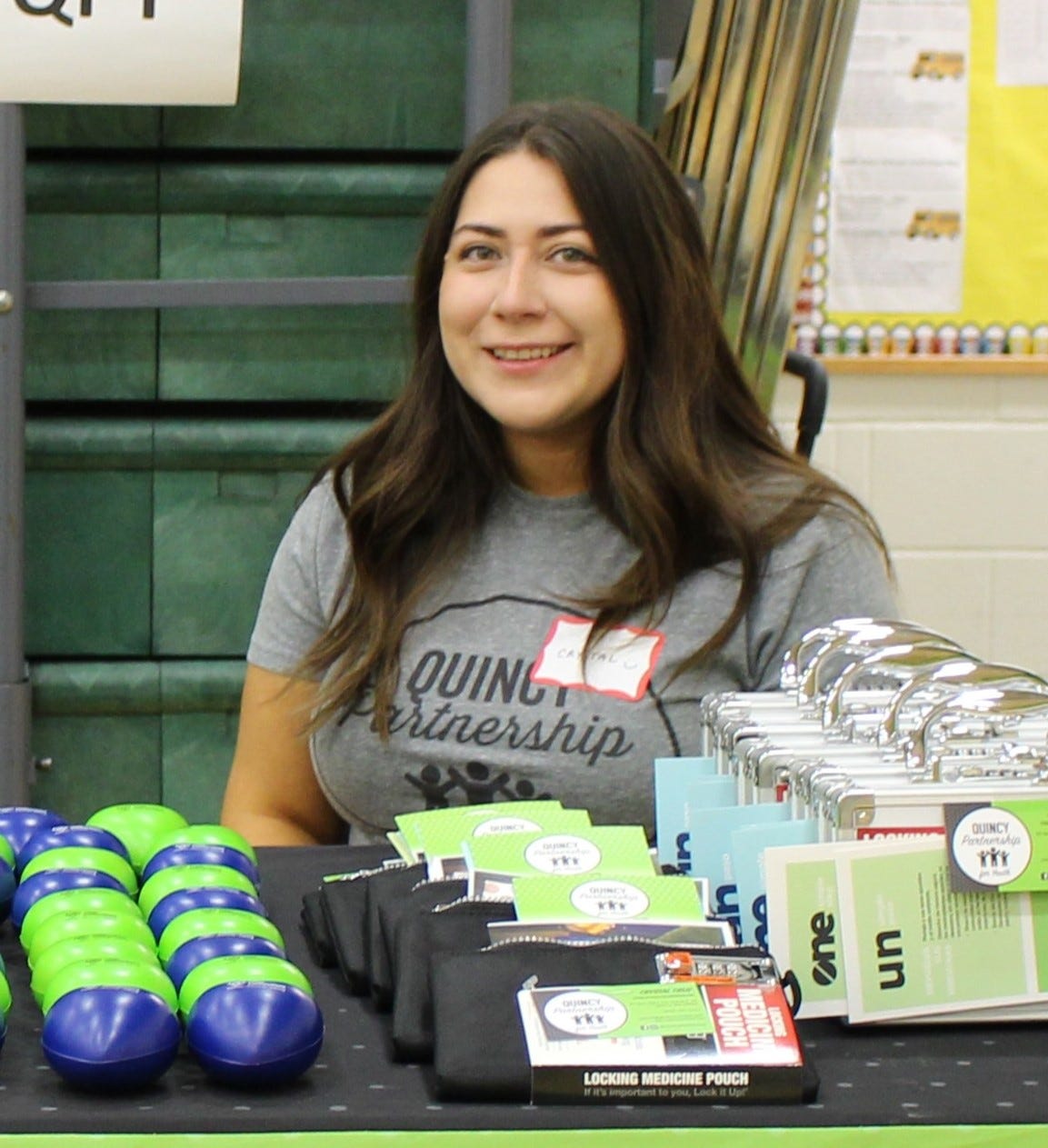
Crystal Cruz Local Kid Giving Back
Crystal Cruz is not new to Quincy. She grew up here, went through the Quincy school system, left for college, and then came home.
That part of her story will sound familiar to a lot of people in this town. Quincy has a way of doing that. People leave for a season, then come back because something about this place still feels like home.
For Crystal, that connection to Quincy is personal, but so is the work. Before stepping into this role, she spent some years working in pharmacy. Later, after studying psychology, she found her way into prevention work. She shared that part of what drew her to this field was growing up with a parent who struggled with substance use. For her, this work became a way to give back to the same community that raised her and to help prevent some of the struggles she experienced growing up.
That matters, because it helps explain why this is not just a job title or a program to her. It is rooted in lived experience and in a real desire to make Quincy stronger for the next generation.
But Crystal was very clear about something else too: Quincy Partnership for Youth is not “her program.” She may be the coordinator and the face some people see, but the coalition is much bigger than one person.
So What Is Quincy Partnership for Youth?
In the shortest version possible, Quincy Partnership for Youth is a coalition of community members working together to prevent substance use and promote the wellbeing of youth in the Quincy School District area.
That is the clean definition. The fuller truth is bigger.
The coalition began in 2003, originally as Communities That Care. At that time, Quincy was dealing with some serious challenges, including gang violence, teen pregnancy, and substance use. Community members came together because they wanted to create something different for local kids. They wanted young people to have places to belong, positive ways to contribute, and a stronger sense that they mattered here.
In 2018, the coalition became Quincy Partnership for Youth, but the heart of the work remained the same.
At its core, the coalition is trying to build what are often called protective factors. In plain terms, that means giving kids more of the things that help them stay grounded and healthy: a sense of belonging at school, better peer relationships, stronger family connections, positive adult support, and real opportunities to be part of something good.
That may sound broad, but broad is exactly the point. The problems facing young people are rarely isolated, so the response cannot be isolated either.

This Is a Coalition, Not a Solo Program
One of the most important things Crystal said during our conversation was that people would probably be surprised by who is actually involved.
When many residents hear the name Quincy Partnership for Youth, they may picture one office, one program, or one person doing outreach. That is not what this is.
The coalition brings together people and organizations from across the community. Crystal pointed to local schools, youth, the police department, healthcare partners, and others who all have a seat at the table. In her words, it is one of the few places where all of those parts of the community are sitting together and talking about the same issues and projects.
That matters.
It means this is not just a standalone nonprofit effort floating beside everything else. It is part of the local support structure. It is a place where different parts of Quincy can align instead of duplicating work or operating in silos.
That also means the coalition often works behind the scenes. Sometimes the public sees the event, the workshop, the activity, or the support, but never realizes Quincy Partnership for Youth helped make it happen.
Crystal described her own role as mostly background work. She handles promotion, coordination, registrations, logistics, and support. The faces people interact with directly may be facilitators, volunteers, partner organizations, or event leaders. In many ways, that is a sign the coalition is functioning the way it should. The work is shared. The mission belongs to the community.
”I feel like a lot of times people expect prevention to be this one instance. It’s not, it’s choosing day after day to provide these opportunities and everyone can participate.”
What They Actually Do in Quincy
This is where the conversation gets important, because Quincy Partnership for Youth is not just about awareness. It does real on-the-ground work.
That includes drug takeback efforts, medication safety education, community workshops, media campaigns, and the Strengthening Families Program. It also includes healthy alternative events for teens, designed to create safe, drug-free spaces during times when young people might otherwise be at greater risk.
That last part matters more than a lot of adults may realize.
Crystal said the coalition has been working to support healthy alternative events for teens, including activities during higher-risk times like the first weekend of spring break. The idea is simple but important: if the community keeps saying there are not enough places for kids to go, then part of prevention work is helping create those places.
In Quincy, that often means partnering with what is already working instead of trying to reinvent everything from scratch. The coalition supports events like Teen Night through the recreation department, helps with snacks and collaboration, and works alongside groups like Fellowship of Christian Athletes when they provide after-game spaces for students to gather safely.
That approach makes sense. Good community work is not always about building brand new systems. Sometimes it is about finding the gaps, strengthening what already exists, and helping more young people access it.
Why the Drug Takeback Work Matters
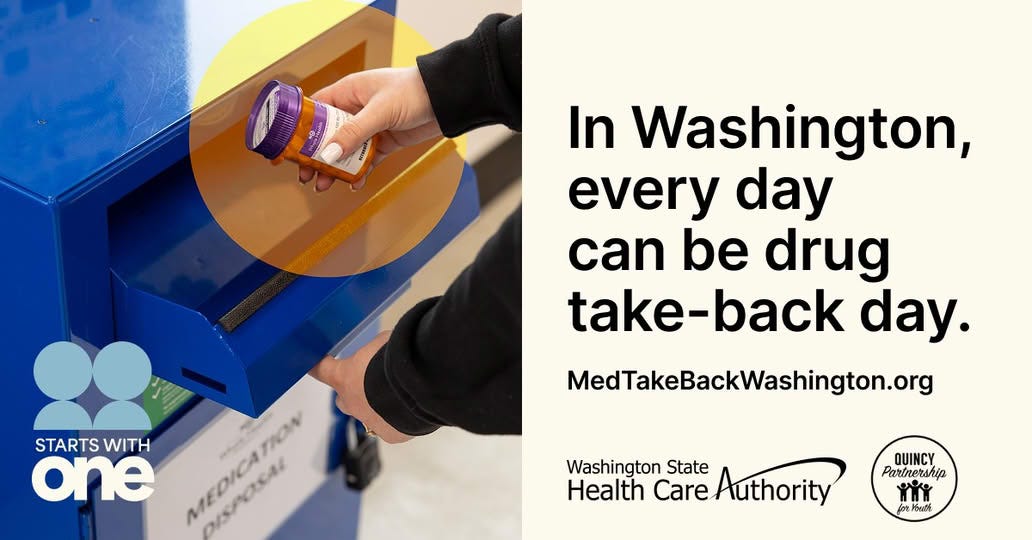
One of the clearest examples of how the coalition fits into the bigger community picture is the upcoming drug takeback work with Quincy Police Department.
At first glance, many people probably assume that kind of effort belongs entirely to law enforcement. In one sense, it does. The police department hosts the event. But Quincy Partnership for Youth helps make the broader effort work by handling promotion, inviting partners, providing supplies, and helping educate the public about safe medication storage and disposal.
That includes distributing locking medication bags and boxes, along with sharing information about local medication drop box locations.
And that education matters because many people still do not know those drop boxes exist, or they see them without understanding what they are for.
Crystal also made an important point about family habits. In many households, especially in communities where people are used to holding on to medications “just in case,” unused prescriptions can sit in cabinets for months or years. The problem is that an unlocked medicine cabinet can turn into easy access for a teenager, a visitor, or anyone else who should not have those medications.
That is not an abstract concern. It is exactly the kind of everyday, ordinary access point that prevention work is trying to address before it becomes a crisis.
The coalition has worked to secure grant and donor support so those locking medication bags and boxes can be offered to the community for free. Most recently, Crystal said Wenatchee Valley Medical Group donated $3,000 to help purchase those supplies.
That is a good example of what this coalition looks like in practice. It is not just messaging. It is identifying a risk, building partnerships, raising support, and putting tools directly into people’s hands.
The Strengthening Families Program Is Not What Some People Think
One of the most useful parts of this conversation was hearing Crystal address a misconception that many people probably share.
The Strengthening Families Program can easily sound like something meant only for families in crisis or families already struggling. Crystal said that is one of the biggest misconceptions they face, and she was clear that it is not an intervention program.
It is a program designed to help families build stronger relationships, improve communication, spend more intentional time together, and add more tools to the toolbox they already have.
In other words, this is not just for families in trouble. It is for families who want to be stronger.
That is an important distinction.
A lot of healthy families never sign up for something like this because they assume it is for somebody else. But Crystal described a program where families spend time playing games, sharing meals, learning together, and building better habits of communication. In a world where everyone is busy, parents are stretched thin, kids are in sports and activities, and quality time gets squeezed out, that kind of space has real value.
And it is not cheap to provide.
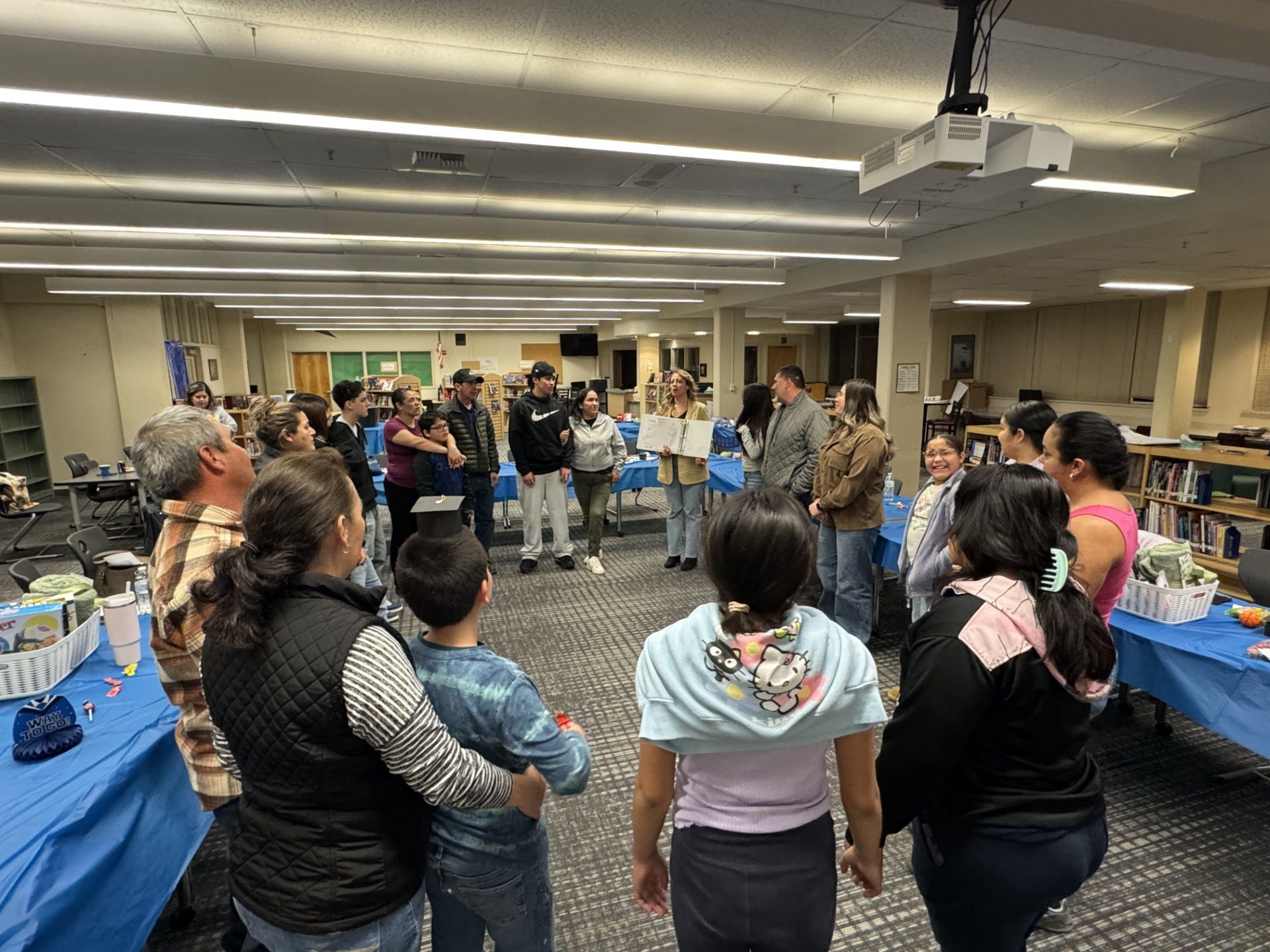
Crystal said it costs roughly $25,000 to run one group. Because the coalition offers both English and Spanish sessions, the full cost lands closer to $45,000 to $50,000. Their goal is typically 12 families in each group (24 Families Per Cycle). This past cycle, nine families graduated.
That money covers real, practical things: trained and certified facilitators, shared meals each week, childcare for younger children, and the space and structure needed to help families fully participate. The program is free to local families, but it is not free to run.
That is worth saying plainly because impactful community work is often invisible in the same way its price tag is invisible. People see the graduation or hear about the program, but they do not always see the actual infrastructure required to make it possible.
”Anyone can be involved in prevention! Prevention looks like human connections, it looks like a sense of belonging and connection in every aspect of the community. “
What They Are Seeing Right Now
When I asked Crystal what issues are most concerning right now for Quincy youth, she pointed first to vaping.
She was careful to say something important: most students are not vaping. That matters, and it is worth saying clearly. But the students who are vaping often do not even know exactly what they are using beyond a flavor description. That is part of the problem.
Schools have responded with prevention efforts, including vape detectors in some places, but the broader challenge remains: how do you educate kids on the risks without accidentally making the product more interesting or familiar? That is a real tension in prevention work, and Crystal did not pretend otherwise.
The second major concern she pointed to was youth mental health.
Again, this is not unique to Quincy, but that does not make it any less urgent here. Crystal talked about the importance of connection, belonging, and reducing isolation. Those things may sound simple, but they sit at the heart of real prevention work.
She also referenced the reality that a significant number of students in Grant County report struggling with suicidal thoughts. That is not a number you can brush aside. It is a reminder that mental health is not some secondary issue sitting off to the side of community life. It is central to it.
When adults talk about “supporting youth,” sometimes they jump straight to rules, enforcement, or activities. All of those have a place. But Crystal kept bringing it back to human connection. To belonging. To trusted relationships. To making sure kids know they matter and have people around them.
That is prevention too.
What Success Looks Like
Success in this kind of work is not always easy to measure in one clean number.
Crystal talked about success as continued community involvement, healthy families, healthy youth, and long-term sustainability. She also said something that stood out: success means seeing new people come into the work, especially younger generations who will eventually carry it forward.
That is one of the most mature answers she gave in the whole interview.
Too many important community efforts are built around a handful of committed people without a real plan for what happens after them. Quincy Partnership for Youth has been around for more than two decades. If it is going to keep serving Quincy for the next two decades, it has to keep growing new leaders, new volunteers, and new partners.
That is not just smart organizational thinking. It is community thinking.
Crystal herself is part of that pattern. As a young person in Quincy, she participated in local programming. Now she is back helping build similar opportunities for the next generation. That kind of full-circle story is exactly how community work survives.
How People Can Get Involved
This may be the most practical part of the whole conversation: people do not need to wonder where to start.
Crystal said Quincy Partnership for Youth holds a monthly meeting every second Thursday at the Port of Quincy, and anyone can attend. Youth can attend. Adults can attend. Community members who care about what is happening with young people in Quincy can show up and learn.
There are also volunteer opportunities connected to projects and events, though because the coalition works closely with youth, volunteers do need to complete a background check.
For people who cannot volunteer their time, there are still other ways to help. The coalition can use in-kind donations, food, supplies, and funding. Just as important, people can attend events, participate in programs, and stay aware of what is happening.
Crystal’s answer about meaningful support right now was simple: they need more people involved.
That may sound almost too simple, but it is probably the most honest answer possible. A coalition only works when the community actually treats it like something that belongs to them.
What This Means to You
Even if you do not have kids at home, this still matters to you.
The young people growing up in Quincy right now are the future workers, parents, leaders, volunteers, and neighbors of this community. If we want a healthy Quincy in ten years, twenty years, or forty years, then the work of helping young people build strong relationships, healthier coping skills, safer habits, and a deeper sense of belonging is not optional. It is foundational.
It also means this work cannot be pushed off onto one coordinator, one school, one church, or one department.
Quincy Partnership for Youth is one of those efforts that reminds us how small-town communities are supposed to work. Different groups come together. People share the load. Problems are faced earlier instead of later. Families are supported before they are in crisis. Young people are given reasons to stay connected instead of drifting toward whatever else is available.
And if you have ever said Quincy needs more places for kids to go, more support for families, better community connections, or more investment in the next generation, then this is one of the places where that work is already happening.
Strong communities do this on purpose
One of the best lines Crystal shared in our conversation was that prevention looks like human connection.
That is the part people should hold onto.
Prevention is not just a slogan. It is not just a campaign. It is not a one-time fix. It is the steady, repeated decision to build a community where young people have places to belong, adults they can trust, families with stronger tools, and safer options when life gets hard.
That kind of work does not always make noise. It does not always get headlines. But it is some of the most important work happening in any town that wants to stay healthy and strong.
Quincy Partnership for Youth has been doing that work here for more than 20 years. The question now is whether more of the community will recognize it, support it, and help carry it forward.
Because if this community truly believes the next generation matters, then this is exactly the kind of work that deserves to be seen.