
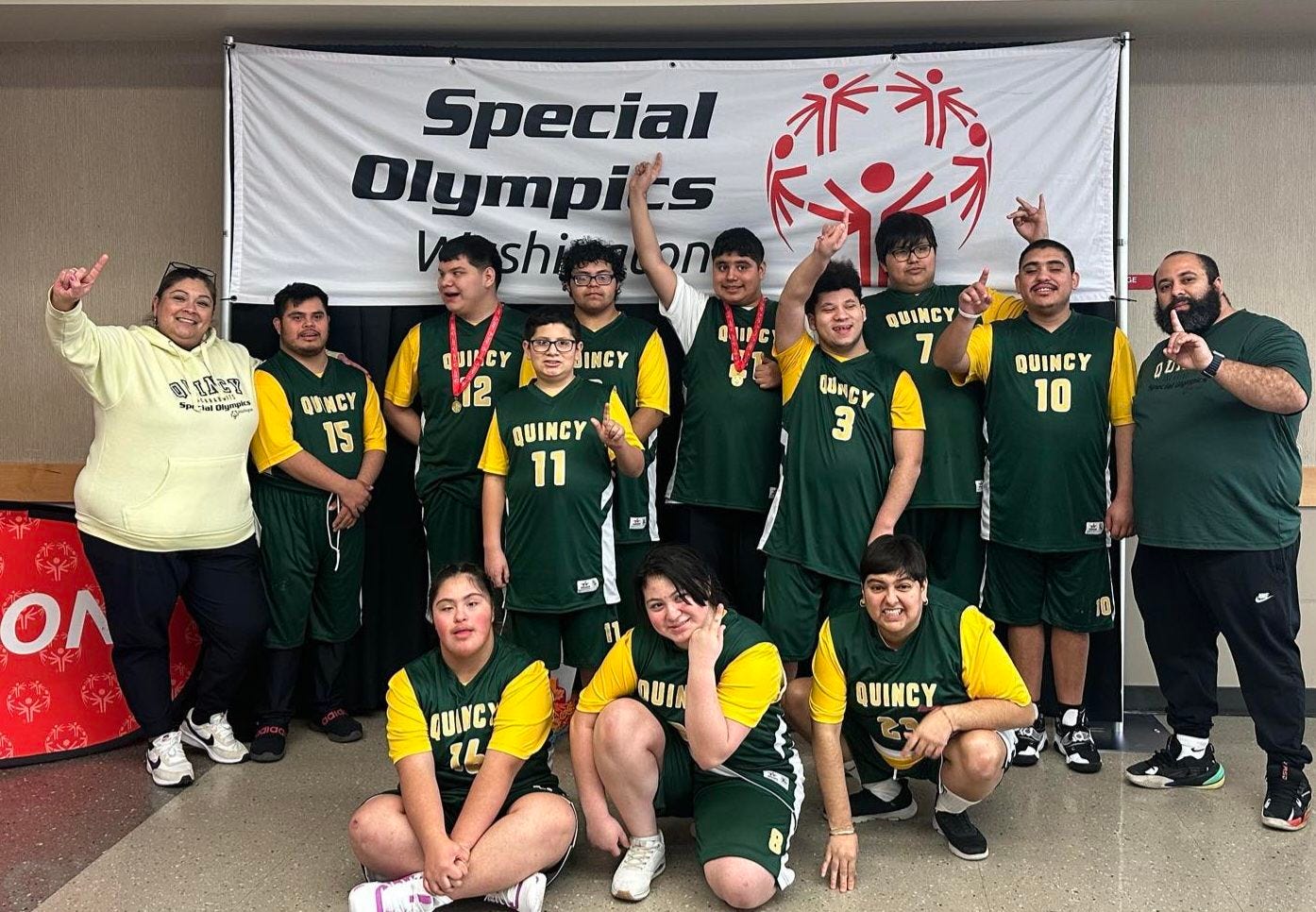
Seven athletes from Quincy Special Olympics went to regionals this year.
All seven qualified for state.
For a program with only about 12 athletes total, that is a huge accomplishment. In any sport, at any level, sending that high a percentage of your athletes to state competition is impressive.
But honestly, after sitting down with Coach Joseph James for nearly two hours, the placements stopped feeling like the biggest part of the story pretty quickly.
The real story was in the way he talked about the athletes.
The way he talked about parents seeing their kids compete publicly for the first time. The way he talked about friendship. The way he talked about kids learning to speak up for themselves. The way he talked about people in our own community who are often seen as disabilities before they are seen as people.
And honestly, maybe the line that stuck with me most came right near the beginning.
“They are lost members of our community sometimes,” Coach James said. “People tend to forget that they’re around.”
That hit hard.
Because the more we talked, the more obvious it became that Quincy Special Olympics is doing something much bigger than helping athletes run races or win medals. It is creating a place where athletes with special needs are seen, known, challenged, celebrated, and connected.
And in a small town, that matters.
It Started With His Son
Like a lot of meaningful things in small communities, this didn’t start as some giant organization or strategic plan.
It started with a dad trying to find something for his son.
“My son,” Coach James said when I asked what got him involved. “I started off kind of selfishly. I did it for my kid.”
He and his late wife realized there simply wasn’t much available for their son to participate in, so they decided to start Special Olympics in Quincy themselves.
That sentence sounds simple now, but anybody who has ever built anything in a small town knows there is nothing simple about starting something from scratch.
And this year carried even more weight emotionally.
Coach James shared that his wife passed away in February. In previous years, she handled much of the organization while he focused on coaching. This season he took on both responsibilities while trying to keep the program moving forward for the athletes.
You could hear the emotion underneath parts of the conversation when he talked about it. But you could also hear the pride.
Because somehow, during one of the hardest years of his life, every Quincy athlete who competed at regionals qualified for state.
The team is also supporting Miley Arellano, who was unable to compete because of an injury.
“All seven of our athletes that participated in regionals all made state,” Coach James said. “That’s rare for any community.”
It is.
Especially here.
Here are the outstanding results:
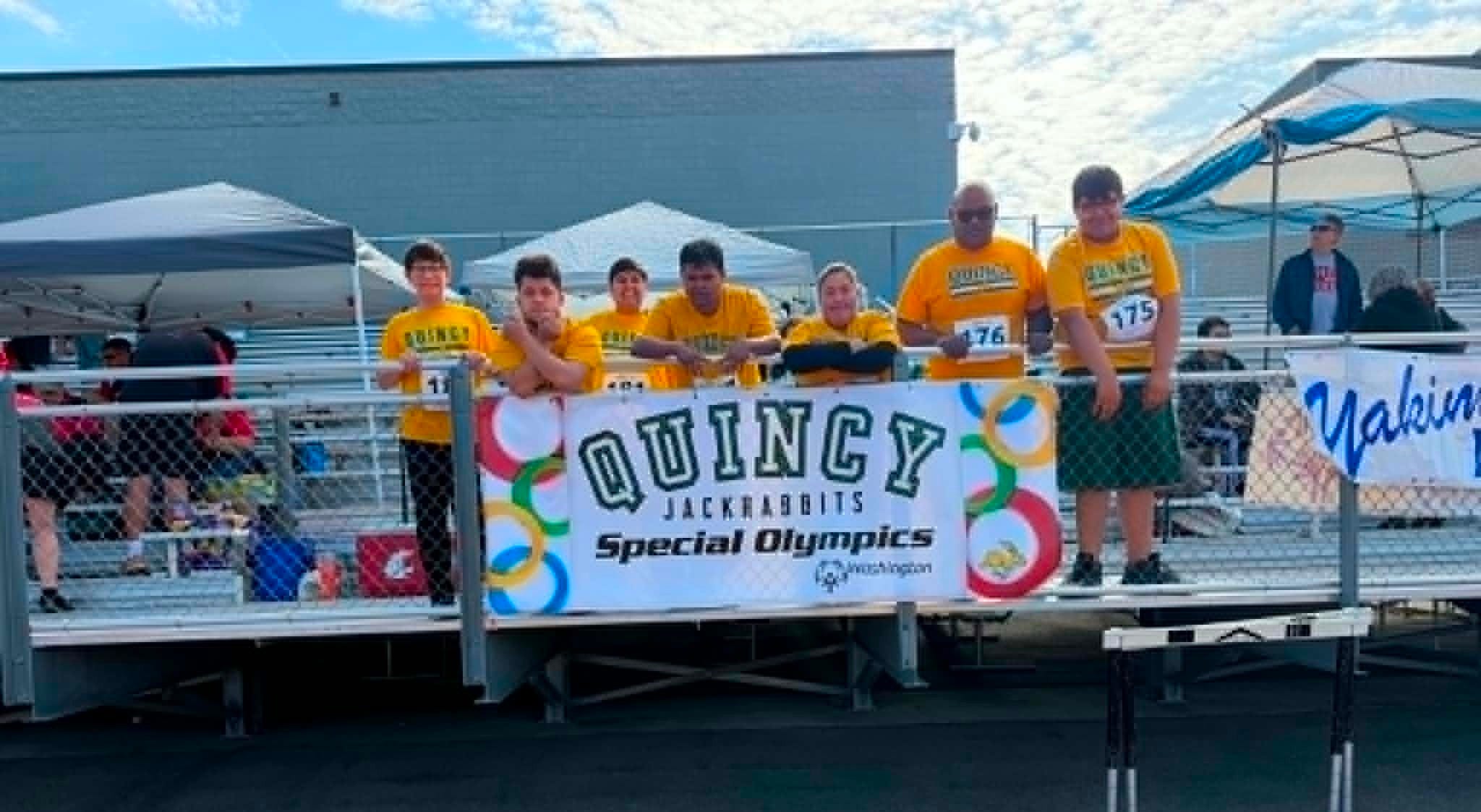
🏃 Carlos Urbina (Quincy Middle School) – 1st place in the 100m and 200m dash
🏃 Christopher James (Quincy High School) – 2nd place in the 100m and 200m dash
🏃♀️ Yaretzy Romero (Quincy High School) – 1st place in the 200m dash
🏃 Diego Gonzalez (Quincy High School) – 2nd place in the 100m and 200m dash
🚶 Marcos Armindenzi (Quincy High School) – 1st place in the 50m walk and 100m walk
🏃 Alejandra Lopez 34
🏃 Dustin Ehinger 37
We also want to recognize Miley Arellano, who was unable to compete due to an injury. We are cheering you on and wish you a speedy recovery!
Good luck at state May 29–31, 2026 🏆
Beyond the Athletics
One of the things I appreciated most about the conversation was that Coach James never reduced any athletes to a diagnoses. He talked about them with the dignity and respect that all people deserve.
You can see in his face as he talk about his athletes how much he enjoys his connection with each one of them.
At one point he laughed and said, “We have characters.”
Then he started describing them one by one.
Marcos is the funny one who says the most random things at exactly the craziest times. Yaretzy is the “drama queen” who sings and does a little bit of everything. Miley loves to sing too. Alejandro likes playing pranks and scaring people. Christopher is the happy-go-lucky one of the group.
And somewhere in the middle of describing all their personalities, Coach James said something that honestly feels like the core of the entire story.
“They’re all great athletes,” he said. “They’re all great humans.”
That may sound obvious.
But I don’t think we always do a great job of remembering that as a society.
Too often people with special needs get defined entirely by what they struggle with instead of who they are. We slap a label on it like autistic, crippled, disabled, down syndrome, ADHD and even neurodivergent. It makes people more comfortable.
Coach James sees the unique athlete that is facing their own set of challenges like every other athlete he coaches at Quincy United. An out of shape athlete and an athlete lacking confidence is the same on every field. They are just athletes who need help training for their goals.
At a very human level Coach James sees his people first. Funny people. Competitive people. Emotional people. Goofy people. Loving people.
People who are training for athletics
And maybe that sounds like a small thing, but I don’t think it is.
The Victories Nobody Sees
The medals are easy to celebrate.
The harder things to notice are often the things that matter most.
Coach James talked about athletes who could barely finish a 50-meter race when they started but are now running 100 and 200 meters.
He talked about parents who doubted whether their child could finish the race at all. Then he talked about one athlete who medaled in the 200.
That mattered.
But another story mattered even more.
Coach James described an athlete who used to barely speak and struggled socially. Over time, through the program and interaction with teammates, that athlete started finding confidence.
“We went from a kid being shy, to not talking, to actually defending himself at school,” James said. “Like, ‘Hey, leave me alone,’ or, ‘Hey, stop.’”
Think about that for a second.
That is not a sports story anymore.
That is a life story.
And honestly, that theme kept surfacing throughout the interview. The longer we talked, the more it became obvious that Quincy Special Olympics is not really about creating athletes nearly as much as it is helping people build confidence, friendships, routines, identity, and connection.
Coach James told me about athletes who now have friends they can call to go to the movies with. Friends who understand them. Friends they can invite over to jump on the trampoline or watch Transformers.
“Where before he might not have that friend, now he has a friend,” James said.
That line stayed with me too.
Because at a really basic human level, everybody wants the same thing.
Everybody wants a place they belong.
Not Just For Kids
Another thing James really wanted people to understand is that Special Olympics is not just for children.
The Quincy program currently serves athletes ranging from around age 10 into adulthood. Their oldest athlete right now is 34 years old, and James said there was even a 90-year-old athlete competing at regionals this year.
That matters because the need for community, activity, friendship, and belonging does not disappear once somebody ages out of school.
“There are adults in our community that have autism, that have down syndrome, that have all these special needs, and there’s an outlet for them,” Coach James said.
He also emphasized that there truly is something for almost every athlete. Wheelchair events. Assisted walks. Modified throwing events. Activities designed for different physical abilities.
“There’s something for every athlete,” he said.
And honestly, listening to him talk, it became pretty clear this is about much more than sports participation.
It is about visibility.
It is about integration.
It is about making sure people with special needs are not hidden away from the rest of the community.
“We want them to be out there,” Coach James said. “We want them to be part of the community.”

The Community Side Of This Story
One thing I found really interesting was how much Coach James talked about the families. The athletes are building friendships, but so are the parents and caregivers.
Families help each other with rides, schedules, school challenges, advice, and support. Over time, the program has become its own little support system.
“The families have to be involved because the athletes are just the athletes,” Coach James said. “But together, now we’re forming a big community.”
That honestly feels very Quincy to me.
People helping people.
People figuring it out together.
And there are signs the broader community is slowly starting to rally behind the athletes too. The American Legion donated. The thrift store donated. The Booster Club is helping purchase state shirts for the student athletes heading to state. The school district has started recognizing the athletes publicly as well.
That visibility matters.
Especially for kids and families who may have spent years feeling invisible.
What The Athletes Teach The Rest Of Us
Near the end of the interview, I asked James what these athletes teach the rest of us about resilience and determination.
He paused for a while before answering.
“That’s the first time this question has ever been asked to me,” he said.
Then he explained that watching the athletes push through challenges changes your perspective on your own problems. “That push, that drive, that motivation,” he said. “That’s what it’s about.”
He also said coaching Special Olympics changed him personally. It taught him patience, empathy, and the importance of understanding people instead of immediately judging them.
“Not everybody learns as fast,” he said. “Not everybody runs as fast.”
Honestly, that may be one of the quiet lessons underneath this whole story. These athletes are not just growing themselves, they are changing the people around them too.

Looking Toward State
Now Quincy Special Olympics heads to state with seven athletes representing the community.
That deserves recognition all by itself.
But after hearing Coach James talk about the athletes, the families, the friendships, the growth, and the sense of belonging this program creates, it feels pretty clear the biggest victories are already happening long before anybody steps onto a track.
When I asked Coach James what he would want the community to know most about his athletes, his answer came quickly.
“They’re loving,” he said. “They are the first ones to give you a hug, even when they’re mad at you.”
For a lot of these athletes and families, this program is bigger than sports now.
It is friendship.
It is confidence.
It is community.
It is a place where they are seen, known, and included.
And honestly, listening to Coach James talk about the athletes, it becomes pretty hard not to realize something important:
This was never really about medals.
It was about making sure nobody in the 98848 gets forgotten.