
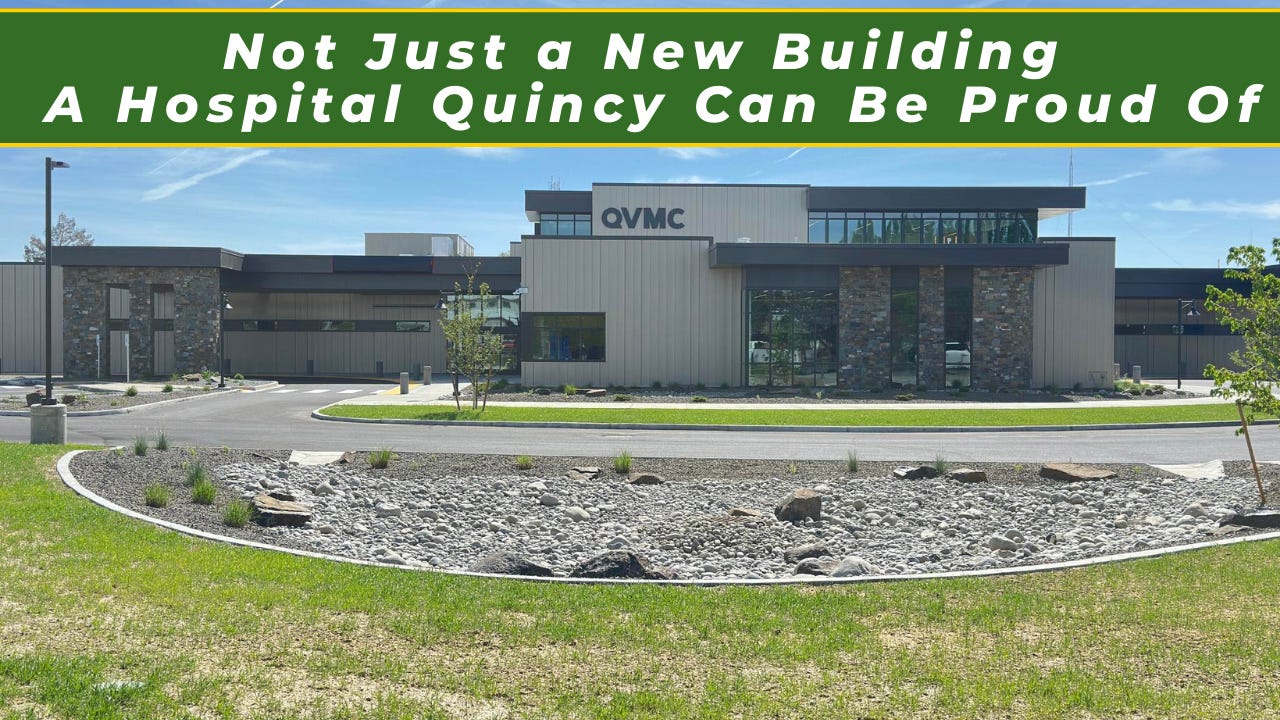
QUINCY — I spent Tuesday night at the Quincy Valley Medical Center commissioner meeting, and I walked out thinking something simple: we didn’t just build a beautiful hospital — we built it responsibly.
That may not sound flashy, but in a small town, that matters.
The hospital just completed a three-year state accountability audit covering 2022, 2023, and 2024 — years that included the full 18-month construction of the new facility. Because of the size and complexity of that project, auditors applied additional testing to make sure finances, procedures, and oversight were solid.
The conclusion was clear: the district complied with state laws and regulations, followed its own policies, and maintained adequate controls to safeguard public resources.
In plain English, the books are in order.
A Bigger Project Meant Bigger Scrutiny
When a public hospital builds a new facility, the scrutiny goes up. There are more invoices, more contracts, more moving pieces. Auditors didn’t just glance at the numbers — they specifically noted they tested areas more tightly because of the scale of the construction project.
They didn’t find anything of concern.
That speaks to process. Commissioners reviewed invoices before payment. The finance committee double-checked. Spending authority procedures were followed. It wasn’t glamorous work, but it was steady and consistent.
Three years ago, the auditors flagged a technical issue related to how executive session time limits were recorded in meeting minutes. It wasn’t dramatic, but it was corrected. Templates were updated. Practices tightened. This time around, the auditors specifically noted that improvement.
That’s how accountability is supposed to work.
A New Hospital That’s Already Busy
Beyond the audit, another theme emerged from the meeting: the new hospital is being used.
January is typically considered a slower month, but leaders shared that patient activity and services are up across multiple areas. One unexpected indicator came from dietary services. In January of last year, the hospital served 471 meals. This January, that number jumped to more than 1,000.
That isn’t just a kitchen statistic. It’s a reflection of more patients receiving care locally — more people staying here instead of driving elsewhere.
It’s also a reminder that this building isn’t sitting empty. It’s working.
Inspections, Fire Marshals, and the Fine Tooth Comb
The hospital also recently underwent a dual Department of Health and CMS survey, along with a full fire marshal inspection of the new building.
Anyone who has lived through a new construction inspection knows what that means: every door opened, every system checked, every detail examined. Leaders described it as thorough — and it was. But the issues identified were largely minor corrections, documentation updates, and contractor follow-ups.
In other words, no red flags. No surprises. Just the normal tightening that happens when a brand-new facility gets its first deep look.
Behind the scenes, staff have also implemented preventive maintenance tracking software to monitor filters, fire systems, and building components. It’s the kind of boring infrastructure work that prevents expensive problems later. You don’t see it, but you benefit from it.
Understanding the Numbers
One topic that always draws attention is the monthly financial report. January showed roughly a $200,000 net loss on paper. That number deserves context.
The new building now carries approximately $200,000 per month in depreciation expense. The old building had very little left to depreciate. Depreciation is an accounting entry — it is not cash leaving the hospital’s bank account.
Bills were paid. Staff were paid. Supplies were paid. The accounting picture simply looks different because the building is new.
The hospital is also navigating the modern realities of healthcare billing — long insurance cycles, appeals, and credentialing delays — all of which impact when revenue is recognized. Those are structural challenges across the industry, not unique to Quincy.
Why This Matters
It’s easy to celebrate ribbon cuttings. It’s more important to pay attention when the auditors leave.
A clean accountability audit, combined with successful state inspections and growing patient utilization, tells a bigger story. It says the hospital isn’t just new — it’s being managed carefully. It says oversight systems are functioning. It says corrections are made when needed.
In a community our size, that matters deeply.
We are not the only hospital in the region. Larger systems surround us. But this one belongs to Quincy. It’s governed locally. It’s staffed by people who live here. And it’s being stewarded with attention to detail.
We call it a jewel because it looks beautiful.
After sitting in that meeting, I’m convinced it’s a jewel because it’s being cared for properly.
And that should give this community confidence moving forward.
What we learned this month at QVMC:
· ✅ Clean state accountability audit covering 2022–2024
· ✅ Extra testing included due to the 18-month building project
· ✅ Focus on strong internal controls and public transparency
· ✅ Signs the new facility is busy — including 1,000+ meals served in January