
Spring is moving fast toward summer here in the 98848, and graduation is right around the corner for seniors and their families. It’s one of those milestone moments; something that’s been building since kindergarten and lands all at once on June 5th.
But for the class behind them, that path may start to look a little different.
At the latest Quincy School Board meeting, there was a lot covered. Policy updates, student reports, FAFSA progress, spring testing, arts recognition, athletics, and upcoming district events all made their way into the conversation.
But one presentation stood out because it touches nearly every family with a student moving through the secondary system.
Alicen Gaytley, Quincy School District’s Director of Teaching & Learning, gave the board an update on 2026 Graduation Progress and the High School & Beyond Plan, including the district’s implementation of SchooLinks, a new statewide platform designed to help students, families, counselors, and staff better track where a student is, what they still need, and where they want to go after graduation.
This was not just a software update.
It was a look at how Quincy is trying to move from simply asking, “Is this student on track to graduate?” toward a bigger and better question:
“Are our students just getting enough credits to graduate, or are we helping them build a real plan for what comes next?”
TL;DR
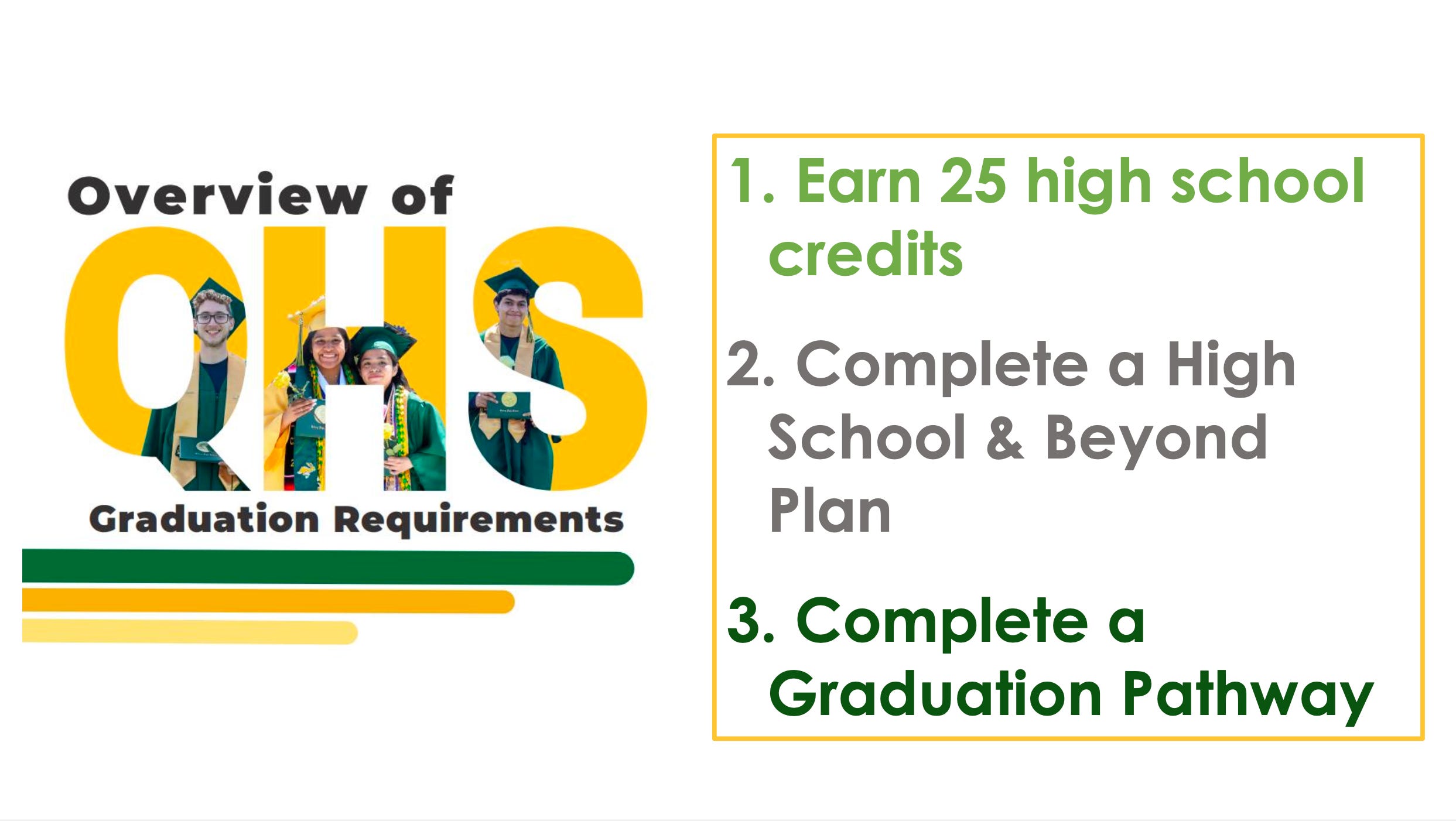
• Quincy students must meet three major graduation requirements: earn 25 high school credits, complete a High School & Beyond Plan, and complete a graduation pathway.
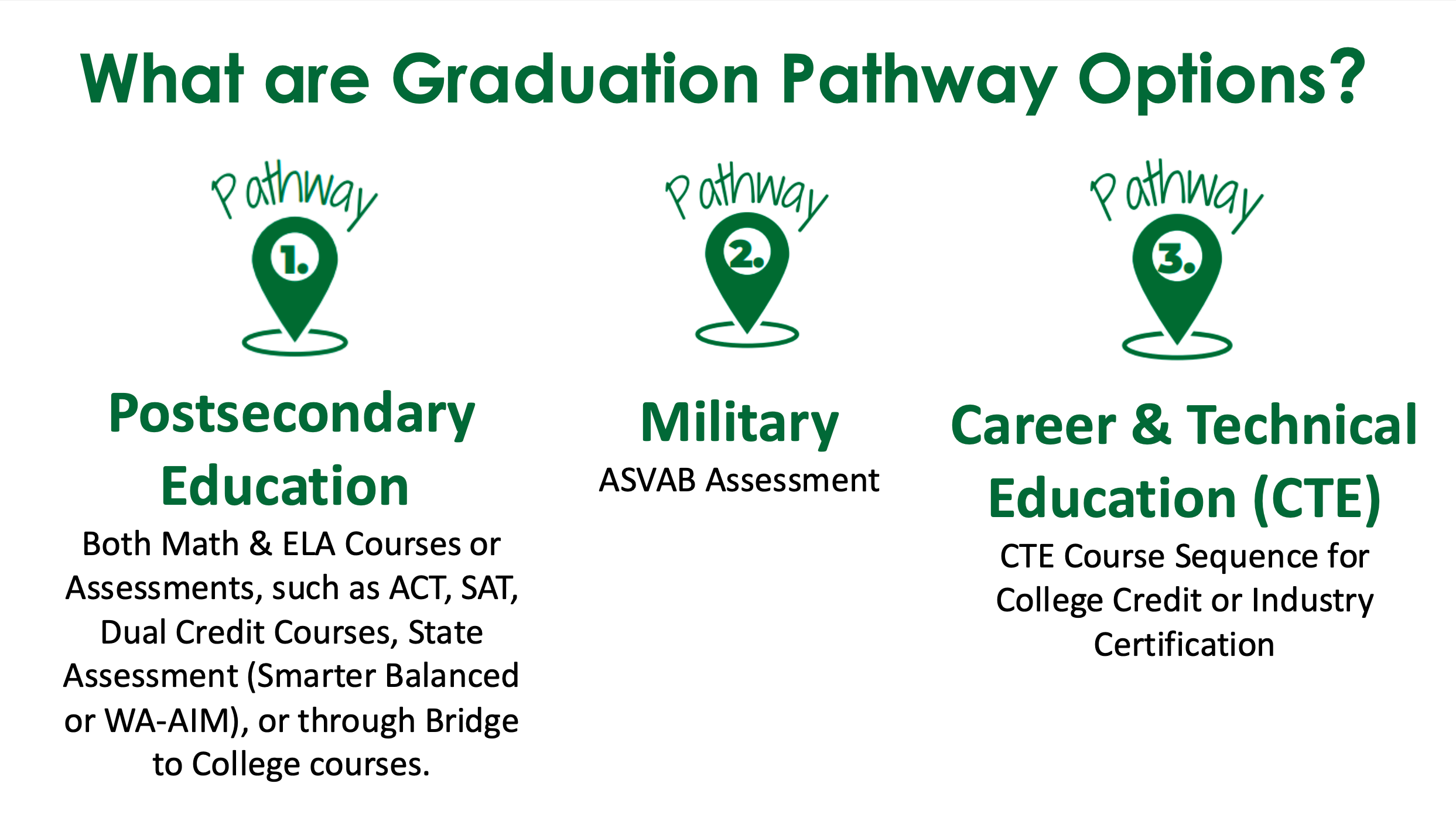
• Graduation pathways include postsecondary education, military, or Career & Technical Education options.
• QSD is preparing to launch SchooLinks in the 2026–2027 school year.
• SchooLinks is designed to give students and families a clearer view of graduation progress, course planning, career exploration, and post-high-school goals.
• The district has spent much of the year cleaning up course data and aligning systems so the platform works correctly.
• Staff training begins this spring and summer, with student onboarding planned for the start of the next school year.
• The district is still working through questions around counselor/advisory roles, sixth grade access, Big Picture Learning, and implementation for different student pathways.
Graduation Is More Than Credits
Gaytley began by reviewing the three major graduation requirements for Quincy High School students.
Students must earn 25 high school credits, complete a High School & Beyond Plan, and complete a graduation pathway.
That last piece matters because graduation is not built around one single route anymore. Students can meet pathway requirements through postsecondary-focused options like ACT, SAT, dual credit courses, state assessments, WA-AIM, or Bridge to College courses. They can also meet the requirement through the military pathway by taking the ASVAB with a qualifying score, or through a CTE pathway tied to a sequence of Career & Technical Education courses.
One board member asked whether passing the ASVAB, for example, would allow a student to graduate early.
Gaytley clarified that it only satisfies the pathway requirement. Students still have to meet the other requirements, including the 25 credits.
That distinction matters. These pathways do not replace graduation requirements. They help define how a student demonstrates readiness for what comes next.
The Current Challenge: Tracking Pieces Instead of the Whole Picture
One of the clearest parts of the presentation was the district’s acknowledgment that the current system has limitations. Right now, counselors are primarily tracking two things: whether students need to recover or retake classes, and whether they have completed a graduation pathway.
That is important work, but it does not always give the full picture.
The larger intent of the High School & Beyond Plan is to help students think through who they are, what they may want to become, and how their classes, activities, and experiences connect to that future. Gaytley said the district wants students to receive more consistent advising around their options, not just near graduation, but throughout their high school journey.
In plain language, the goal is to make this less reactive.
Instead of waiting until senior year to find out what a student still needs, the system should help students and families see progress earlier, understand options more clearly, and make better decisions along the way.
Why SchooLinks Matters
SchooLinks is the platform Washington is moving toward as a universal system for High School & Beyond Plans. Gaytley explained that one of the issues across the state has been variance. Different districts have used different tools, processes, and systems, which means the student and family experience has not been consistent.
The legislature’s intent is to create a more universal student experience. The platform is supposed to routinely update academic course, credit, and grade data so students and families can see graduation progress more clearly.
For Quincy, that meant a lot of behind-the-scenes work before the district could simply “turn on the lights.”
Gaytley said the district found differences in course codes between the middle school and high school, including duplicate or overlapping codes. If those had been pushed into SchooLinks without cleanup, the information families saw may not have been accurate.
So the district has spent the year working through course codes, building cleaner data systems, and preparing Skyward to connect correctly with SchooLinks.
That is not flashy work, but it is the kind of work that determines whether a system actually helps families or simply creates more confusion.
There’s also a fair question sitting underneath all of this.
Whenever the state rolls out a “one system for everyone” approach, it sounds good on paper. More consistency. More transparency. Same experience across districts.
But anyone who’s been around more than one school or school district for a while knows it’s rarely that simple once it hits real classrooms.
Every district runs a little differently. Programs like Big Picture Learning don’t fit neatly into traditional models. Even something as basic as course coding turned into a year-long cleanup process just to get ready for this.
And that’s before you get into what happens when families and staff are actually using it every day. So while the potential here is real, so is the reality that rolling something like this out statewide is going to come with friction.
“On paper, a system built for everyone makes sense. In real classrooms, it’s rarely that simple.”
That’s also why the district is spending so much time right now on training, role clarity, and making sure this doesn’t just become another system people have to work around.

A Student-Friendly Tool With Long-Term Potential
One of the more encouraging pieces of the presentation was how the platform may function for students beyond basic compliance. Gaytley described SchooLinks as engaging, relevant, and student-friendly.
Students will be able to explore career interests, build profiles, track goals, plan courses, and eventually create a kind of digital portfolio that can include their story, experiences, accomplishments, credentials, references, and even a video introduction.
Students will also be able to keep access beyond graduation by connecting the account to a personal email rather than only a district email.
That detail may sound small, but it matters. Gaytley noted that even something as simple as students needing a non-school email for Big Bend registration can become a hurdle. Building that habit earlier could help students avoid problems later.
The potential here is bigger than checking boxes.
Done well, this gives students a place to collect evidence of who they are becoming.
What This Could Mean for Families
If you’ve ever sat at the kitchen table trying to figure out where your kid stands: how many credits they have, what they still need, or whether they’re actually on track. Then this is the kind of thing that could make that a whole lot clearer.
If the rollout works the way it is intended, families should eventually have a clearer view of where their student stands, what courses they are requesting, what pathway they are pursuing, and how their plan connects to life after high school.
That matters because school systems can be hard to navigate from the outside. Graduation requirements, pathway options, advisory lessons, course requests, CTE programs, credit retrieval, college forms, and career planning can all feel like separate conversations.
SchooLinks is meant to pull more of that into one place.
That does not mean the platform solves everything. It means families may have a better starting point for conversations with students, counselors, and teachers.

The Questions Still Being Worked Through
The district was also honest that there are still pieces to figure out.
Gaytley pointed to several areas still under discussion: role clarity for counselors and advisory teachers, aligning advisory lessons with career interests and postsecondary planning, access for sixth graders, implementation for Big Picture Learning and other flexible learning options, and the course planner requirement.
Big Picture Learning brought up a particularly important issue. The program already does a lot of individualized planning around student goals and future pathways, but it does not operate like a traditional course-and-grade model. District leaders said the state has acknowledged that flexible learning models still need clearer guidance inside the platform.
There were also questions about students with disabilities and how transition planning, IEP requirements, and High School & Beyond Plans will better align. District staff said OSPI training has addressed that area and that more support is expected.
Those are not minor details. They are the difference between a platform that works for most students and a system that truly works for all students.
“Graduation isn’t just a finish line; it’s where everything either comes together… or doesn’t.”
What It Means for You
If you have a student in middle school or high school, this is something to watch.
The rollout is expected for the 2026–2027 school year, with staff training beginning in June and August and student onboarding at the start of the school year.
For families, the practical takeaway is this: graduation planning is becoming more visible, more career-connected, and hopefully easier to understand.
For students, the bigger message is that their plan after high school should not be a last-minute conversation. It should be something they build, revisit, and adjust over time.
For the community, this also connects to a larger question Quincy keeps returning to: how do we prepare local students not just to graduate, but to step into college, trades, military service, careers, and community life with a clearer sense of direction?
A Step Toward Better Conversations
There is always a risk with new platforms that the tool becomes the story. The better story here is not SchooLinks itself. The better story is that Quincy School District is trying to make graduation progress, career planning, and post-high-school preparation more connected and more visible.
That matters.
Because when students can see the path in front of them, families can better support them. When counselors and teachers have cleaner data, they can advise more clearly. And when a student starts asking earlier, “Who am I? What can I become? How do I get there?” the conversation changes.
Graduation becomes more than a finish line.
It becomes the point where everything either comes together… or doesn’t.
And that’s really what this is trying to improve.