

Todos los artículos de este sitio pueden ser traducidos por su navegador web.
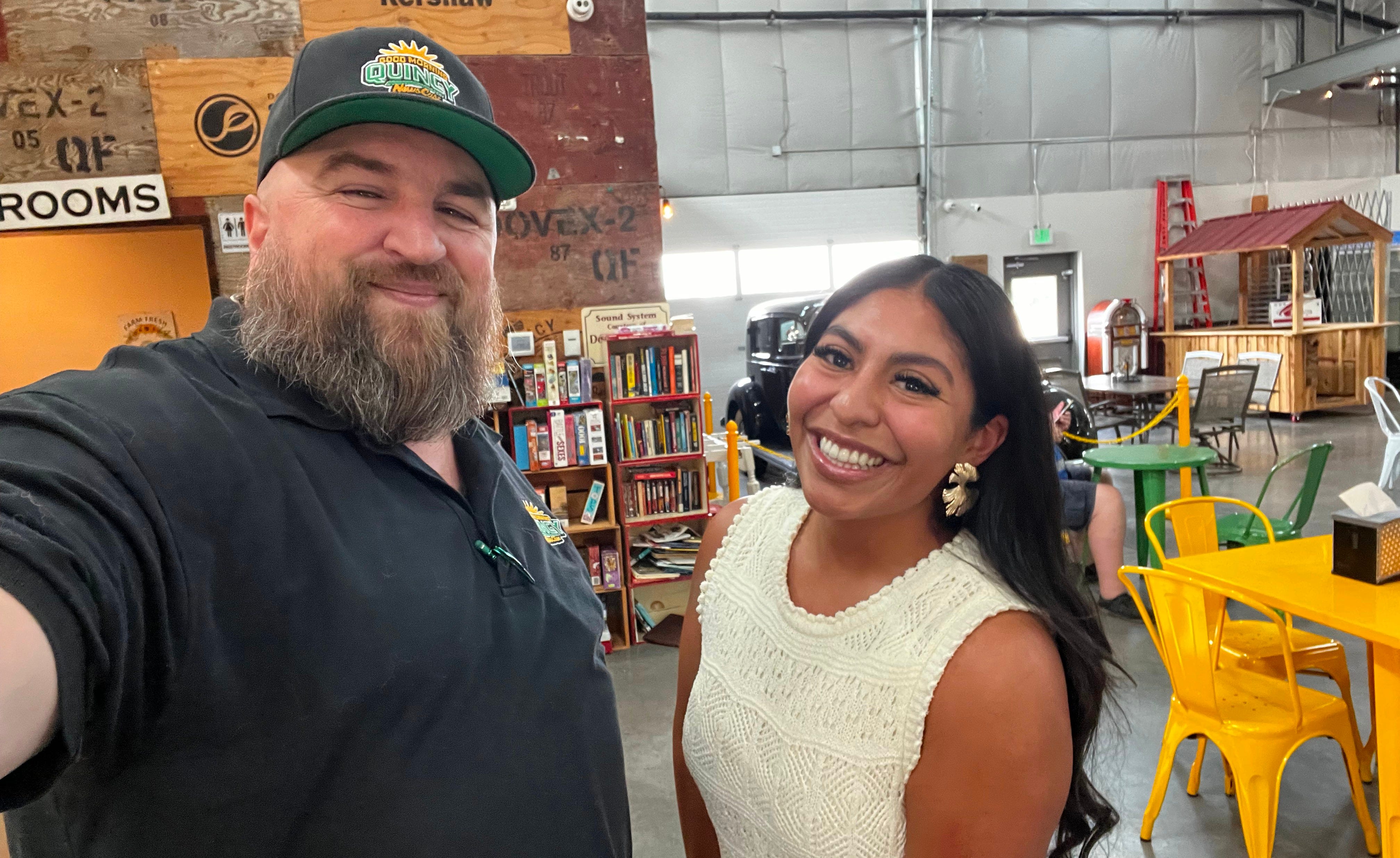
Sitting inside the Quincy Public Market during the lunch hour, Jazmine Benitez and I spent the first few minutes talking about home. We laughed about people we knew, reminisced about Quincy and tried to put into words that familiar feeling that there is something different about this community. Benitez knows it from several sides. She grew up here, served as a student representative to the Quincy City Council, participated in Quincy Partnership for Youth and has volunteered in the community, including coaching middle school basketball. Now, as Community Equity Coordinator for the Non-Profit CAFÉ, she is bringing another kind of service home to the 98848: helping workers understand rights they may already have but may not know how to use.
On Tuesday, Aug. 18, CAFÉ, the Community for the Advancement of Family Education, will partner with the Washington State Department of Labor & Industries for a free Know Your Rights as a Labor Worker workshop from 5:30 to 6:30 p.m. at the Quincy Public Library, 208 Central Ave. S. There is no registration or cost to attend. Snacks will be provided, information will be available in Spanish and English, and attendees will have an opportunity to hear directly from an L&I representative and ask questions about workplace rights.
For Benitez, there was a simple reason to bring the workshop to Quincy.
“I think being a Quincy native, it would be awesome to host something and give back to my community in that aspect,” she said. “Being involved within the community was something that I always enjoyed doing from the start. And so providing that and giving back to my community any way that I can is essential for me.”
TL;DR
What: Know Your Rights as a Labor Worker workshop
When: Tuesday, Aug. 18, 5:30–6:30 p.m.
Where: Quincy Public Library, 208 Central Ave. S.
Cost: Free; no registration required
Who: The workshop is open to workers from any industry and people who simply want to learn more about workplace rights
Language: The presentation will primarily be in Spanish, with English translation available; printed resources will be available in both languages
What to expect: A presentation, informational resources, food and time for questions
Partners: CAFÉ and the Washington State Department of Labor & Industries
Presenter: Alma Castillo, an L&I community representative
Can’t attend? Jazmine Benitez can be reached at 509-293-7602 for help connecting with appropriate resources

Worker Rights Go Beyond the Farm
Agriculture remains one of the most visible parts of the economy surrounding Quincy, and CAFÉ does significant work with agricultural and H-2A workers. That could make it easy to look at a labor-rights workshop and assume it is intended only for farmworkers. Benitez emphasized that Tuesday’s workshop is not limited to agriculture.
“I invite the entire community to come out,” she said. “This doesn’t just pertain to farm workers. This pertains to anybody, truly.”
That distinction is particularly relevant in the 98848, where agriculture exists alongside food processing, construction, healthcare, education, retail, hospitality, technology and other industries. The workplace may change considerably from an orchard to a construction site, restaurant, school or office, but employees in each can encounter questions about wages, breaks, leave and other protections.
A person also does not need to be involved in a dispute with an employer to attend. In fact, Benitez hopes people will learn this information before they find themselves needing it. Someone who likes their employer and has never experienced a workplace problem is just as welcome as someone who already has questions.
“You just never know what kind of situation you may be placed in,” Benitez said. “Knowing your rights can be something that becomes knowledgeable and you have somewhere to kind of grab, or somebody to reach out to.”
That preventative aspect may be one of the workshop’s most useful lessons. Workplace protections are a little like knowing where the fire extinguisher is before something catches fire. Learning what resources exist during a calm Tuesday evening at the library is considerably easier than trying to identify the right agency, form or phone number after a paycheck is missing or another workplace problem has already developed.
Having Information Isn’t the Same as Knowing How to Use It
Employers are required to make certain workplace information available, but Benitez said simply making information visible does not mean every employee knows how to understand it, use it or ask for help. Through her work, she encounters barriers ranging from literacy and difficulty completing forms to uncertainty about which organization handles a particular problem.
Fear can be another barrier. A worker may recognize that something does not seem right but hesitate to raise the issue because of concern about losing a job or creating problems with a supervisor. Others may not realize that the situation they are experiencing is something they can ask about in the first place.
Benitez pointed to missed breaks and unpaid wages as examples she has encountered through her work. She was careful, however, not to suggest those problems are particularly prevalent in Quincy. When asked specifically whether she had seen many unpaid-wage cases in the Quincy area, Benitez said most of the cases she has personally encountered have been around Wenatchee because she has not yet spent as much time doing this work in her hometown.
“I’m weaseling my way through and hoping to just give out more support and have the community know that I’m here to aid,” she said with a laugh.
Her work also extends beyond traditional wage-and-hour questions. Benitez assists people trying to navigate programs such as paid family and medical leave and other community resources. Sometimes the first problem a person brings to her is not ultimately the problem CAFÉ or L&I can solve. That does not necessarily mean the conversation ends there.
Finding the Right Door When You Need Help
One of the difficulties of navigating workplace problems is that the person experiencing the problem may not know which agency handles it. A question involving wages or breaks may lead in one direction, while another situation could involve an employer’s human resources department, a human-rights organization or a different community resource entirely.
Benitez sees part of CAFÉ’s role as helping people find the correct door rather than expecting them to already know which door they need.
“Sometimes things aren’t necessarily L&I related,” she said. “Sometimes they’re the human rights situation.”
When another organization is better equipped to help, Benitez said CAFÉ can make what she described as a “warm handoff,” connecting the person with an appropriate resource instead of simply telling them to start searching somewhere else.
That approach extends beyond worker rights. As Community Equity Coordinator, Benitez works one-on-one with community members on needs that can include résumé building, job searches, paid family and medical leave, rental or utility assistance, and access to food or clothing. Her definition of community equity is practical: people should be able to reach the resources available to them.
“If we don’t have the response, somebody else within our community has it,” Benitez said. “We’re always willing to connect individuals with other partners.”
That navigation component helps explain why Tuesday’s workshop is about more than memorizing a list of workplace rules. CAFÉ wants people to leave knowing not only that protections exist, but where they can begin when they have a question.
Bringing Labor & Industries Into the Room
Tuesday’s workshop will also remove one of the steps that can make seeking help frustrating: figuring out how to reach the right person inside a government agency.
Alma Castillo, a community representative with the Washington State Department of Labor & Industries, will present during the workshop. Castillo is bilingual, and the presentation is expected to be primarily in Spanish. Benitez said English translation will be provided as needed so everyone in the room can follow the discussion, and printed L&I materials will be available in both languages.
For Benitez, having Castillo physically in the room is important because it gives residents direct access to someone who works with these issues. Anyone who has tried to navigate a government agency by telephone knows that even figuring out what question to ask can sometimes be difficult.
“A lot of the time when you call L&I, it’s like hours on the phone waiting for somebody to respond, or they don’t necessarily answer your question in the manner that you wanted it to be,” Benitez said.
At the library, attendees will be able to hear the presentation and then participate in a question-and-answer period. Benitez said there will also be opportunities for people who want additional information about a particular situation to connect directly with those who may be able to point them toward the next step.
For someone who has never interacted with L&I before, that personal connection may be as valuable as the printed material they take home. As Benitez put it, the workshop gives residents a chance to put “a name to the face” and know someone they can reach out to later.

A Quincy Connection to a Regional Organization
CAFÉ is based in Wenatchee and also has a small team working in the Yakima area, but its work extends into Grant County. Benitez said the organization has been serving Grant County for some time, although CAFÉ does not currently have a permanent Quincy location.
Benitez, however, does.
She lives in Quincy and travels between her hometown and CAFÉ’s Wenatchee office. That puts someone who works directly with CAFÉ’s programs and partners inside the community even without a local office.
“We’ve been serving Grant County for a while,” Benitez said. “But I am excited to interact with my own community and give back to the people who have helped me in the past.”
Benitez could not say whether a permanent CAFÉ location in Quincy might eventually be part of the organization’s plans. For now, she hopes to continue bringing workshops and resources into the community and making residents more aware that CAFÉ is available when they need help.
Tuesday’s workshop is one opportunity to begin building that connection. It gives residents a chance to learn about worker protections, but it also introduces people in the 98848 to individuals they can recognize and contact later instead of beginning with an unfamiliar agency or internet search when a problem occurs.
What This Means to You
If you work in the 98848, you do not need to wait until something goes wrong to understand what protections you have as an employee. Tuesday’s workshop is designed for people who currently have workplace questions as well as those who simply want to know more about their rights before they ever need that information.
The Know Your Rights as a Labor Worker workshop will be held Tuesday, Aug. 18, from 5:30 to 6:30 p.m. at the Quincy Public Library, 208 Central Ave. S. The event is free, no registration is required and food will be provided. The presentation will primarily be in Spanish, English translation will be available, and informational resources will be offered in both languages.
Those who cannot attend Tuesday but need assistance can contact Benitez directly at 509-293-7602. She said she is available Monday through Friday and can help residents determine whether CAFÉ, Labor & Industries or another organization is the appropriate place to begin.
The value of the workshop is not limited to the person sitting in the room. Benitez pointed out that someone may never encounter a workplace problem themselves but could later recognize that a friend, coworker or family member needs the information they learned.
Bringing Something Useful Back Home
Before our interview officially started at the Public Market, the conversation was about Quincy; the people, the community and the difficult-to-define quality that makes this place feel different to those who call it home. Once the recorder came on, it became clear that the same idea was underneath Benitez’s decision to hold this workshop here.
She has gone from participating in Quincy Partnership for Youth and representing students before the City Council to volunteering with young people and now working professionally to connect families and workers with resources. The role has changed, but the connection to the community has remained.
“You may love your job, and everything can be going right, and that’s awesome,” Benitez said. “But if you just wanna know a little bit more, you’re more than welcome to stop in, interact, network, share some thoughts, share some stories, eat some yummy food, and just interact with your community.”
For Benitez, Tuesday evening is an opportunity to bring some of what she now does professionally back to the place where she first learned to be involved. For workers across the 98848, it is an hour at the library to learn something they may never need—but something that could matter considerably if the day ever comes when they do.


Connect with Cafe Here
