
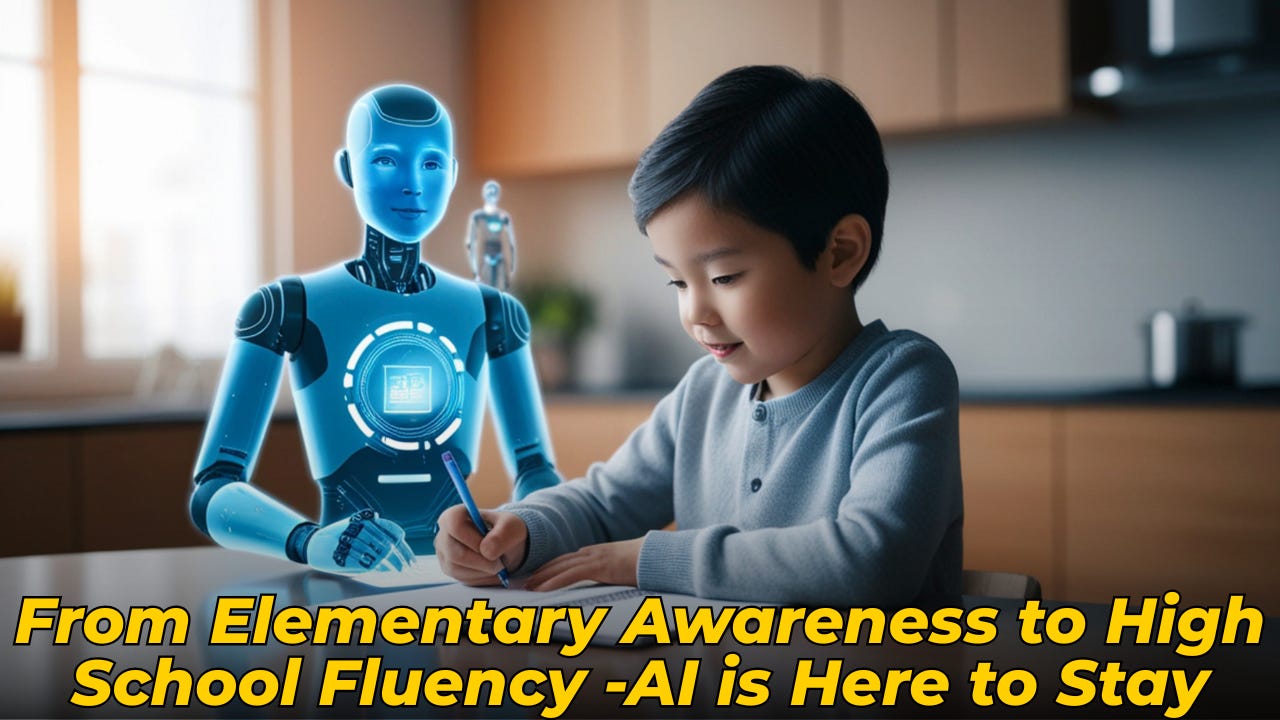
You may love AI or you may hate it, but regardless of where you land on what seems to be a very polarizing topic, it is here. In all of history, such a major technological advancement has never been introduced into our world and then changed direction and gone away. The genie is out of the bottle and it’s here for good.
AI isn’t coming someday. It’s here. It’s in the phones. It’s in Google. It’s in social media, every job and even in homework tools. It’s in the apps our kids are already using whether we like it or not. And whether we’re ready or not, it’s going to be part of the world our students graduate into.
That’s the reality our school district is working in right now — not fear, not hype, not pretending it doesn’t exist.
At this week’s school board meeting, district leaders shared what may be one of the most important long-term conversations happening in our schools: how Quincy is preparing students for a world shaped by artificial intelligence.
The encouraging part? They’re not rushing. They’re not reacting. They’re not throwing shiny tools into classrooms and hoping it works. They’re doing the groundwork first.
The Microsoft Elevate Grant — What It Actually Means
Quincy School District has been awarded a Microsoft Elevate Grant that includes $75,000 to help design and implement what leaders are calling an “AI readiness” plan for students. In addition, Microsoft is funding a separate $25,000 engagement with a third-party partner to help develop customized AI tools — sometimes called AI “agents” — that would operate within the district’s existing digital systems.
This is not about “bringing robots into classrooms.” It’s about funding research, training, planning, and building a responsible structure before anything major rolls out.
One phrase shared during the meeting captured the tone of the work: “Repeat slow, go fast.” In other words, take the time to learn from other districts, evaluate best practices, address ethical questions, train staff properly, and then move forward with clarity.
AI is not going away. The question isn’t whether to deal with it — it’s how to deal with it wisely. Quincy is choosing to approach it thoughtfully.

Honest About Where We Are
District leaders were candid in their assessment of where Quincy stands. Over the past few years, the district has focused on policy, guidance, and professional learning. Staff have been developing an understanding of how AI affects education and how it can be used responsibly in their own workflows.
What they have not yet built is a comprehensive, grade-level plan for teaching AI readiness directly to students. And because that plan does not yet exist, teachers have not been trained district-wide on how to teach those skills consistently.
Rather than gloss over that reality, leaders identified it as the work ahead. The grant allows the district to close that gap intentionally instead of reactively.
Keeping the Mission at the Center
For parents who may feel cautious about AI in schools, one of the most reassuring elements of the presentation was the district’s emphasis on “decentering AI.” That means the focus remains on students and learning — not on technology.
The district’s mission has not changed. Quincy is still committed to building a culture of belonging and graduating students who are prepared for successful futures as engaged and productive citizens. Leaders tied the AI work directly to the district’s Profile of a Graduate — students who are skilled creators, collaborators, forward-thinking learners, and difference makers.
AI is not replacing that mission. It is being evaluated as a tool that can support it when used responsibly.

What “AI Readiness” Means
AI readiness does not mean encouraging students to rely on chatbots to complete assignments. Leaders described it as a broader set of skills students will need to navigate modern life and careers. That includes technical understanding, career and professional awareness, life skills, critical thinking, and healthy skepticism.
One presenter described the importance of students maintaining a little “side-eye” when interacting with AI tools — not fear, but awareness. The goal is not blind trust in technology but informed, thoughtful use.
In a small community like Quincy, that framing matters. We are not looking to turn students into passive consumers of technology. We want them to become capable thinkers who can question, evaluate, and apply tools appropriately.
A Clear Path From Elementary to High School
The district outlined a developmental approach. Elementary students would focus on awareness — understanding what AI is and where it shows up in their world. Middle school students would develop literacy — learning responsible use and foundational skills. High school students would work toward fluency — deeper understanding and practical application so they graduate ready for postsecondary education and the workforce.
This is not about chasing trends. It is about acknowledging that many industries already expect familiarity with AI tools and processes.
One example shared during the meeting came from a workplace perspective: future employers may not just want to see a resume, but examples of how students have responsibly used AI in real projects. That kind of preparation positions Quincy graduates to compete confidently beyond our community.
Supporting Teachers Along the Way
The district made it clear that this is not about placing unrealistic expectations on teachers. Instead, leaders plan to create short, practical lesson resources that teachers can use as AI becomes more relevant in a classroom setting.
If AI tools are used in a lesson — whether in English, history, math, or career and technical education — teachers would have consistent guidance to introduce those tools responsibly. Professional development is also part of the plan so staff feel prepared and supported.
Strong implementation depends on people, not just technology. The district appears committed to that principle.
Doing This Carefully — Especially in Math
AI planning is also being coordinated with the district’s math work. Generative AI systems are language-based and can sometimes struggle with communicating math processes clearly. District leaders emphasized the importance of ensuring that any AI integration supports learning accurately and aligns with priority standards.
That attention to detail suggests this effort is being measured against student learning outcomes, not novelty.

A Measured Response to a Changing World
Stepping back, the message from the meeting was steady and measured. Quincy School District is not ignoring AI, and it is not rushing to adopt tools without preparation.
Leaders are studying, planning, training, and building systems so that as AI becomes part of classroom practice, it is introduced with structure, ethics, and student growth at the center.
Our students will graduate into a world where AI is embedded in agriculture, healthcare, business, manufacturing, logistics, and countless other fields. Preparing them for that reality does not mean abandoning core educational values. It means equipping them with the skills to navigate modern tools responsibly.
From what was presented this week, Quincy is rising to meet that challenge.
TL;DR
• Quincy School District received a Microsoft Elevate Grant with $75,000 to build an AI readiness framework for students.
• An additional $25,000 engagement will support development of customized AI tools within district systems.
• The district is taking a deliberate approach: building policy, training staff, and creating grade-level plans before classroom rollout.
• The plan progresses from AI awareness in elementary school to literacy in middle school and fluency in high school.
• The goal is not more technology for its own sake, but preparing Quincy students with critical thinking, ethics, and practical skills for the evolving world they will enter.