
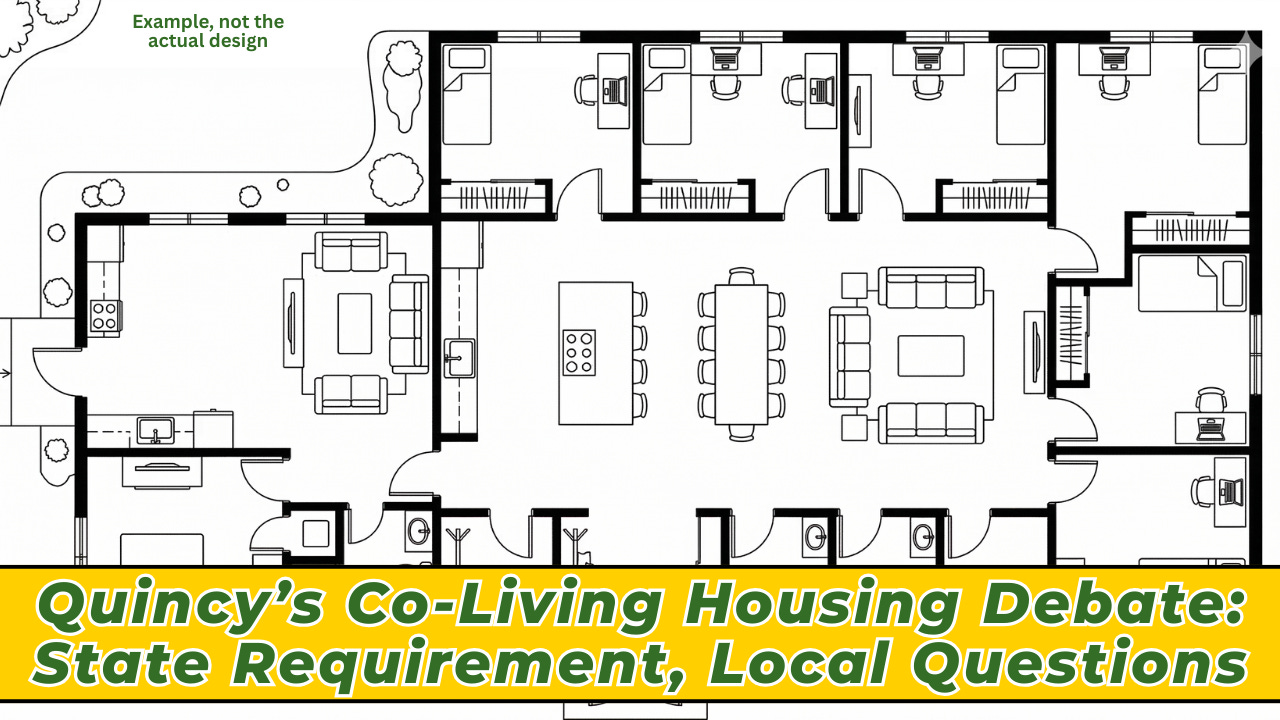
Update 4/9/26
As of the April 7, 2026 City Council meeting, this ordinance has been passed to ensure the City complies with Washington State requirements. However, under the adopted zoning standards, building a state-defined co-living dwelling (per RCW) in an R-1 zone requires a full acre of property. In practical terms, that standard leaves virtually no viable locations within existing residential neighborhoods for this type of housing.
This was the Council’s original concern. With clearer interpretation of the RCW, it’s now understood that while the ordinance meets state requirements, the zoning itself effectively limits where these developments can occur, reducing the concern about widespread impact in residential areas.
Original Story Below
TL;DR
Washington State now requires cities like Quincy to allow “co-living housing,” which is a dorm-style setup where people rent individual rooms and share common spaces. Quincy has to adopt this, but the state also limits how much control the city has over how it’s regulated.
At Tuesday’s meeting, council raised concerns about how this type of housing would fit in local neighborhoods and whether residents would have any say. Because of those concerns—and some legal limits—the city chose not to approve the ordinance yet and is sending it back for more review before making a final decision.
Full Ordinance for your review


A Different Kind of Conversation
Tuesday night’s city council meeting included a conversation that felt a little different than most. Not because it was heated, but because this wasn’t something the city of Quincy set out to do on its own. This is coming from the state, and you could hear that tension in the room as council worked through what it actually means for our community.
The discussion centered around Ordinance 26-650, which would bring Quincy into compliance with a state requirement tied to the Growth Management Act. Under RCW 36.70A.535, cities like Quincy are required to allow something called co-living housing. This isn’t optional, and the deadline to adopt it has already passed at the end of 2025. The city is now working to catch up and do it correctly.
What Co-Living Housing Means (Plain English)
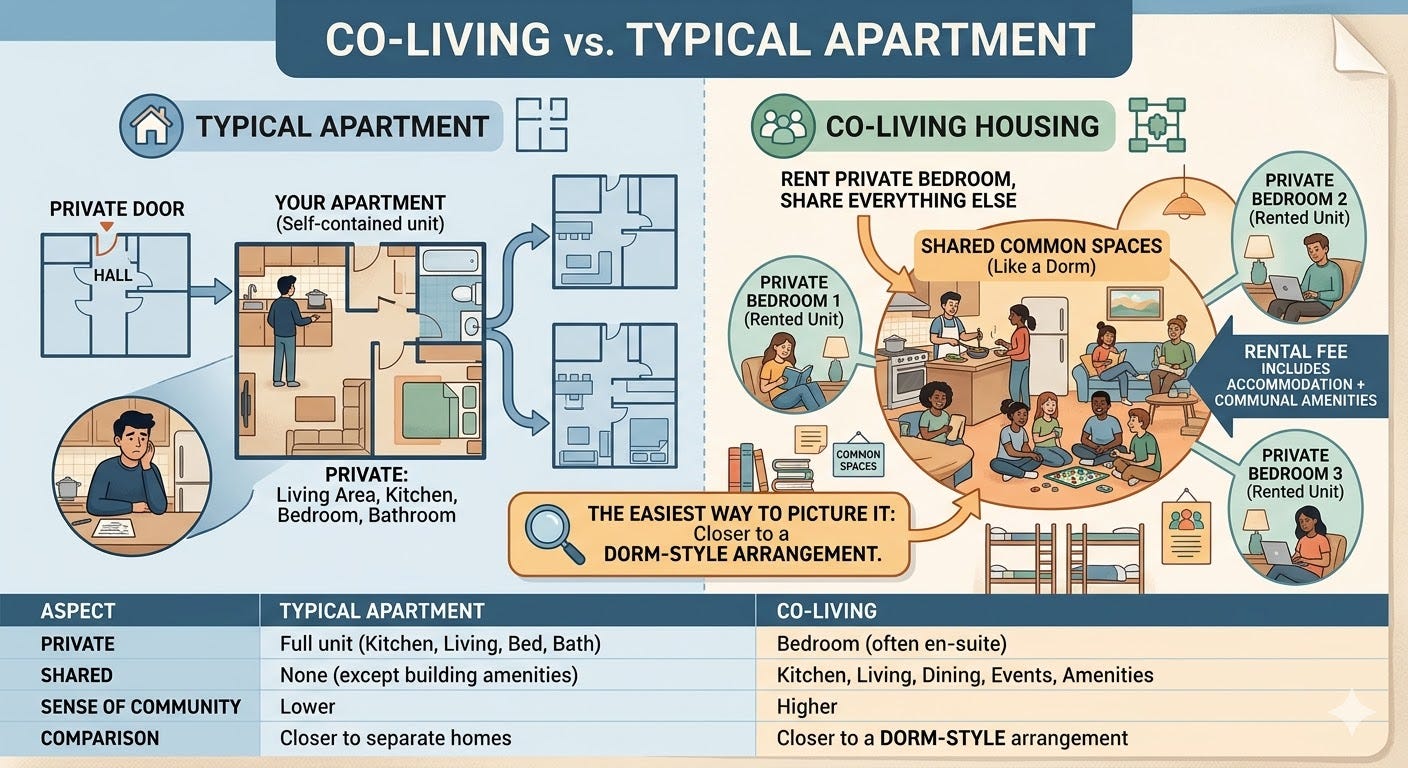
Co-living housing isn’t a typical apartment setup. Instead of renting a full unit, people rent individual sleeping rooms and share common spaces like kitchens and living areas. The easiest way to picture it is something closer to a dorm-style arrangement.
In many places, this type of housing is used for workforce housing or lower-cost living options. In some cases, it can overlap with transitional housing setups, including halfway-style living environments. That’s not automatically what it becomes, but it’s part of why the idea raised some concern during the meeting.
What the State Requires (And Limits)
One of the biggest takeaways from Tuesday night is that the state doesn’t just require cities to allow this type of housing, it also limits how much control cities have over it.
Under the law, Quincy:
Cannot require larger room sizes than state building code allows
Cannot require additional parking beyond certain limits
Cannot regulate co-living housing more strictly than other multi-family housing
Cannot exclude it from affordable housing programs
In plain English, even if the city wants tighter rules, there are boundaries on what it’s allowed to do.
Where This Could Show Up in Quincy
Based on how the ordinance is written, co-living housing could be allowed in multi-family zones, mixed-use areas, and most of the city within the urban growth area.
What that means locally is simple. This isn’t limited to one small area or a specific project. It could apply across a large portion of Quincy, depending on zoning and future development.
That’s where the conversation started to shift.
Where Council Has Concerns
Council members weren’t arguing against the need for housing, but there was clear hesitation about how this specific model fits here.
Questions came up about:
Whether neighbors would have any input
What kinds of uses might develop inside these buildings
How the city could prevent unintended consequences
One idea that came up was requiring every co-living project to go through a conditional use permit process. That would give nearby residents notice and a chance to weigh in before something is built.
The Legal Catch
The challenge is that state law may not allow that approach across the board.
City staff explained that co-living housing cannot be held to a higher standard of review than other residential uses in the same zone. That creates a real tension. There is a desire for local oversight, but limits on how far the city can go.
In plain English, Quincy may not be able to add extra layers of review just because this type of housing feels different.


Why Council Didn’t Vote Yet
Because of those questions, council chose not to move forward with the ordinance Tuesday night.
Instead, they are sending it back for:
Legal review
Possible adjustments
Clarification on what the city can and cannot require
This isn’t a rejection. It’s a pause to make sure they get it right.
What This Means for Quincy
This is one of those moments where local government has to work within rules set somewhere else. Most of the time, council is deciding what Quincy wants to do. In this case, they are figuring out how to implement something the state is requiring.
The bottom line is straightforward. This type of housing is coming in some form because the state requires it. The question now is how it gets implemented here, and how much say Quincy will realistically have in shaping it.
That’s the part still being worked out, and this conversation isn’t finished yet.