
For families in the 98848, finding something different to do can sometimes begin with getting in the car and leaving town. Clark and Tiffany Grigg know those drives because they have made them with their own children, including trips during the winter simply to find an indoor place to play. That experience helped turn a late-night conversation about a virtual batting cage into something much larger. On Monday, Sept. 7, the fourth-generation Quincy farming family will open The Pitch, a new indoor entertainment center built around a simple idea: give people another place to play, gather and spend time together without first leaving Quincy.
The Pitch, located at 900 13th Ave. SW, Suites 6 and 7, combines arcade and table games, a virtual BatBox baseball simulator, event space and an after-school Kids Club three days a week. Depending on the day and hour, the approximately 3,000-square-foot business could serve as a supervised after-school destination, a place for friends to meet on a Friday night, a family outing on Saturday, a training and competition space for athletes or a private venue for parties and group events.
TL;DR
The Pitch opens Monday, Sept. 7, at 900 13th Ave. SW in Quincy.
$5 general admission covers the freeplay attractions, with BatBox sessions, concessions and some other offerings separate.
Public hours are 6:30–9 p.m. Tuesday through Thursday, 3–10 p.m. Friday and 1–11 p.m. Saturday, with Monday and Sunday available by appointment.
The Pitch combines BatBox virtual baseball with arcade, table and family games, giving athletes and non-athletes activities under the same roof.
Kids Club runs from 3:30–6:30 p.m. Tuesday through Thursday for children ages 5–12 before the facility transitions to regular public hours.
Clark Grigg said the Quincy School District bus garage is working with The Pitch to provide an after-school stop for participating students when parents make the necessary arrangements.
The Griggs plan to develop tournaments, family activities and other events, while the entire facility can also be rented for private gatherings.
The business adds another potential piece to a larger community priority identified through Better Together 98848: creating more places where local young people can gather outside school hours.

An Idea That Grew Beyond Baseball
Clark Grigg was born and raised in Quincy and comes from a fourth-generation farming family with a farm on Adams Road. He and Tiffany have a six-year-old daughter and a two-year-old son, and sports have long been part of their lives. Clark grew up participating in local youth soccer, baseball and football, while Tiffany grew up in East Wenatchee playing sports including soccer and golf. Their daughter is now beginning her own involvement in Quincy activities through dance, Little League and other youth programs.
The idea for The Pitch began at home when Tiffany came across BatBox on Instagram and showed it to Clark one night. The technology caught their attention, and their first idea was relatively straightforward: find some property, build a structure and put in batting cages.
The more they discussed it, the less satisfied they became with that plan. A facility centered entirely on baseball and softball would have a natural audience, but it would also exclude much of the community they wanted to serve. A sibling who did not play baseball needed something to do. So did a parent, a teenager with different interests or a family that simply wanted somewhere to spend an evening together.
“That doesn’t suit everybody,” Clark recalled them realizing. “That doesn’t suit our town.”
The concept began expanding from a batting facility into a broader family entertainment center, with BatBox becoming one attraction instead of the entire reason for the business. That decision ultimately shaped almost everything inside The Pitch.
Finding a place to try the idea turned out to be simpler than their original plans. For roughly six months, the Griggs had regularly walked past a vacant commercial space while taking their daughter to dance. At the same time, they were discussing lots, new construction and what it would take to build their own facility.
Eventually, the contradiction became obvious.
“What are we doing?” Clark recalled asking.
They signed the lease in July and began transforming the roughly 3,000-square-foot space themselves, including grinding the existing epoxy floor, painting and preparing the building for its new use. Clark joked that after the experience, neither he nor Tiffany wants to see epoxy paint again.
Starting with a rented storefront rather than immediately building a large facility also allowed them to keep the idea within their means. They could open The Pitch, find out how Quincy actually uses it and allow demand to determine what comes next.


Five Dollars and More Than One Way to Play
The Pitch is designed around a relatively simple general-admission concept. During public hours, $5 admission provides access to its freeplay attractions rather than requiring visitors to continually purchase tokens or pay each time they move to another general-admission game. BatBox sessions, concessions and certain other offerings are separate.
The activities deliberately stretch beyond baseball. Visitors will find games including ping pong, pool, dome hockey, air hockey, pinball, cornhole and oversized versions of familiar games such as Kerplunk and Guess Who. A community puzzle offers something quieter, while other games and activities give families and groups enough choices that everyone walking through the door does not need to share the same interests.
“We’re trying to not just have it catered to kids either,” Clark said. “We wanna cater to families.”
BatBox remains one of the more unusual attractions. Instead of simply feeding balls toward a hitter like a conventional pitching machine, the system presents a visual pitcher going through the pitching motion while delivering the ball. That gives baseball and softball players a more game-like experience while still allowing someone who is simply curious to pick up a bat and try it.
Clark can also envision using BatBox for competition. One possibility would bring area baseball programs together for simulated games, allowing teams such as Quincy and Ephrata to compete while spectators watch. Those events are still ideas rather than a finalized schedule, but they demonstrate how the Griggs are thinking beyond individual batting sessions.
Then there is Onion Ball.
Tiffany wanted to bring a piece of the family’s agricultural background into the business, and the result involves throwing actual onions at a target for a chance to win prizes. Clark said they tested the game during a Willow Springs block party with Deb and Tom Adams, their grandchildren and others, who kept playing for about an hour.
There are no foam or beanbag onions involved.
“Your hands will smell like an onion, your clothes will smell like an onion,” Clark said. “You just gotta be ready to smell and not be afraid of it.”
It is a lighthearted part of the business, but also one that makes The Pitch distinctly local. Baseball is there because the Griggs love baseball. Onion Ball exists because they are a farming family. The rest has been built around making sure people who care about neither still have something to do.

A Business That Can Become Different Things
One of the more interesting parts of The Pitch is that the same space can serve a different purpose depending on when someone walks through the door.
Kids Club occupies three afternoons each week, but at 6:30 p.m. Tuesday through Thursday, The Pitch transitions to regular public hours for all ages until 9 p.m. On Friday, it is open from 3 to 10 p.m., and Saturday hours run from 1 to 11 p.m. Monday and Sunday are available by appointment.
Those evening and weekend hours create opportunities that go well beyond the after-school program. A family can spend an evening playing together, athletes can use BatBox, friends can meet for pool or ping pong, and groups can gather around games without needing to participate in an organized league or scheduled activity.
The Griggs also plan to build an event calendar as the business develops. Ideas include BatBox and cornhole tournaments, family nights, movie nights, bingo nights and other activities. The entire facility can also be rented for private events, creating another local option for birthdays, team gatherings, organizations and other groups.
The important part is that Clark and Tiffany do not yet know which of those uses will ultimately become the most important to Quincy. They have built the first version of The Pitch, but they expect the people who use it to help determine how it develops.
That flexibility could ultimately be one of the business’s strengths. The same room can serve elementary-age children after school on Wednesday, families later that evening, friends looking for something to do Friday night, a private group on Sunday and eventually competitors and spectators during an organized tournament.
Kids Club Adds an After-School Option
From 3:30 to 6:30 p.m. Tuesday through Thursday, The Pitch will operate its Kids Club for children ages 5–12. Clark said the age range could eventually be adjusted to include 13-year-olds if enough families demonstrate a need to cover the remainder of middle school.
Tiffany will be heavily involved in running the program, along with one additional employee as the business gets started. Clark described the program as structured without requiring children to spend the entire afternoon following a rigid schedule. Kids can use the games and activities, work on homework or participate in additional projects Tiffany plans to introduce throughout the year.
“It’s just another place for them to come hang out with their friends,” Clark said, while also knowing they are in a locally owned, family-run business.
One of the largest practical questions the Griggs faced was transportation. An after-school program is of limited help to working parents if they still have to leave work every afternoon to transport their children from school.
Clark said that hurdle became considerably easier when the Quincy School District bus garage contacted them and was willing to work with The Pitch as an after-school stop. Parents who want their children transported there will need to make the appropriate arrangements with their child’s school.
“That was our biggest hurdle,” Clark said. “What’s gonna be the transportation for people that can’t leave work, but need somewhere for their kid to go?”
The business has also established parental waivers and checkout procedures for children participating in Kids Club. After the program ends at 6:30 p.m., the facility returns to its regular public operation.
Kids Club is therefore an important piece of The Pitch, particularly for families looking for another after-school option, but it is only nine hours of the business’s weekly schedule. The larger concept extends well into the evenings and weekends.

Another Piece of a Conversation Quincy Is Already Having
That larger concept arrives while Quincy is already discussing the need for more places where young people can spend time outside school.
During the Better Together 98848 vision process, residents repeatedly identified youth gathering spaces as an area where the community could improve. The finished Community Action Plan made “Coordinate Teen & Youth Activity Spaces” its second priority, calling in the short term for accessible, welcoming spaces where youth, particularly middle- and high-school students, can gather outside school hours for both athletic and non-athletic activities.
The plan’s aspirational goal is broader: every middle schooler and teenager should have a place to go and something to do outside school hours that interests or inspires them.
The Pitch should not be mistaken for the fulfillment of that goal. It is a privately owned family entertainment business, not a dedicated youth center, and its Kids Club primarily serves younger children. Quincy will need more than one building, business or public program if it hopes to reach the larger goal residents established through Better Together 98848.
The connection is nevertheless difficult to miss.
In some ways, the public evening and weekend hours may ultimately have more relevance to that particular community priority than Kids Club. The Pitch gives older youth another possible place to meet friends, play games or spend time around other people without needing to join a sports team or enroll in a formal program.
That is one more option in a community that has specifically said it needs more of them.
The Long Drives That Helped Shape the Idea
Clark said becoming a father changed the way he thought about what was available in his hometown. If someone had asked him 10 years ago whether he would someday open a community-oriented entertainment business, he doubts he would have imagined himself doing it.
Having children changed the calculation.
During the winter, his daughter would ask whether the family could make the long drive to an indoor playground because she was tired of being stuck inside. Other family outings could mean trips to Spokane, the Tri-Cities or elsewhere simply to find an indoor activity.
Eastern Washington weather makes that experience particularly familiar. Winter cold can keep families inside, while summer brings stretches of extreme heat. Smoke can eliminate outdoor options during otherwise beautiful weeks, as families throughout the 98848 were reminded again this summer.
That helped make year-round indoor activity an important part of the Griggs’ concept.
“Now having a venue and having a place that they can drive two minutes to, or five minutes to, or even like for us that live out in the country, that it’s 15 minutes to get to it — that’s nothing compared to when we used to drive two hours,” Clark said.
The family considered putting the concept elsewhere. Clark said Tiffany suggested possibilities including Cheyenne and Leavenworth during their discussions, but he kept returning to the problem of distance. If they were going to take the risk of starting another business, he wanted to remain close enough to be personally involved.
He also wanted their investment to be in the community where he grew up and where they are raising their children.
“We wanted to put something in our hometown and grow our hometown,” Clark said, “and be able to show our kids also that work-hard-to-play-hard mentality.”

Starting Small Enough to Grow
The Griggs have plenty of ideas about where The Pitch could eventually go, but they are intentionally starting smaller than the ultimate vision.
Clark continues to work his regular job and operate the family farm. Tiffany and one additional employee will initially handle much of The Pitch’s daily operation, with Clark helping as his schedule allows. If attendance grows enough to require more employees, they can expand the staff rather than carrying that expense before they need it.
Their immediate definition of success is similarly practical. Clark said if they can keep the lights on, keep children safe and provide a place where families can come and play, they will consider the first stage a success.
That does not mean the family lacks bigger ambitions. Clark has talked with David Garza of Athletic Breakthrough about similarities between their visions and the possibility that pieces of the two concepts could someday complement one another in a larger space. For now, those discussions are possibilities rather than plans.
Clark also hopes The Pitch eventually moves into a building of its own and becomes substantially larger than the first location. If the current space is outgrown quickly, he considers that a good problem to have.
“Bring it on,” he said. “We’re ready to outgrow this place.”
For now, however, the Griggs are concentrating on proving what they can do with the space they have. Rather than trying to build the final version on opening day, they are giving Quincy a chance to show them what the next version should be.
What This Means to You
For residents, The Pitch adds something Quincy has relatively little of: a year-round indoor entertainment option designed so the entire group does not need to share the same interest.
A baseball or softball player can use BatBox while another member of the family chooses something completely different. Parents can participate instead of simply waiting for their children. Friends have another place to meet. Younger children have another after-school option three days a week. Groups have another space available for private events, while planned tournaments and community activities could create additional reasons to return.
The $5 freeplay admission model also matters practically. Family entertainment can become expensive quickly when every game or activity carries another charge. The Pitch’s approach gives visitors access to the general freeplay attractions for one admission price, while BatBox, concessions and other separately priced offerings remain optional.
For the broader community, the opening also represents another example of local residents responding to something Quincy has said it wants. Better Together 98848 identified more youth gathering opportunities as a priority, but reaching that goal was never likely to happen through one government project or a single youth center. It will take schools, churches, parks, public programs, nonprofits and private businesses creating different places for different interests and age groups.
The Pitch is one of those private pieces. Whether it becomes a favorite family destination, an after-school resource, a Friday-night gathering place, a baseball training hub, an event venue or some combination of all of them will be determined after the doors open.
Quincy Gets Its Turn
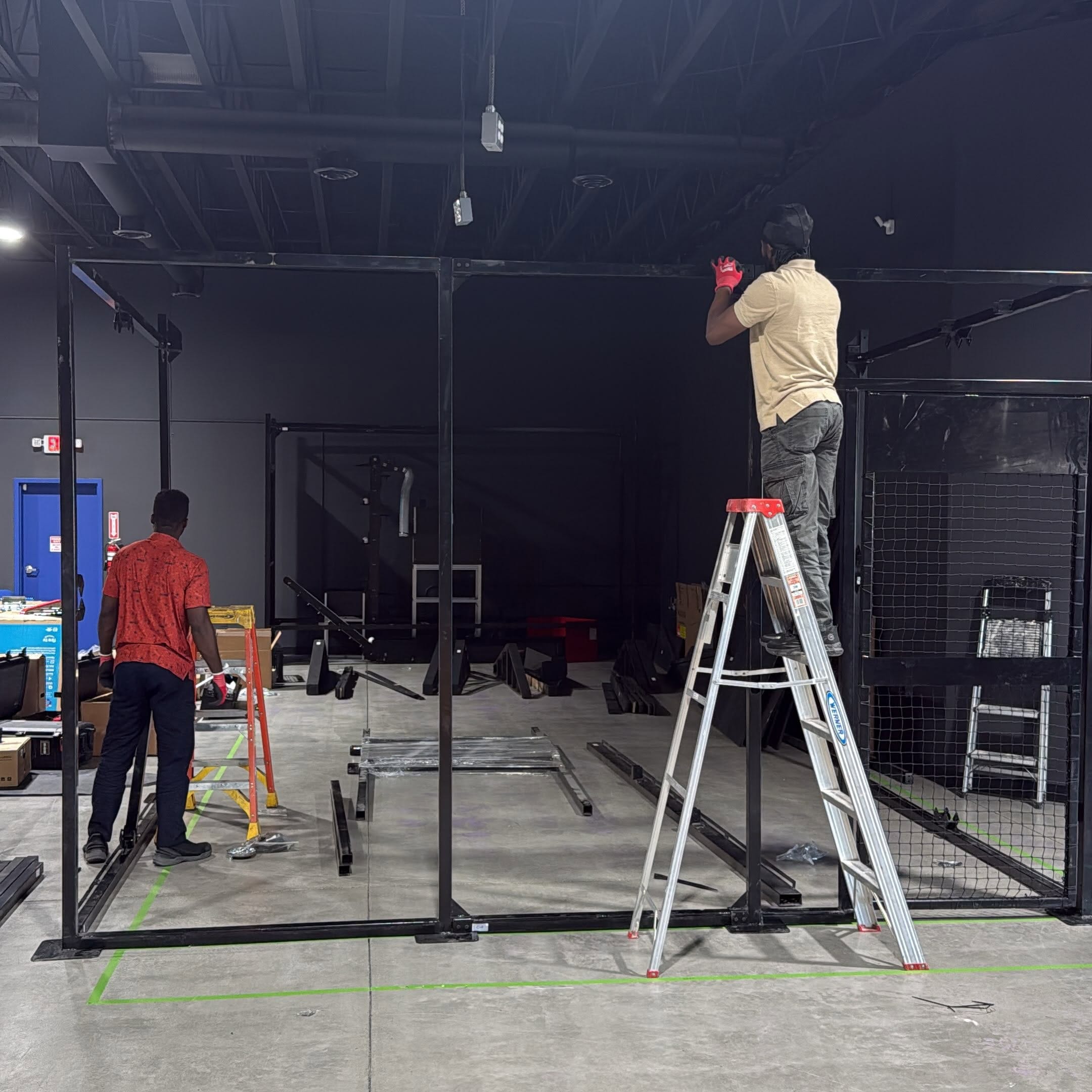
Clark said one of the things he is most looking forward to on opening day is seeing the reaction from people who have watched the transformation since the Griggs signed the lease in July. Nearby businesses, teachers and other community members have watched them grind floors, paint walls, clean windows and gradually turn an empty commercial space into something new.
Clark compared the experience to people having read the book and finally getting a chance to see the movie. For the Griggs, however, opening day is not the ending. It is the point when the community becomes part of the story.
The grand opening begins at noon Monday, Sept. 7, with $5 admission. Clark said visitors will have an opportunity to experience the attractions, including BatBox, although the business will not take BatBox reservations during the grand opening so more people have a chance to try it.
After opening day, Kids Club will operate from 3:30 to 6:30 p.m. Tuesday through Thursday, followed by public hours from 6:30 to 9 p.m. The Pitch will be open to the public from 3 to 10 p.m. Friday and 1 to 11 p.m. Saturday, with Monday and Sunday available by appointment.
Clark wants people to understand that The Pitch is not a temporary attraction or weekend event. “This is physically staying,” he said. “This isn’t a poster I want you to hang in your coffee shop for one day because this event’s coming this weekend.”
For years, families in the 98848 have grown accustomed to getting in the car when they want something different to do, while community conversations have asked what it would take to create more places here for people, especially young people, to gather. The Pitch will not answer all of those needs, and Clark and Tiffany Grigg are not pretending that it will. What they have done is take an empty storefront, an idea that started at home and a considerable amount of their own work and turn them into one more reason to see what can happen without leaving Quincy. Beginning Monday, the community gets its chance to walk through the doors and decide what that place becomes.
Pssst….. Be sure and ask about onion ball!