
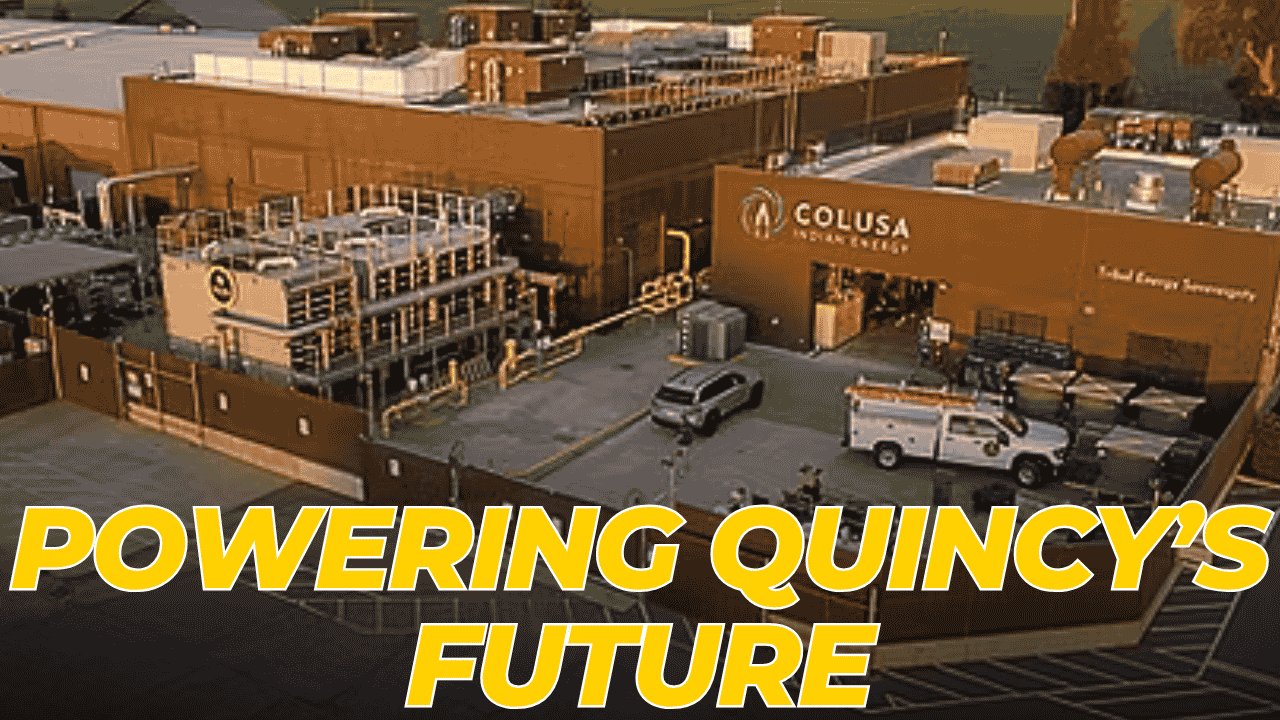
For more than two decades, Quincy has been a case study in what reliable, affordable electricity can mean for a small community. Hydropower helped support the agricultural and food-processing industries that were already here, then became one of the reasons data centers and other large industrial users invested billions of dollars in the 98848. Those investments brought construction, permanent jobs, new tax revenue and additional economic activity to the community.
Now, some of that success has created a new challenge. Quincy still has companies interested in locating or expanding here, but there is not an unlimited supply of electricity waiting for the next large industrial customer. Grant County PUD Commissioner Larry Schaapman put the challenge plainly when asked what he sees as the utility’s biggest issue over the next decade: “Resources, resources, resources,” followed closely by the transmission necessary to get that electricity where it is needed.
That does not mean Quincy residents are in danger of suddenly losing power to new industry. Schaapman said Grant PUD has policies protecting its core customer-owners, including residential customers, irrigators and small commercial customers. The larger question is one of future growth. If Quincy and the rest of Grant County want to continue attracting major employers and industrial investment, new sources of electricity will have to be part of that future.
One possible piece of that future is now taking shape through nearly two years of work between the Port of Quincy and Colusa Indian Energy. The project is still in development, and many details remain to be finalized, but the current concept could eventually add hundreds of megawatts of locally produced electricity while creating skilled jobs and making greater use of the Port’s existing rail and industrial infrastructure.
TL;DR
Grant PUD is pursuing new energy resources, including solar, geothermal and small modular nuclear reactors, as electricity demand continues to grow.
Schaapman says additional energy resources and the transmission needed to deliver them are among Grant PUD’s biggest long-term challenges.
The Port of Quincy has been working with Colusa Indian Energy for nearly two years on a possible source of new generation specifically in the Quincy area.
CIE is currently studying a project of less than 350 megawatts that could use selected waste materials, including certain plastics, to create synthetic gas for electricity generation.
The project could bring construction work and permanent skilled jobs in power generation, maintenance, rail, material handling and plant operations.
The project is not yet approved or fully designed. CIE says 2029 remains a possible target for initial generation if permitting, agreements and other development work move forward as hoped.

Growth Needs Power
Grant PUD is not waiting for a single technology to solve the region’s future energy needs. Schaapman said the utility has been actively pursuing new resources for four or five years, including small modular nuclear reactors and geothermal generation. Grant PUD is working with Chelan and Douglas county utilities to explore geothermal potential and is also examining other emerging technologies, including fusion.
Solar is already becoming a larger part of the mix. Schaapman said Grant PUD expects approximately 300 to 400 megawatts of solar resources to come online over the next four or five years. That includes a project near Moses Lake expected to produce approximately 120 megawatts, with Grant PUD serving as the power purchaser. Solar and wind are not firm resources because their production changes with the weather and time of day, but Schaapman said they can complement the county’s hydroelectric system. When those resources are producing, water can effectively be saved behind the dams and used to generate electricity later.
The search for new resources is being driven by growth throughout Grant County, but the problem is particularly important in Quincy. Schaapman said cities and port districts throughout the county want additional industry because of the jobs and tax base that come with it, but energy is one of the fundamental requirements for making that growth possible.
“If this county wants to continue to grow, we’re gonna have to find new energy sources for that growth to happen,” Schaapman said. “If you don’t have that, the wheels don’t turn for businesses.”
That challenge is already affecting Quincy. Schaapman said the PUD has tried to maintain communication with Port commissioners because power availability has become a significant limitation on what they can do.
“They can’t grow right now ’cause we don’t have any power to supply with,” Schaapman said.
The Port Goes Looking for a Quincy Solution
Economic development is the Port of Quincy’s job, and its long-range planning makes continued industrial development a priority. The Port’s comprehensive plan calls for strengthening and diversifying the local economy, attracting industrial activity and encouraging industries that provide employment and improve the economic opportunities available to area residents. Its plans also call for continued development of industrial properties and the infrastructure necessary to support them.
If electricity is becoming one of the barriers to accomplishing those goals, finding another source of power becomes part of the economic-development discussion.
That effort brought the Port together with Colusa Indian Energy nearly two years ago. I met with Shelby Ahmann Chief Commercial Officer of Colusa Indian Energy to talk more about it. Ahmann said the company was introduced to Port commissioners through its relationship with the Yakama Nation. CIE is 100 percent tribally owned, and Ahmann said much of the company’s work is centered on developing energy projects in Indian Country.
The original Quincy conversation centered on finding electricity for a prospective large industrial customer. Ahmann said CIE initially believed it might be possible to locate several hundred megawatts through the larger Bonneville Power Administration system, rather than relying solely on Grant PUD. When the company began looking, however, the readily available power was not there.
CIE then began looking at the larger demand around Quincy. Ahmann said the company identified roughly 2,200 megawatts of potential demand that could materialize if electricity were available. At the same time, he said significant transmission improvements necessary to move additional electricity from existing hydroelectric generation could take six to 10 years.
Those limitations changed the conversation. Instead of only asking where the Port could find more electricity to bring into Quincy, CIE and the Port began examining whether some of the electricity needed for future growth could be generated here.

A Project That Has Changed Along the Way
The concept has evolved considerably during the nearly two years CIE has worked with the Port. An earlier version contemplated bringing additional natural gas infrastructure into Quincy and eventually developing between 1,000 and 3,000 megawatts of generation as demand grew. Ahmann said that concept included technology intended to remove carbon from natural gas, conventional combined-cycle generation and additional carbon controls on the back end.
CIE eventually stepped back from that proposal and began developing a smaller project around Washington’s existing energy and emissions requirements. Ahmann repeatedly described the company’s approach as “compliance by design,” meaning the project is being designed around the standards it would have to meet rather than designing a plant first and attempting to make it comply later.
The current concept is for a facility of less than 350 megawatts. The final generating equipment has not been selected. Ahmann said the plant could ultimately use reciprocating engines or turbines, while fuel cells are another possibility but become more difficult economically at larger scales.
How that generating equipment would be fueled is where the Quincy proposal becomes more unusual.
Turning Waste Into Fuel
Earlier public discussions around the project included wood and other biomass as possible fuels. Those materials remain possibilities, Ahmann said, but woody biomass has a lower energy content and would require substantially more material to produce the same amount of energy. That would also mean considerably more material arriving in Quincy by rail.
CIE is now studying a process that could use selected waste plastics as a feedstock to produce synthetic gas. For anyone who grew up being told not to throw plastic into a fire, that description immediately raises an obvious question: Is this simply a plant that burns plastic?
Ahmann said it is not.
The proposed system would use electrically heated pyrolysis. Prepared feedstock would be placed into a closed reactor and heated rather than burned inside the reactor. That process would extract synthetic gas, which would then be collected, compressed and moved through an on-site pipeline to the generating plant. The synthetic gas would have an energy value approaching natural gas and would then be combusted in the generating equipment to make electricity.
Ahmann said CIE would select which classes of plastic could be used based in part on their characteristics and the resulting gas. The front-end conversion process would operate as a closed system, but the resulting gas still has to be combusted at the power plant, meaning the overall facility would have emissions that must be controlled and permitted.
CIE says it intends to use what the industry calls best available control technology, including selective catalytic reduction, on the generating side of the plant. Ahmann said the company designs its projects to stricter emissions targets than simply meeting the minimum standard required in a particular jurisdiction. The final emissions profile, however, is one of the details still being developed and would be subject to review by the appropriate regulatory agencies before the plant could be built.
The same is true of other aspects of the project. CIE is still working through the plant’s footprint, sound levels, feedstock requirements and final technology package. Ahmann said a final solution has to be completed and ultimately approved before it can move through the local and state regulatory process.

Jobs Beyond Construction
For Quincy, the economic-development value of the project would not be limited to producing additional electricity. Building and operating a power plant also requires a workforce.
Construction would create work for skilled trades, but Ahmann said the permanent facility would require employees ranging from material handling and rail operations to technical plant positions. Power plant operators and technicians would receive specialized training on the equipment they operate, while the synthetic-gas portion of the facility would require its own workforce. Maintenance, plant management and other technical positions would add to that employment base.
Ahmann did not provide a final employment number because the plant design and size are still being developed, but he said CIE expects dozens of positions associated with the synthetic-gas operation in addition to jobs in rail and material handling. Unlike the image of an old biomass plant with workers feeding material into a boiler, Ahmann described a highly automated operation that would require workers trained to operate and maintain sophisticated equipment.
For a community that continues to look for ways to give local students career opportunities without requiring them to leave home, those positions could become another avenue into the skilled trades and technical workforce. Ahmann came from the trades himself and emphasized that skilled labor would be important both to construction and long-term operation of the facility.
The project could also put more of the Port’s existing transportation infrastructure to work. Ahmann described a facility with rail spurs, storage systems and modular processing equipment. Feedstock would arrive by rail and move into storage before being fed into the conversion system. CIE currently anticipates substantial rail use, although the amount will depend on the final feedstock and size of the plant.
Ahmann summed up the concept as “local power for local growth,” with Port rail infrastructure put to work alongside new construction, permanent employment and additional investment in Grant County.
Where the Electricity Could Go
Another important change from the original concept is that CIE is no longer designing the project around a single large customer. Ahmann said the company is considering an independent power producer model that could allow electricity to move onto the larger electrical system while leaving options for the Port to directly serve future tenants where appropriate.
CIE does not want to become the utility deciding which customer receives which electrons, Ahmann said. The preference would be to put power onto the system and work with Grant PUD, Bonneville or other utilities to determine how it is ultimately used. A Port tenant could potentially receive power directly in some circumstances, while electricity could also be supplied to the broader grid. Those details remain part of the discussions still ahead.
That distinction matters because the proposed plant is not simply being presented as a dedicated power source for one future data center. CIE is looking at it as generation located where demand already exists, with enough flexibility to potentially support Port tenants, the larger utility system and future growth.
Ahmann also said a properly configured facility could potentially provide additional resiliency during grid emergencies. Exactly what role it could play would depend on how the plant is connected and the agreements eventually reached with utilities.

What This Means to You
The most important thing for Quincy residents to understand today is the difference between a proposal and a project ready for construction. Colusa Indian Energy and the Port have been working on the idea for nearly two years, but there is not yet a final plant design, approved permit package or construction date.
There are still significant steps ahead. CIE must finish developing the technology package, work through environmental and regulatory requirements, reach agreements for the electricity the plant would produce and ultimately receive the approvals necessary to move forward. Ahmann said CIE expects more detailed information to become available as that work progresses and emphasized that the company has changed its plans as it encountered technical and regulatory challenges rather than trying to force its original concept forward.
There is also a broader point that can easily get lost in the details of pyrolysis, transmission lines and megawatts. The discussion is happening because Quincy continues to have economic opportunities that require more electricity than is readily available today.
That is not a problem unique to the Port, Colusa Indian Energy or data centers. Grant PUD itself is searching for new resources because it expects demand to continue growing. The utility is adding solar, investigating geothermal and studying new nuclear technologies while simultaneously working on the transmission infrastructure necessary to move electricity around the county.
The Colusa proposal is another possible piece of that much larger puzzle.
Building the Next Chapter
There is no guarantee today that the Colusa Indian Energy project will be built exactly as currently envisioned. The company is still answering engineering questions, the Port still has decisions ahead of it, regulators will have their own requirements and agreements will have to be reached with whoever ultimately purchases the electricity.
There is, however, a possible timeline beginning to emerge. Ahmann said improvements in the availability of generating equipment have made him less concerned about manufacturing delays than he was six months ago. Permitting, local adoption and agreements with utilities are now more likely to determine how quickly the project can move. If those pieces come together, he said initial generation in 2029 remains within the realm of possibility.
The larger energy picture will continue developing at the same time. Grant PUD’s new solar resources will come online. Geothermal exploration will continue. Small modular nuclear technology will continue moving through development. Transmission projects will add capacity to move electricity where it is needed. The answer to Grant County’s future power needs is increasingly likely to be a combination of resources rather than one new plant or one new technology.
For Quincy, that matters because the community’s economic development has always depended on more than simply having land available for the next employer. Agriculture required irrigation, processing required transportation and infrastructure, and the technology boom depended heavily on access to reliable, affordable electricity. Each chapter required the community to have the infrastructure necessary for the opportunity in front of it.
The next chapter of growth in the 98848 faces the same basic test. Companies may still want to invest here, the Port may still have land to develop and the community may still want the jobs and tax base that come with new industry, but those opportunities cannot move forward without the electricity to support them.
That is why Grant PUD is searching for new resources and why the Port of Quincy has spent nearly two years looking for another solution closer to home. Colusa Indian Energy’s proposal is still only one possibility, and there is considerable work ahead before anyone knows whether it becomes part of Quincy’s energy supply.
What is much clearer is the question driving all of those efforts: if the 98848 is going to continue growing, where will the power for that growth come from?
For the first time, part of the answer may be generated right here in Quincy.