
If you missed our first story on speed cameras coming to Quincy school zones, read that one first. It gives the broader background for what the city is doing and why. This piece is the follow-up, and it gets more specific.
Last night at city council, Quincy leaders got a closer look at where the proposed cameras may go, how the system would function, and what traffic data is driving those choices.
At this point, the picture is getting a lot clearer.
The discussion came during council’s review of the city’s Speed Safety Camera Equity Analysis, a required step under Washington law before cameras can be added or moved. The report lays out the proposed locations, explains the safety case for them, and looks at the larger impact through the lenses of livability, accessibility, economics, education, and environmental health.
The proposed camera locations aren’t random. They’re based on traffic data collected over about a week at multiple locations across town, focusing specifically on areas near schools and parks—places where kids and families are most likely to be.
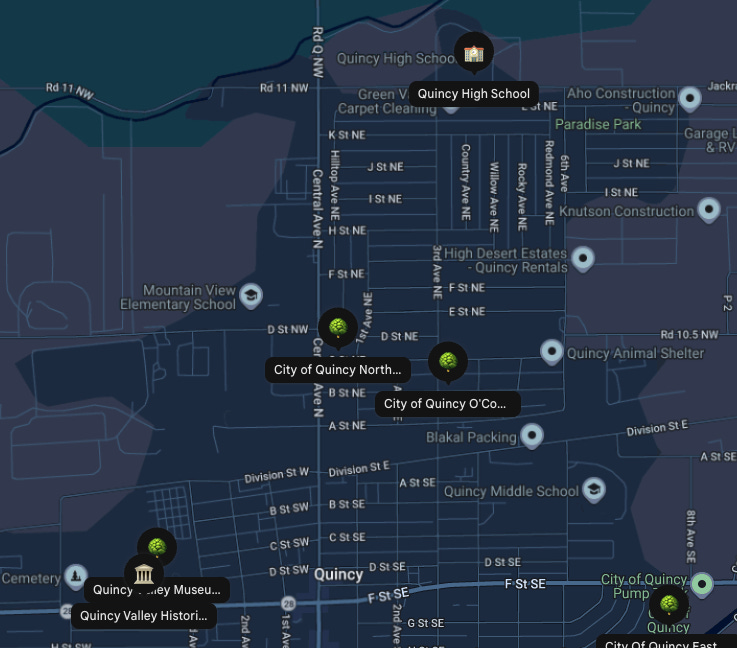
Here are the locations currently being considered:
F Street Southwest (near the museum)
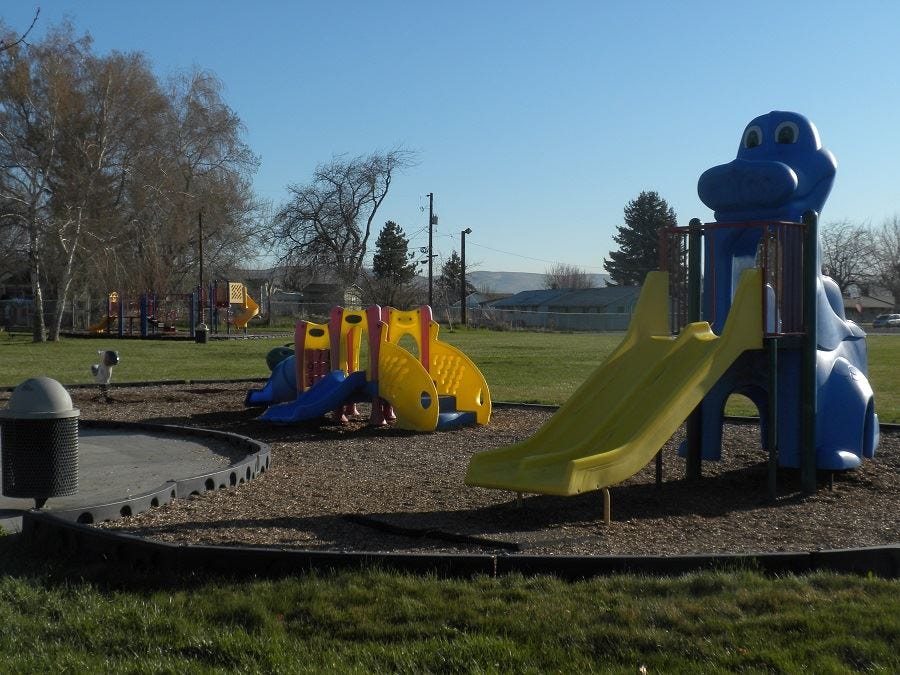
700 block of 6th Avenue Southeast (near the park)
1200 block of Central Avenue South (near the fire station and trail area)
300 block of Central Avenue North (near North Park)
Jackrabbit Way (near the high school)
3rd Avenue Northeast (near O’Connell Park)
According to the data presented, 3rd Avenue NE and F Street SW showed the highest levels of speeding activity. Those weren’t guesses—they were measured.
That lines up closely with what Captain Trujillo told council Tuesday night, though in conversation some of the streets were referenced a little differently. The basic idea stayed the same: the city is looking at a handful of school and park zone locations where speeding data showed a clear enough pattern to justify enforcement.
One of the biggest things clarified during the meeting was that the cameras are expected to monitor both directions of travel, not just one. Council asked directly whether these would be single-direction or bi-directional, and the answer given was both ways. That matters, because for drivers it means this would not be a one-sided setup where only one lane or one direction is being watched.
Council also pressed on how the speeding numbers were gathered. The answer was that the vendor brought in traffic counting equipment and gathered data over multiple days at the proposed locations. In the city’s equity analysis, those speed studies are shown in chart form for each site. The report says Quincy will use location-specific speed studies and five-year crash summaries, along with near-miss reports and community feedback to demonstrate need.
And the numbers are not small.
At the F Street SW location near the museum, the speed study showed thousands of vehicles per day in each direction, with a large share moving in the 36 to 45 mile per hour range in a posted 35 zone. For example, on Tuesday, October 29, eastbound traffic totaled 7,911 vehicles, with 4,561 of them clocked between 36 and 45 mph, plus 89 between 46 and 55 and 5 over 56 mph. Westbound traffic that same day totaled 3,511, with 2,064 in the 36 to 45 range. Similar patterns continued across the full week of sampling.
At East Park on F Street SE, the posted speed is also 35 mph. The report’s sample days show a consistent number of drivers above that mark, including several in the 46 to 55 range. On Central Avenue South near the park trail crossing, where the posted speed is 45 mph, the charts again show regular traffic above the limit, though at lower overall volumes than some other locations.
North Park shows a different kind of concern. There, the posted speed is 25 mph, and the study found vehicles regularly running 31 mph and above in both directions. The same goes for 3rd Avenue NE by O’Connell Park, another 25 mph area where the city’s chart shows a steady number of drivers moving faster than they should be through a park zone.
Then there is Jackrabbit Way by Quincy High School, where the posted school zone speed is 20 mph during active school hours. The city’s chart there breaks out two time windows, morning arrival and afternoon release, and shows drivers over 20 mph during both periods.
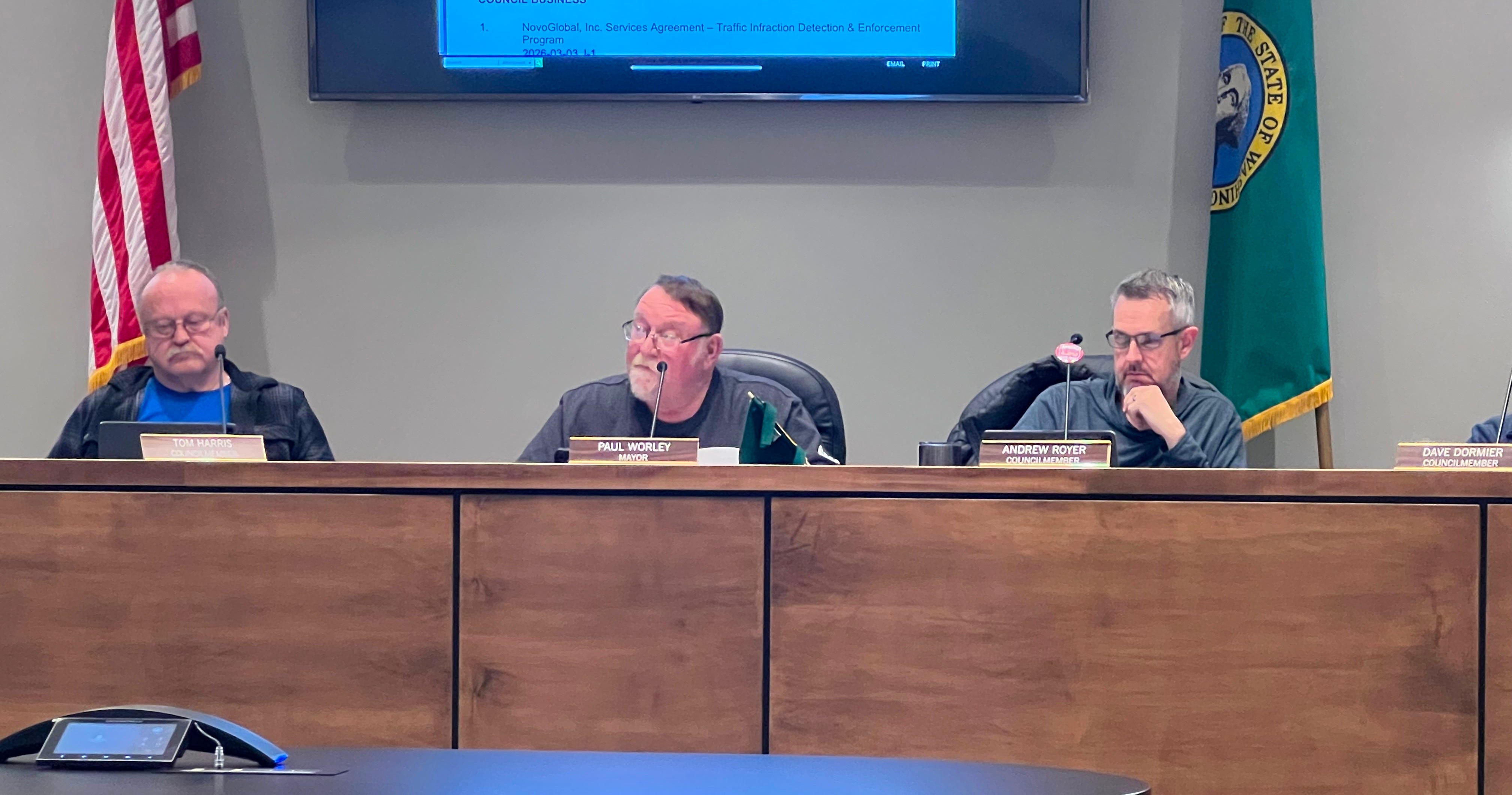
During the council discussion, Captain Trujillo said two locations stood out the most in terms of speeding: F Street Southwest and 3rd Avenue Northeast. That matches what council members were seeing in the overall presentation and helps explain why those locations are drawing extra attention as the program moves forward.
Another question council raised was the one regular folks are asking too: how fast do you have to be going before a ticket is triggered?
That part is still to be decided.
Captain Trujillo told council that the threshold will ultimately be set at the direction of city council. He also gave some practical context from normal traffic enforcement, saying officers generally are not writing tickets for someone going only two or three miles over the limit. In school and park areas, though, he noted there is less room for tolerance because of the higher safety risk with pedestrians and children nearby.
That means the city has not yet announced the final trigger speed, but it is clearly being talked through with the setting in mind.
Council also got clarification on something else people will want to know: this is not a case of a machine just spitting out tickets with no one looking at it. According to the discussion, the vendor provides and maintains the equipment, but a Quincy Police Department employee will review the photo or video evidence and verify that the citation is valid before it goes out. The report also says the city plans to begin with a 30-day warning period before citations start, and that advance signage will be posted ahead of activation.
That part matters in a town like Quincy. Folks may still debate the cameras—and I’m sure they will—but this does help answer the concern that tickets would just be automatically kicked out without any local review.
The city’s argument for the cameras comes down to a pretty practical reality. The police department cannot have an officer sitting at every school zone and park crossing all day long. During the meeting, Trujillo described the cameras as a force multiplier. In plain English, that means they let the city extend enforcement into places where officers simply cannot be all the time.
The report also makes the city’s case that automated enforcement applies the same standard to every vehicle that passes the camera, removing some of the inconsistency people often associate with traffic stops.
There was also some useful context on what did not make the list. During the meeting, council heard that other areas had been reviewed, including stretches people in town have complained about before, but not every spot had enough traffic or speeding data to justify a camera.
That is worth noting. This is not the city trying to blanket Quincy with cameras. At least at this stage, it is a limited list focused on locations where the data gave them something solid to stand on.
And that is really the heart of this follow-up story.
This part of the conversation is less about whether speed cameras feel popular and more about whether the city can show its homework. Tuesday night helped with that. Council asked where the locations came from, how the counts were gathered, whether the cameras would watch both directions, who reviews the citations, and how the trigger speed might be set.
Those are the right questions, and they brought out answers the public needed to hear.
For Quincy families, the issue underneath all of this is pretty simple. If kids are walking near parks, moving around school zones, or crossing busy stretches of road, the city has to decide what it is willing to do to slow traffic down before somebody gets hurt.
It’s also worth saying out loud—speed cameras aren’t something everyone gets excited about. In a lot of communities, they’ve been controversial. Some people see them as a needed safety tool, especially around kids. Others worry about fairness, overreach, or them turning into more about revenue than safety.
Not everybody will agree with the cameras. In fact, I had a conversation with a neighbor shortly after the meeting who feels like the whole idea is a waste of money.
You’re likely to hear both sides of that here in Quincy too. And as this moves forward, that conversation is probably just getting started.