
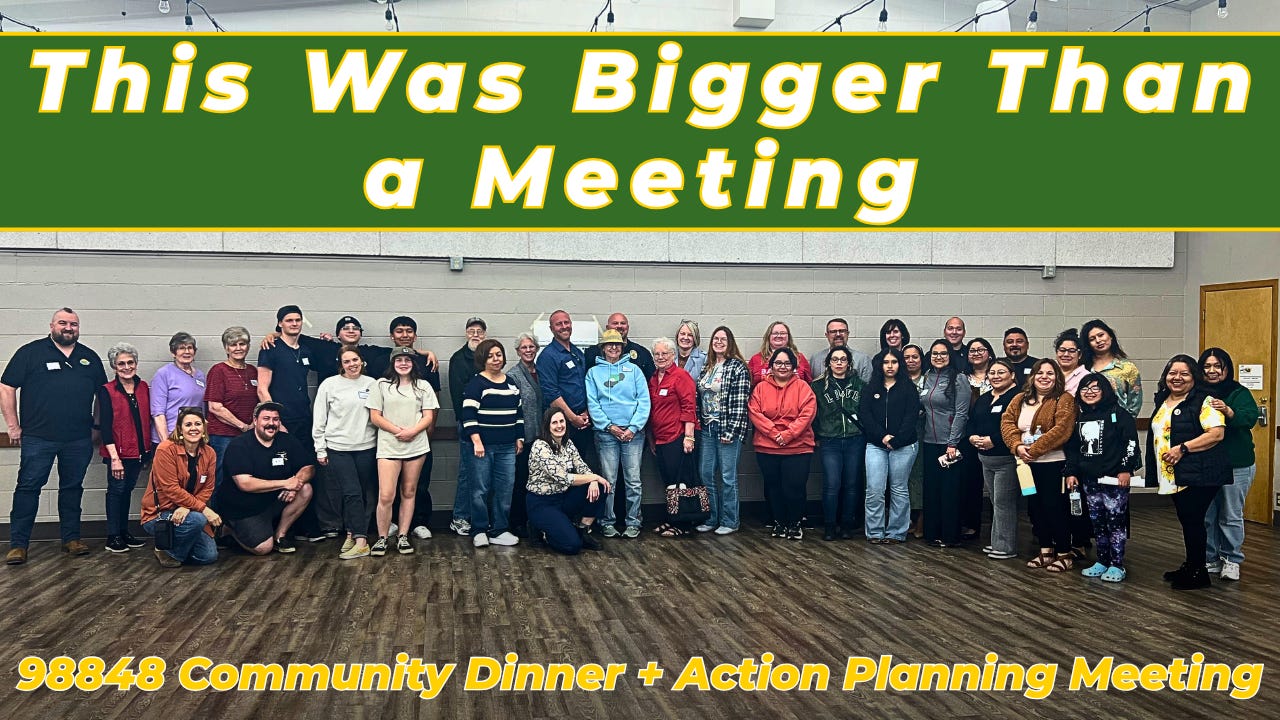
Monday night, standing off to the side of the room taking pictures, I watched table after table stand up and begin sharing the ideas they had worked through together. As I looked around, something clicked for me.
This was not just another dinner. It was not just another meeting. It was not just another round of community input.
In that room, the 98848 was actually there.
Not one slice of Quincy. Not one familiar circle of people who always show up. Not one version of what the community thinks. What I saw in that room was people from all walks of life in Quincy and the surrounding 98848 area, represented in a way that felt real. Parents. Business owners. People working in agriculture. People working in industry. People working in tech and at the data centers. Young people. People speaking English and Spanish. People I knew, and plenty of people I had never met before.
And somewhere in the middle of all that, I realized something else.
I had been skeptical of this process.
I have said that before, and I do not mind saying it again. I have wondered how much would really come of all this. I have wondered whether this would turn into another well-meaning conversation that sounds good for a season and then fades away into a binder on a shelf somewhere.
But last night changed something for me.
Because when you hear people from every corner of the community talking about where the 98848 is headed, what they want to protect, what they want to build, and what they want their kids to inherit, it becomes very hard to dismiss it as just another meeting. Monday night felt like something more. It felt like one of those quiet moments that will matter much more in hindsight than most people realize while it is happening.
TL:DR
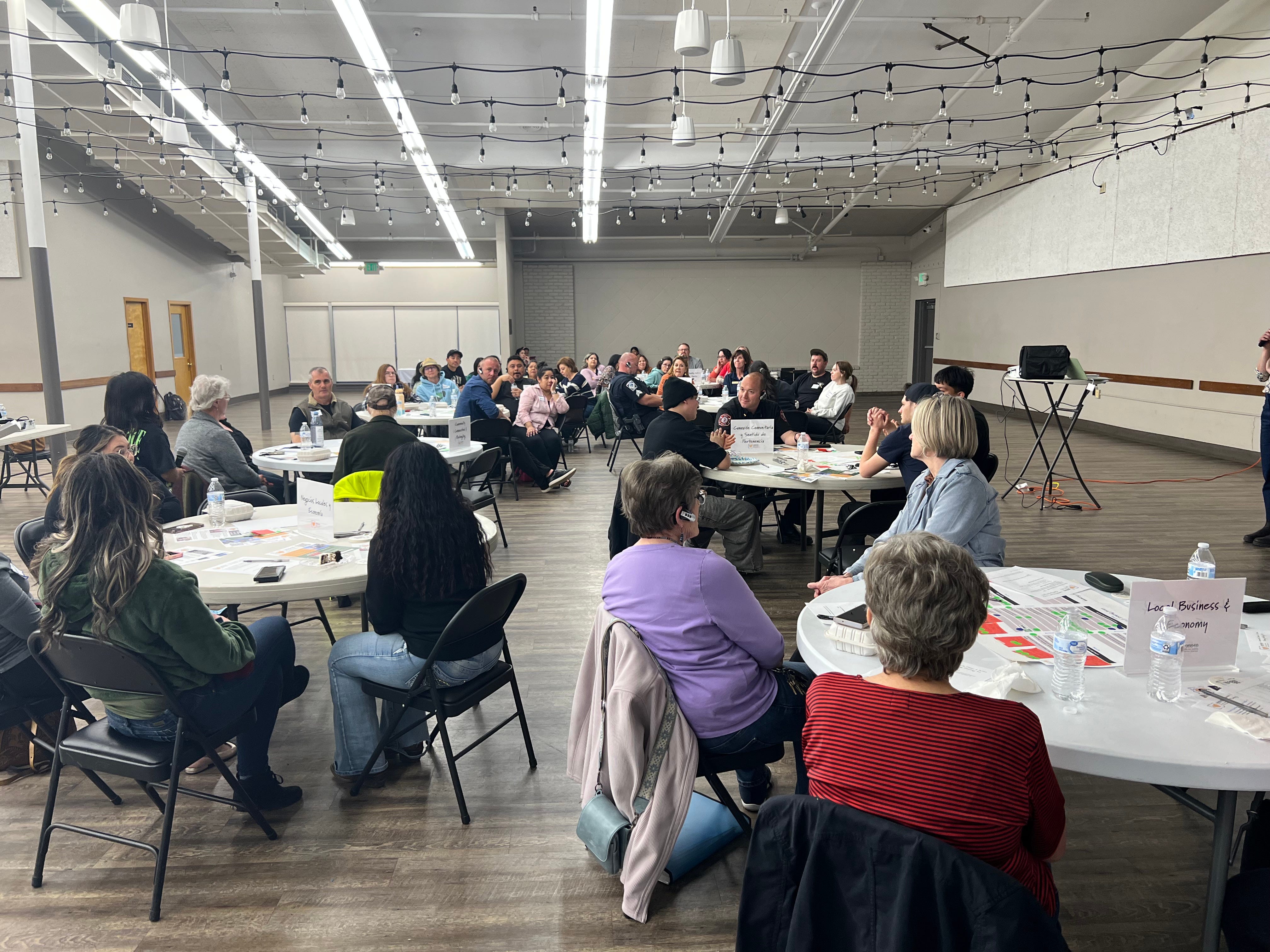
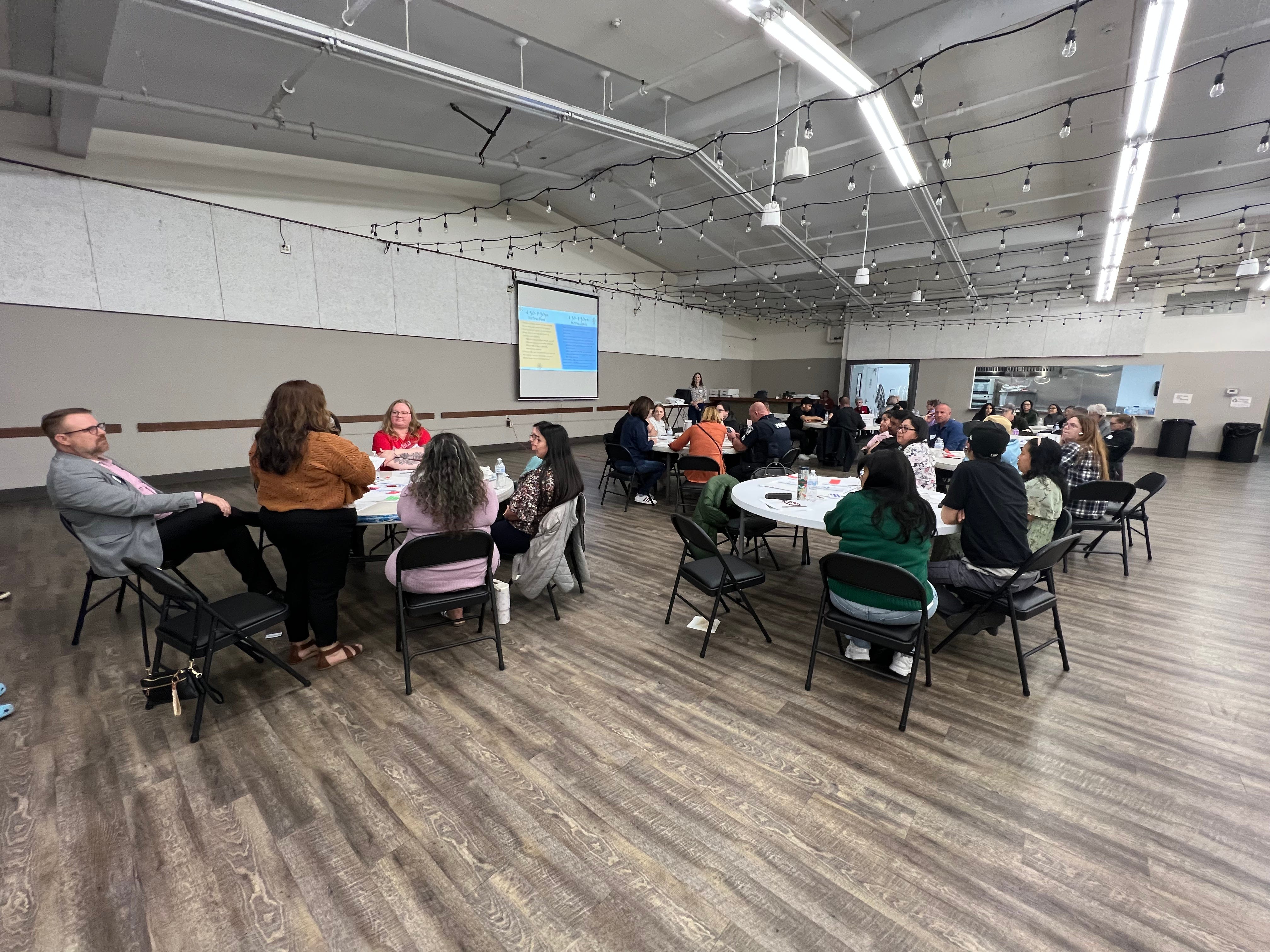
Around 40 people gathered Monday night for the 98848 Community Dinner + Action Planning Meeting at the Quincy Business & Event Center.
What happened in that room was bigger than a dinner or brainstorming session. It was the latest step in a community visioning process that has been building since 2019.
The strongest part of the night was the people in the room. Quincy was represented by a broad mix of voices, backgrounds, industries, and generations.
The conversation made one thing very clear: people want growth, but they do not want to lose the agricultural, small-town heart of this community.
Some of the priorities that came up were practical and actionable. Others were more aspirational and will require careful reality checks.
The project may be nearing its formal end, but the bigger conversation about where 98848 goes from here is just getting started.
If you care about what this community looks like in five years, this is not the time to sit back.
This Was Not Just Another Monday Night
If you were not able to join the meeting Monday night, then for you it may have just been another Monday. You were getting dinner on the table, running errands, picking up kids, doing homework, taking care of the things every family takes care of on a weeknight.
There is nothing wrong with that.
But if you missed what was happening inside that room, you may have no idea how many pieces moved on the board last night.
You may have had no idea that a small gathering of around 40 people was helping shape the next phase of life in the 98848. They were talking through roads, safety, downtown, local business, recreation, gathering spaces, young people, family life—it was all on the table at once. And whether you were there or not, those conversations are going to show up in your daily life.
That is the thing about local meetings like this. They are easy to miss. They often do not look dramatic from the outside. They do not always come with a big flashing sign telling you, “Pay attention, this matters.”
But they do matter.
Seven Years Brought Into One Room
What happened Monday night did not begin this week.
This was not the result of a month of planning or a couple recent meetings. This process stretches back to 2019. That means surveys, conversations, outreach, meetings, feedback, organizing, setbacks, momentum shifts, and years of trying to understand what people in this region want for the future of the 98848.
Monday night was not the beginning. It was the one of the last crucial steps of seven years of effort.
That matters because it changes the way we should look at what happened. This was not just people tossing around random ideas over dinner. This was a community trying to bring years of input into clearer focus. The work now is to sort through what was heard, weigh what is realistic, and decide what comes next.
There are still a lot of questions in the air. There should be. What does growth really look like here? What kind of change actually serves families living here every day? Which ideas are ready for action, and which ones still need more work? What belongs to local leadership, and what is outside local control altogether?
Those are not small questions. But they are the right questions.
The Difference in the Room Was the People
I was at the last community meeting a month ago, and I was honest about my disappointment then. (see that story here) The turnout was low. The energy was low. It did not feel like the kind of event that matched the size of the questions being asked.
Last night was different.
The room felt alive before the event even got going. People were sitting around tables talking, laughing, catching up, and settling in. There were not fancy decorations or some big polished visual presentation changing the mood. The room itself was simple. The difference was the tone.
People came ready to engage.
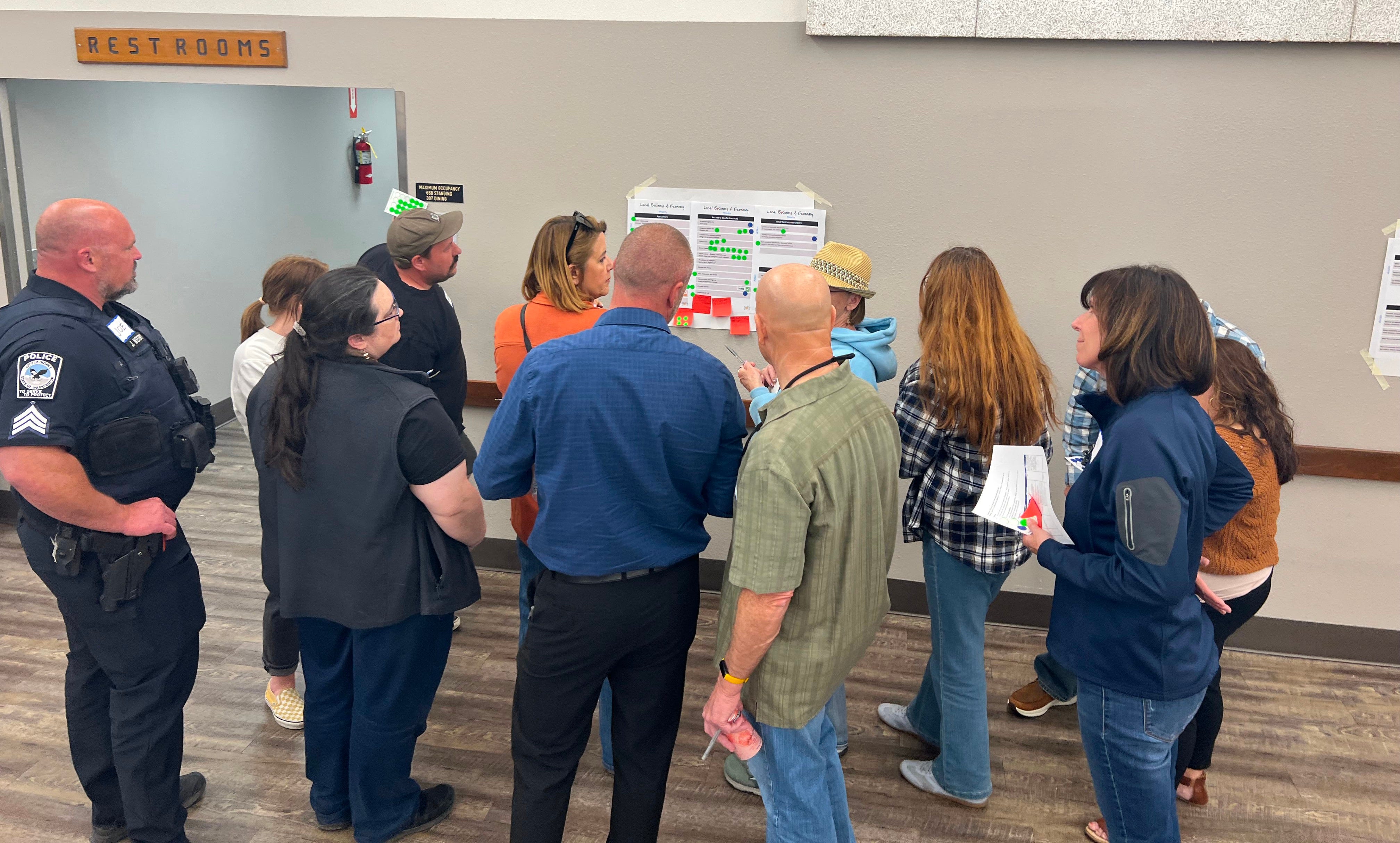
And more importantly, a broader range of people showed up. We had some familiar faces, yes, but we also had business owners who had not been part of these conversations before. Parents who had not been plugged into this process before. People from very different walks of life. People from different income levels. People from across the agricultural, industrial, and technology sides of our region. Young people who could have spent their Monday night anywhere else, but chose to be there.
That part mattered as much as anything else.
Because if you are going to have a serious conversation about the future of Quincy and the surrounding area, you need the 98848 in the room.
One of the Best Parts of the Night Was Simple: People Could Be Heard
One of the things the organizers did very well was make space for people to participate in the language they were most comfortable speaking.
The event was held in both English and Spanish, and translators were set up with in-ear devices so people could speak comfortably and still be heard equally. That may sound like a logistical detail, but it is more than that. When people have to force themselves into a language that is not their first language just to participate, something gets lost. Sometimes a lot gets lost.
Last night, that barrier was handled well.
That helped make the night feel like a real community conversation and not just a meeting where some people are technically invited but not truly equipped to participate. That matters in a place like ours.
What People Cared About Was Telling
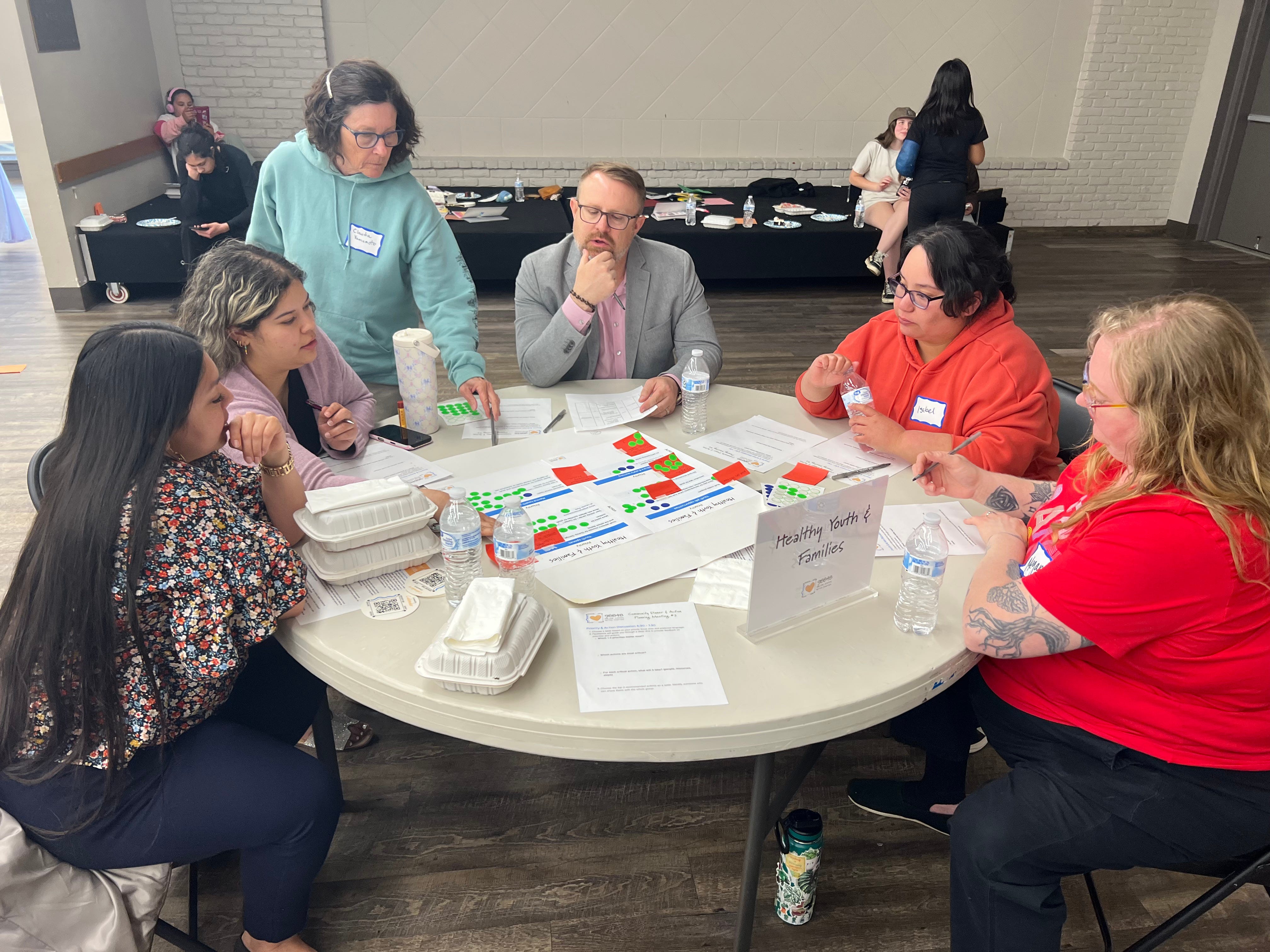
The official goal of the night was to bring several years of input into focus, identify the most supported priorities in a few key areas, and start thinking about action steps.
Those areas included things like outdoor recreation, community connection, youth and health, and business and economy. The plan was not just to vote on favorite ideas, but to begin asking, “What would it actually take to move this forward?”
I am not convinced the meeting fully got all the way to that second part.
I think the room absolutely identified priorities. I think people clearly communicated what they cared about. I think a lot of strong ideas were surfaced, supported, and clarified. I am less convinced the meeting got far enough into practical action steps for each area. That may have been a time issue. It may have been a process issue. It may simply be that people came ready to speak more than they came ready to map implementation.
And honestly, that is okay.
Because what became clear last night was that people desperately wanted to be heard. Even in a process that had already gathered years of input, people still came ready to speak into it, because they realized their voice could matter in the room.
That says something important all by itself.
“Monday night felt like one of those quiet moments that will matter much more in hindsight than most people realize while it is happening.”
Quincy Wants Growth, But Not at the Cost of Its Identity
If there was one thread that kept showing up across the room, it was this: people want progress, but they do not want to lose who we are.
That tension matters.
There was a lot of agreement that growth is coming and that growth can bring real benefits. There was also a strong feeling that Quincy and the surrounding 98848 area cannot forget what built this place. We are not just a technology hub. We are not just an industrial corridor. We are not just a place with big projects and future development on the horizon.
At our core, this is still an agricultural community.
That identity is not a side note. It is foundational.
And what I heard last night was not resistance to growth. It was something more thoughtful than that. It was people saying, yes, bring opportunity, bring good things, bring improvements, but do not strip away the character of the place in the process. Do not try to turn this into somewhere else. Do not make the mistake of confusing development with identity.
That is an important distinction, and I think it is one the community understands better than outsiders often do.


The Most Powerful Ideas Were the Most Human Ones
One of the most affirming things about the night for me was seeing how many of the strongest conversations were deeply people-centered.
There was a lot of talk about gathering places. Not just buildings, but places where people actually want to be together. Places that feel like community. Places where families gather, where young people connect, where neighbors run into each other, where life happens.
There was conversation about volunteer opportunities and how people need to know where they can plug in. There was concern for young people and what opportunities exist for them as they come out of school. There were questions about starter jobs, about access, about family life, about safety, about community events, about what it means to have a town that functions not just economically, but relationally.
That should not surprise anyone who really knows Quincy.
For all the growth pressures we are dealing with, this is still a place where people care deeply about people. Last night did not create that truth. It revealed it again.
Where the Friction Showed Up
The room had plenty of alignment, but it also had real friction, and that is not a bad thing.
In fact, it is necessary.
Because people do not all see growth the same way. Some see progress in beautification, downtown improvements, visual appeal, and creating more inviting public spaces. That matters. An attractive downtown matters. Walkability matters. A place you are proud to stroll through with your family matters.
Others see a different order of priority. They are thinking first about roads, safety, business survival, jobs, transportation, or whether kids can safely get from one part of town to another. They are thinking about function before aesthetics.
Both sets of concerns are legitimate.
That is exactly why broad representation mattered so much. We needed the voices that push for beauty, and we needed the voices that push for practicality. We needed the dreamers and the realists. We needed people who have lived here for generations and people who are seeing newer angles on what the future could be.
That is how you actually pressure test a vision.
Some Ideas Were Strong. Some Were More Wishful Than Actionable.
This is where the next phase is going to matter a lot.
Not every good idea is a realistic idea. Not every popular idea is something the community can actually execute. And not every problem people identified is one that local groups have the power to solve directly.
For example, people want a movie theater. I understand why. It would be great. It is easy to see why that kind of idea gets support. But wanting something and being able to sustain it economically are not the same thing.
The same goes for certain road and highway issues. People rightly talked about wider roads, safer access, passing lanes, and traffic concerns between Quincy and George. Those are real concerns. But some of those decisions sit well outside the direct control of local community groups. State-level transportation issues are not solved just because a good idea gets a lot of stickers on a board at a community meeting.
That does not make the ideas bad. It just means the next phase has to be honest.
If this process is going to keep people with it, then the difference between ideas, action steps, and realistic authority has to be made very clear. Otherwise, communities can lose steam when they feel like they were asked to dream but never shown what can actually be done.
“People want progress, but they do not want to lose who we are.”
Growth Is Already Here, Whether We Feel Ready or Not
One of the things I think people need to understand is that this conversation is not theoretical anymore.
Growth pressures are already here.
You can see it in housing. You can see it in traffic. You can see it in school conversations. You can see it in fire and police planning. You can see it in recreation projects. You can see it in the practical questions people are now asking about roads, access, crossings, downtown, youth opportunity, and the overall shape of daily life in this region.
Some of the projects already moving in our area trace back to this wider conversation. The community calendar, the Q-PLEX, the new aquatic center, these are not disconnected things floating in space. They all connect back to years of people talking about what this area needs and where it should go.
So when people hear “visioning process,” they should not picture some abstract planning exercise with no real-world consequences. They should picture road work, construction, parks, recreation, safety planning, business conversations, and the physical shape of Quincy changing over time.
Because that is what this is.


Safety, Access, and Everyday Life Were Right in the Middle of the Conversation
Some of the most grounded conversations last night had to do with things people live with every day.
How do kids get across town safely?
How do people cross the highway safely as traffic grows?
How do people deal with the railroad tracks if the practical reality of their route does not match the legal route?
How do communities like George, Crescent Bar, and Sunland Estates connect more safely and effectively as the broader region grows together?
These are not glamorous questions, but they are some of the most important ones. Because when a community starts growing fast enough that safety, access, and movement become bigger issues, you are no longer talking about hypothetical future problems. You are talking about conditions families are already living with.
That is part of why this meeting mattered. It brought practical concerns and long-range hopes into the same room.
Supporting Small Business Has to Mean More Than Saying We Want To
One of the strongest conversations of the night centered around supporting local business.
That is easy to say. It is harder to live.
People talked about wanting more local restaurants, more small businesses, and stronger support for the businesses already here. I believe that desire is real. I also think the tension around it is real.
Because supporting local often costs a little more.
That is not a criticism. It is just reality. A small business in Quincy is not going to outcompete a national chain or an online giant on pure price. That is not how this works. If we want the local coffee shops, restaurants, shops, and service businesses that make a town feel alive and rooted, then at some point this has to move from sentiment to action.
We have to choose them.
That does not mean every family has unlimited room in the budget. Everybody understands that pressure. But if the community says local businesses matter, then the community has to show up for them when it can. Otherwise, we are just applauding the idea of small business while quietly financing its replacement.
That is not somebody else’s issue. That is ours.
What This Means to You
If you live in the 98848, this conversation is about your life whether you were in the room or not.
It is about how your family moves through town. It is about whether your kids have places to gather, opportunities to work, and ways to grow here. It is about whether our local businesses survive. It is about whether Quincy becomes more connected or more fragmented as it grows. It is about whether the future feels like an extension of who we are or a departure from it.
And it is also about responsibility.
This project may be wrapping up its formal process, but your chance to shape the community is not ending. It happens every time you show up to a meeting. Every time you ask a question. Every time you support a local business. Every time you pay attention. Every time you choose not to check out.
That is the real takeaway from last night.
The formal vision document may come out in the next few weeks. The boards will tabulate the data. The organizers will sort through input. We will all get to see what the next five years is supposed to look like on paper.
But paper is not the same thing as follow-through.
Follow-through will come from a community that stays engaged.
This Is the Part Where We Decide Whether “Better Together” Means Anything
After everything I have seen and heard through this process, I am more hopeful than I was when I first got involved.
I am still not naïve about it.
There are good ideas here. There is real energy here. There is clear care for the community here. There are also real questions about execution, follow-through, priorities, and whether people will stay engaged once the excitement of the event fades.
Long projects lose steam. That is what long projects do. We have already seen enough in this community to know that not everything happens quickly, and not everything happens cleanly. Big things take time. That is true of the aquatic center. It is true of the Q-PLEX. It is true of road work. It is true of planning. It is true of anything that aims to shape a community over years instead of weeks.
So the challenge now is not just to have had a good meeting.
The challenge is to keep heart.
“If you care about what this community looks like in five years, this is not the time to sit back.”
To keep showing up. To keep asking questions. To keep paying attention. To keep pressing for clarity. To keep choosing local. To keep insisting that community input actually lead somewhere. To keep reminding ourselves that none of this gets built by slogans.
“Better Together” is a fine phrase.
Now we find out whether Quincy means it.
Because that is the question underneath all of this. Not whether we can come up with ideas. We clearly can. Not whether we can fill out boards and put dots on priorities. We can do that too. The real question is whether we are willing to act like the future of this place belongs to all of us.
If you call the 98848 home, then sooner or later you have to answer that for yourself.
Where do you fit?
What part are you going to play in the next five years?
What will you do, not just say, to help shape the home you want for your family, your kids, your neighbors, and the generations coming after us?
Because last night made one thing very clear.
This community’s future is not being shaped somewhere far away by strangers. It is being shaped here, by the people willing to step into the room, speak up, listen well, and stay involved.
The only real question left is how many more of us are willing to do the same.